It should come as no surprise that cybersecurity threats intensified in 2023. Research shows that 62% of organizations believe their cybersecurity teams are understaffed. As 2024 looms near, digital threats are expected to increase in sophistication. Consequently, the tools and strategies cyberprofessionals use to counter them must also adapt. By staying informed about emerging threats, enterprises and individuals can bolster their defenses, ensuring a safer digital environment. There are 7 proactive cybersecruity trends IT practitioners can expect to see dominate in the new year.
Trend #1: The Rise of AI in Cybersecurity
Artificial intelligence (AI) is rapidly shaping cybersecurity by analyzing vast amounts of data to detect threats often missed by humans. AI automates repetitive tasks and offers predictive insights, moving the needle from a reactive security approach to a proactive one. However, its integration has challenges. While AI enhances detection and offers predictive insights, it also introduces risk, namely, the potential for systems to be exploited by malicious actors. Embracing AI in cybersecurity demands a balanced approach that considers both its advantages and inherent risk. Organizations can achieve this balance by equipping employees with the skills necessary to utilize AI technology safely.
Trend #2: The Persistent Risk of the Remote Workforce
This was a widely recognized risk in 2023—and it is not going away in 2024. The onset of the COVID-19 pandemic (and resulting shift to remote work) created a unique set of cybersecurity challenges. Upwork estimates that 36.2 million people in the United States will work remotely by 2025, an increase of 16.8 million people compared to pre-pandemic numbers.1 More than 60% of all enterprise data is stored in the cloud.2 As increasing numbers of employees retrieve this data from home, the boundaries defining secure enterprise networks have blurred.
As increasing numbers of employees retrieve [enterprise] data from home, the boundaries defining secure enterprise networks have blurred.
Similarly, the use of personal devices for work activities continues to pose a challenge. These devices, often lacking the robust security measures of enterprise-owned hardware, become potential threat entry points. The absence of physical security controls (such as surveillance systems, access controls and perimeter security) that exist in office environments also increases risk.
In addition, the perceived safety of one's home often leads to complacency. Individuals believe their home networks are secure, causing them to overlook potential vulnerabilities. This mindset is a factor attackers can exploit, especially as the number of remote workers increases. Organizations can mitigate this risk through enhanced training and awareness tactics, comprehensive cybersecurity policies, and regular software updates, among other options.
Trend #3: The Growing Concern of Mobile Security
It is hard to ignore the burgeoning number of mobile applications (apps) available to consumers. With the convenience and accessibility they offer, mobile app usage has surged. This rise comes with specific cybersecurity challenges:
- Each mobile application presents a potential vulnerability. Users who download and interact with apps can unwittingly expose sensitive data or grant access hackers can exploit. The sheer volume of apps makes it difficult to ensure that each one adheres to stringent security standards.
- Personal mobile devices are not secure. The growing market share of mobile devices, expected to reach 3.6 billion units by the end of 2024,3 means that they are becoming primary targets for cyberthreats. As more people rely on smartphones and tablets, the stakes for securing the devices also rise.
It is essential to recognize the risk associated with mobile usage and take steps to mitigate it. Robust mobile security is not only about protecting individual devices but also the data they access and store. Enterprises can address risk by developing secure mobile apps, implementing mobile device management solutions and enforcing strong authentication measures.4
Robust mobile security is not only about protecting individual devices, but also the data they access and store.
Trend #4: IoT
The Internet of Things (IoT) is steadily gaining traction, transforming everyday objects into smart, interconnected devices. From home appliances to industrial equipment, IoT’s reach is expansive, signaling a new era of connectivity. This increase in connectivity raises risk, because each IoT device in an ecosystem potentially offers an entry point for malicious actors. A vulnerability in one interconnected device can have cascading effects and compromise an entire network's security.
As IoT adoption rises,5 it is crucial to address vulnerabilities and ensure that every device is secure, updated routinely and monitored for potential threats.
Trend #5: Cloud Security and Compliance Automation
Over the past several years, the transition from on-premises infrastructure to cloud-based solutions has been swift. Organizations increasingly recognize the benefits of the cloud, ranging from scalability to cost efficiency. However, this migration also introduces new cybersecurity challenges. As data moves to the cloud, protecting it becomes a priority. Enterprises must ensure that their cloud environments are as secure, if not more so, than traditional infrastructures.
Compliance has also undergone a transformation. With the emergence of Software-as-a-Service (SaaS)-based organizations, there has been a notable uptick in compliance automation platforms. By integrating with these platforms, enterprises can ensure that they meet industry standards without manual overheads.
Trend #6: State-Sponsored Cyberthreats
In 2023, state-sponsored cyberthreats became a pressing concern,6 one that is likely to continue into 2024. As tensions rise between nations, cyberattacks are increasingly used as political and strategic tools. Sophisticated and well-funded attacks often target critical infrastructures, government systems and even private enterprises.
The nature of these threats underscores the importance of considering geopolitical dynamics in cybersecurity strategies. To address these challenges, organizations must stay informed about global political developments and their potential cyberimplications. This allows cybersecurity teams to prepare for and respond to threats posed by state-sponsored cyberactivities.
Trend #7: The Talent Gap in Cybersecurity
The cybersecurity industry faces a widening talent gap in 2024. As cyberthreats become more complex and frequent, the demand for skilled professionals has surged.7 However, meeting this demand has proven to be a significant hurdle.
The need for more expertise across various levels is a primary concern. From entry-level to senior leadership roles, the industry needs more individuals skilled in disciplines such as:8
- Cybersecurity analysis
- Incident response and management
- Knowledge of network, cloud and application security
- Threat intelligence
- Compliance and risk management
- Identity and access management
- Penetration testing and ethical hacking
- Architecture and engineering
- Cryptography
- Forensics and investigation expertise
Skill deficits in these areas hamper the ability to address current threats and slow the development of strategies to anticipate future challenges.
A multi-faceted approach is necessary to address this issue. Enterprises must invest in education and training programs for existing employees to enhance their cybersecurity skills. They must foster cultures of continuous learning through ongoing professional development opportunities. Widening searches for talent by cross-training with other disciplines and implementing inclusive hiring practices will enable organizations to benefit from the skill sets of the 26% of cybersecurity professionals who come from racial and ethnic minority backgrounds.9
Conclusion: Cybersecurity Trends
2024 will bring a new batch of cybersecurity challenges and opportunities. One factor that will remain constant is the need to be proactive and anticipate risk in advance. By monitoring these trends, organizations can position themselves to navigate cybersecurity and achieve a safer digital future.
Endnotes
1 Ozimek, A.; “Economist Report: Future Workforce,” Upwork
2 Lookout, Hybrid Work and BYOD: Enterprise Security Risks on the Rise, 2023
3 Goldstein Market Intelligence, Global Smartphone Market Outlook 2024: Global Opportunity And Demand Analysis, Market Forecast, 2016-2024, 18 June 2019
4 Bineesh, M.; “Mobile App Security Best Practices for Businesses,” ITSecurityWire, 26 October 2023
5 Allinson, M.; “IOT Platform Market Forecast for 2024: Trends Analysis,” Robotics & Automation News, 30 June 2023
6 US Department of Defense, 2023 Cyber Strategy of The Department of Defense, USA, 2023
7 CyberSeek, “Shortfall of Skilled Cybersecurity Workers in the US Reaches an Estimated 466,000, CyberSeek Data Reveals,” 6 June 2023
8 CompTIA, State of Cybersecurity 2024, September 2023
9 ISC2, “Revealing New Opportunities for the Cybersecurity Workforce”
JUSTIN RENDE
Has been providing comprehensive and customizable technology solutions around the globe since 2001. With his focus on innovation and efficiency, Rende’s technology-forward methodology has set him apart from other cybersecurity professionals. His understanding of industry trends has allowed him to stay on top of the latest security threats and match them with the most innovative and best-of-breed solutions, products and solutions. In 2015, Rende founded Rhymetec to focus exclusively on cybersecurity and develop the most secure, simplified and innovative cybersecurity solutions. He advises his clients to adopt cutting-edge technology before it becomes mainstream, resulting in the most secure and cost-effective technology that scales with a client’s business.
You can read the original article posted in ISACA by Rhymetec CEO, Justin Rende.
Need a team that enables your company to keep up with and align practices to current trends in cybersecurity?
Rhymetec was founded in 2015 as a Penetration Testing company. Since then, we have served hundreds of SaaS businesses globally in all their cybersecurity, compliance, and data privacy needs. We’re industry leaders in cloud security, and our custom services align with the specific needs of your business. If you want to learn more about how our team can help your business with your security needs, contact our team for more information.
Interested in reading more? Check out our blogs:
- Security Policies for Small Businesses: 5 Tips For Effective Communication
- 6 Ways Cybersecurity Is Important For Business Growth
Since the pandemic began, remote work has grown in popularity to the point that many companies now operate remotely. The Bureau of Labor Statistics found that around 27% of the U.S. workforce worked remotely at least part-time as of August and September 2022, but some academic surveys suggest the number was closer to 50%. With technological advancements driving the remote revolution, companies grapple with cultivating a cohesive culture without physical proximity. Is fostering a true team spirit and camaraderie in a remote setting a paradox? How does the lack of in-person interactions affect team dynamics, and what are some potential solutions to bridge this gap?
Here are some innovative approaches for nurturing a remote culture that resonates with the essence of the traditional workplace environment.
The Remote Work Paradox
Building a thriving culture remotely seems contradictory. The essence of a company's culture often lies in the intangible connections formed between its members. However, when interactions are confined to screens, this essence is challenged. The lack of personal contact and impromptu conversations (think: watercooler exchanges) that shape the organic development of relationships in a traditional office setting is acutely felt. Without in-person interactions, employees often miss out on small, unspoken signals, leading to potential misunderstandings.
Maintaining team morale and motivation is another challenge. In an office setting, the energy and enthusiasm of colleagues can be contagious; however, in a remote environment, maintaining this vibrancy becomes a chore. The spontaneity and warmth of face-to-face interactions are hard to replace in a virtual environment.
When employees work remotely, they often take a siloed approach to their tasks that can make them feel particularly isolated. This kind of separation makes building a united and friendly work atmosphere—which is important for success—difficult. Creating a sense of belonging and loyalty to the company is more difficult when workers don't interact with the organization's space and people.
These challenges demonstrate the importance of finding innovative ways to build a strong, interconnected remote culture.
Breaking Down The Barriers
Our cybersecurity firm recently tackled the remote culture conundrum head-on by organizing a company retreat. The retreat aimed to bridge the gap created (by working online) and build genuine connections between team members. The agenda was carefully crafted to balance formal business discussions with casual, fun activities designed to help team members bond and get to know each other outside of work.
The retreat was a game-changer. Team members, who only knew each other through computer screens, got to share experiences and get to know each other better in a relaxed environment. Meeting face to face broke down the usual formalities and helped everyone understand each other as co-workers and as people.
After the retreat, we saw a significant change in how the team interacted and cooperated. Colleagues who used to communicate primarily by email and online meetings formed personal bonds. These new relationships led to easier conversations, better teamwork and a stronger feeling of being part of the team. The retreat proved that while remote work is undoubtedly viable, meeting in person occasionally is critical for building a strong and united team culture.
The Impact Of In-Person Interaction
The value of in-person interactions in shaping a remote culture is massive. Meeting face to face helps people understand and relate to each other in ways that are hard to do online. The in-person meetings at the retreat enabled team members to get to know each other better and learn about each other's personalities, how they work and their lives outside of work.
This better understanding improved the way everyone communicated. Talks became more open and relaxed. It became easier for everyone to talk to each other, leading to a friendlier and more supportive atmosphere at work.
Tricky, But Not Impossible
Despite the challenges of remote work, the company remains committed to the remote model. However, we now know that meeting in person is important, too, so we aim to continue holding retreats and events a couple of times a year. We believe this will help keep the team's spirit and culture strong, like when employees meet in person.
Creating a remote work culture is tricky but possible. As the way we work keeps changing, combining the freedom of remote work with occasional in-person gatherings appears to be the right way to keep a team happy and productive and build a lively and effective culture.
You can read the original article posted in Forbes by Rhymetec CEO, Justin Rende.
About Rhymetec
Rhymetec was founded in 2015 as a Penetration Testing company. Since then, we have served hundreds of SaaS businesses globally in all their cybersecurity, compliance, and data privacy needs. We’re industry leaders in cloud security, and our custom services align with the specific needs of your business. If you want to learn more about how our team can help your business with your security needs, contact our team for more information.
Interested in reading more? Check out our blogs:
Ask any security professional what the biggest risk to organizations is, and nine times out of ten you'll get the same answer - people.
What security professionals know from experience is further confirmed by security research. Verizon's 2025 Data Breach Investigations Report puts the percentage of breaches that involved human error as high as 60%. Despite the best intentions, even the most diligent employees are susceptible to falling for social engineering tactics like phishing emails.
The onus is on company leadership to not only establish clear security policies for their business but to effectively communicate these policies to employees.
You could have the best, most meticulously documented security policies in the world, but they won't be able to help if they aren't communicated to the people who handle your assets daily. In 2025, small businesses also face added scrutiny from enterprise customers and regulators, making strong policies not just a security measure but a business requirement.
Rhymetec's Senior Cybersecurity Analyst, Kyle Jones, discussed how to effectively communicate security policies with employees in the latest episode of SaaS District:
Rhymetec, a Managed Security Services Provider focused on cybersecurity, compliance, and data privacy, enables SaaS organizations to have in-house security expertise at a fraction of the cost. Security professionals like Kyle have firsthand experience behind the scenes of the information security programs at hundreds of companies.
Based on Kyle's experience, here are 5 tips he encourages businesses to use to communicate security policies with employees effectively:
1. The First Rule of Security Policies for Small Businesses: Know Your Audience
"The first thing I would suggest is know your audience. Know who you're communicating to,” suggested Kyle when asked how to communicate security policies in a startup environment of rapid growth. "If you're a CEO, a CTO, someone that's going to roll out policies - the first thing you want to focus on is knowing your audience. If you're a marketing agency, you don't want to draft heavily technical policies for your employees, because the communication is going to fail."
When tailoring and communicating policies to your organization, you want the policies to become ingrained as practice, not just documents that sit on a shelf (or in a file on your Google Drive that nobody looks at twice!).
The first step to effectively accomplishing this is to know your audience and make sure you remember to tailor your language to everyone in your audience.
If you work in tech, it may seem evident to you what the policy means when it says:
"All corporate devices must utilize full-disk encryption using the AES-XTS data encryption algorithm in compliance with the NIST Advanced Encryption Standard".
But this likely means nothing to your company's lawyer or accountant. Instead, simplify the language and foster clear communication. If the policy is going to apply to a non-technical audience it's far better to create a policy like:
"All corporate laptops and desktops must enable full-disk encryption in their device's settings."
Creating effective policies and procedures requires remembering that many users may not be security or even IT knowledgeable. This is becoming even more important as many small businesses are adopting AI tools and cloud platforms in 2025. Policies must account for a non-technical audience using technologies that carry significant risk if misunderstood.
2. Make Sure Your Small Business Security Policies Are Drafted by a Subject Matter Expert
Kyle emphasized the importance of working with a subject matter expert who understands the regulatory requirements in your industry as well as the voluntary security standards your customers may want you to have.
Having a subject matter expert develop your policies, especially in the early stages, allows you to align your policies with industry standards and with what you want to achieve as your company grows. Businesses that bake security in from the get-go establish a solid foundation, saving money and headaches in the long term.
Many organizations see security policies as "another GRC checklist item". This couldn't be further from the truth. Security policies are a core part of your business, and working towards adherence is critical.
However, even before building buy-in, you need to make sure your security policies are rock solid.
Here are a few questions you should ask in reference to the organization or individual drafting your policies:
- Are they basing their security policies on a risk assessment specific to your organization?
Organizations have dramatically different risk profiles based on industry or sector. For example, a software as a service company has numerous risks related to cloud hosting, data segmentation, and cloud identity and access management. These risks are not shared by a typical accounting firm. Policies should be tailored to your specific organization and can't be written in a vacuum.
- Does the person or organization have a strong working knowledge of how policies are implemented in practice?
Policies are only as useful as their implementation (and you will be audited based on both!). There should be a strong plan for operationalizing any policies that have been drafted on behalf of your business. This is where working with an outside expert like a Managed Security Services Provider, particularly for startups who may not have the resources to build out large in-house security teams, can come into play as a resource.

Ensuring The Companies of the Future Are Secure
To Kyle, one of the most important challenges of his work is making sure companies have solid security practices in place and that they are secure from the ground up:
"At Rhymetec, we're working with startups. A lot of them are early-stage startups…A lot of the companies that I work with and manage the security program for are the future. They have very powerful technologies and very innovative products".
The companies he works with are forward-thinking and looking to grow quickly. Establishing solid security policies for small businesses is critical before they expand into new marketplaces or internationally, before they go public, or before they are acquired.
Subject matter experts like the team at Rhymetec take the job of security entirely off their plate so they can focus on core tasks and grow their business.
3. Emphasize Security Policies Throughout the Year
There's nothing worse than policies that haven't been adopted.
Identify opportunities throughout the year where you can emphasize security policies for your small business in a proactive and exciting way.
"Something else I think that all organizations can do more of is emphasizing the importance of the policies. The policies are not an annual thing we review and send out to employees, and it's done. We want to find different ways to emphasize the policies," Kyle pointed out.
Have a company all hands?
This can be a great opportunity to discuss security policies, their implementation, and overall best practices. Include policy provisions in your security awareness and training courses, and aim to connect policies with outcomes.
When employees ask questions about anything security or IT-related, that can be a great opportunity to reference the policies and see what they say. When Kyle talks to the companies he manages security programs for, he uses their questions as an opportunity to bring up the policies and emphasize their importance.
It can be difficult for employees to conceptualize why security policies are necessary as they can often seem divorced from outcomes.
Walking the company (at a high level) through how a ransomware attack happens, or how threat actors launch business email compromise campaigns can be informative and help solidify the importance of adhering to policy language. The point is not to fearmonger, but to provide information that helps employees mentally link the policies to the reasons behind them.
People are more likely to adhere to something if they understand it.
In other words, don't just tell people what to do - show them why it matters.

4. Have a Training Program Built Around the Policy Language
Staff awareness training is an excellent opportunity to reinforce and build on your policies.
You want to ensure that your training program directly reflects language from your policies. For example, if you have a policy around full disk encryption (to use an earlier example), reinforcing this and providing a how-to guide in your training provides an excellent opportunity for reinforcement.
As another example, if you have a policy of reporting any suspicious emails as phishing for the security team to look at, reinforce this with training! Small businesses now often rely on a myriad of cloud collaboration tools, APIs, and AI assistants. Your training must be updated to reflect this reality and directly reference related policies, such as how to securely handle shared data or what information can be input into AI systems.
It's hard for employees to remember technical minutia and playbooks, so constantly reinforcing and iterating on your organization's security posture and policies is critical.
5. Update and Review Policies Regularly
Risk to your organization changes.
Both the regulatory and threat landscapes are in constant flux. Policies should not only be updated regularly but should be continuously reviewed and adjusted based on new information.
For example, the advent of large language models such as OpenAI's GPT-4 and Google's Gemini should force organizations to reimagine their policies:
- Are employees allowed to use these applications at work?
- What types of data can be shared with them?
- Do our policies reflect current regulatory language about algorithm decision-making?
These are important questions to answer. At Rhymetec we recommend conducting regular policy reviews. Working with a vCISO can dramatically simplify this process as they will be in tune with regulatory and threat landscape changes that could impact your business.
In summary, here are the 5 expert-approved tips discussed in this article to effectively communicate security policies to employees:
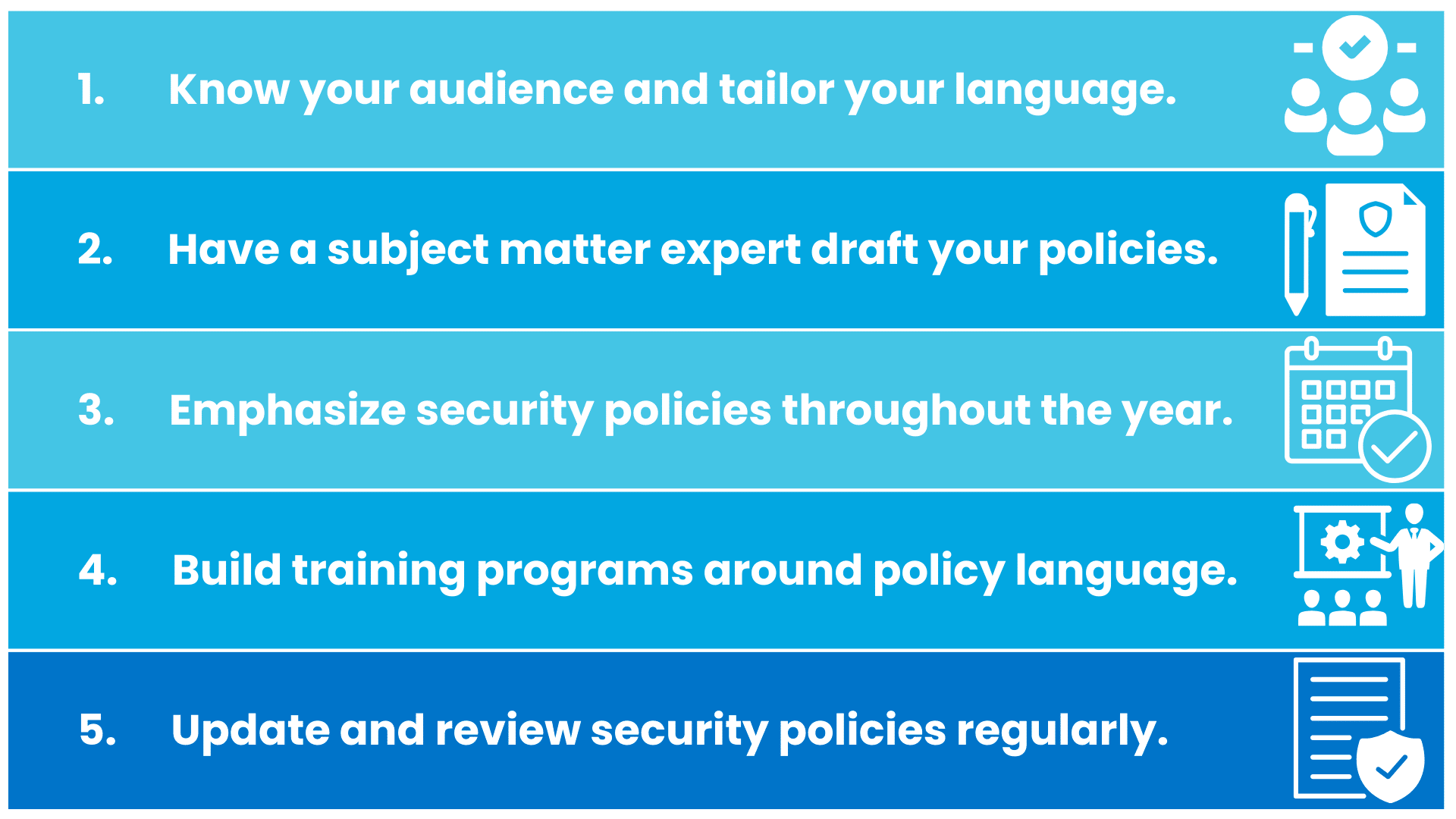
Security Policies for Small Businesses: The Bottom Line
Small businesses need security policies that work for them. They need policies that are tailored, based on real risks the business faces, and that meet a range of complex compliance requirements.
When done right, reinforced, and iterated on, policies form the backbone of a security program and enable organizations to do business with confidence and precision.
Hopefully, this article helped solidify how to draft and implement policies effectively. At Rhymetec, we believe that security and compliance are continuous processes that need to evolve and improve over time. We work directly with clients to build policies and security programs that meet regulatory requirements, scale with their growing organization, and enable business outcomes.
If you have more specific questions on crafting security policies for your business, please feel free to contact our team:
FAQs: Security Policies For Small Businesses
Why are security policies so important for small businesses?
Because most breaches stem from human error, strong policies protect against mistakes and provide much-needed guidance to employees. They also demonstrate accountability to customers, auditors, and regulators.
How often should small businesses update their security policies?
At least annually — but ideally every 6 months or whenever major changes occur in technology, staff, or regulations. In 2025, rapid changes in AI and data privacy laws mean reviews are needed more frequently.
Who should write or review a company’s security policies?
A subject matter expert with compliance and technical knowledge. Many SMBs rely on vCISO services or MSSPs like Rhymetec to ensure policies are tailored to industry risks and compliance frameworks.
How can small businesses make policies easier for employees to follow?
Keep language clear and non-technical, integrate policies into training, and connect them to real-world examples like phishing or ransomware incidents. Policies that are simple to understand are more likely to be followed.
Do security policies help with compliance certifications?
Yes. Well-documented policies form the backbone of compliance efforts for frameworks like SOC 2, ISO 27001, HIPAA, GDPR, and CMMC. They are often the first thing auditors request when evaluating a company’s security posture. As part of Rhymetec's Vanta Compliance Services, we can leverage cutting-edge compliance automation technologies like Vanta to accelerate this process for you. We enable our clients to maximize their use of compliance automation platforms like Vanta and Drata.
About Rhymetec
Rhymetec was founded in 2015 as a Penetration Testing company. Since then, we have served hundreds of SaaS businesses globally in all their cybersecurity, compliance, and data privacy needs. We're industry leaders in cloud security, and our custom services align with the specific needs of your business.

About Kyle Jones: Information Security Manager at Rhymetec
Kyle Jones is a Senior Cybersecurity Analyst at Rhymetec. Kyle is an experienced cybersecurity and compliance professional who excels at aligning SaaS cloud architecture with industry standards and regulations. If you have any questions about security, you can get in touch with Kyle on LinkedIn or contact our team at Rhymetec.
Partnering with a Managed Security Services Provider (MSSP) is an elegant solution for many companies for two main reasons:
- MSSPs provide specialized experience at scale, enabling organizations to access expert security services without having to build in-house security teams.
- Companies of all sizes are increasingly recognizing that good security is good business.
Cybersecurity and information technology risks continue to shift more rapidly than ever. Organizations of all sizes are coming under increasing regulatory scrutiny both in the United States and the European Union, with new requirements such as the U.S. SEC Data Breach rule and the EU's NIS2 Directive, as well as upcoming regulations like the Digital Operational Resilience Act (DORA) requirements in Europe and CMMC 2.0 in the U.S. defense sector.
In 2025, enterprise buyers are also raising the bar with stricter vendor due diligence and security questionnaire requirements. At the same time, a vast cybercrime underground continues to flourish, amplifying the ever-present threats of ransomware attacks, data breaches, and insider threats.
But even beyond these well-known risks, having a solid information security foundation is just good business. It inspires confidence with partners, vendors, customers, and employees. Even more than that, it enables organizations to scale effectively without the omnipresent threat of ransomware attacks, data breaches, and compliance violations.
Good security is good business.
What is a Managed Security Services Provider?
Managed Security Services Providers (MSSPs) provide outsourced cybersecurity and consulting services to businesses of all sizes, providing an elegant and simple solution for organizations to reduce the risk of both regulatory noncompliance and experiencing a threat actor attack. Common services provided include incident response, endpoint protection, threat intelligence, patch management, risk management, security questionnaire fulfillment, compliance management, and much more.
MSSPs centralize decades of security experience across different functions and organizations into a single entity, enabling small businesses to leverage security know-how and experience usually reserved for the world's largest and most sophisticated corporations.
Why Organizations Are Turning to MSSPs in 2025
Business drivers in 2025 include:
Expansion into regulated markets (e.g., finance, healthcare, SaaS)
Scaling globally, especially into Europe under NIS2 and DORA
Meeting stricter third-party vendor risk assessments from enterprise buyers
Preparing for CMMC 2.0 certification in the U.S. defense sector
This is why MSSPs like Rhymetec, now serving over 1,000 clients worldwide, are seeing increased demand from SaaS companies, startups, and enterprises alike.
Indeed, MSSPs help organizations work through a variety of complex technical and regulatory challenges, including:
Compliance Frameworks and Regulatory Requirements
Compliance requirements continue to proliferate adding additional regulatory impetus for organizations to improve their cybersecurity.
That's one of the reasons why Managed Security Services Providers with extensive experience helping organizations meet a range of frameworks (such as SOC 2, ISO 27001, PCI DSS, FedRAMP, GDPR, and others) are increasingly seen as the best route to go to meet requirements. In 2025, new frameworks like ISO 42001 (AI Management Systems) are also becoming relevant for companies building or deploying AI, and the EU AI Act is introducing additional oversight.
Many organizations see regulatory requirements as purely a cost. However, collaborating with the right MSSP company can help transform these requirements into a net benefit that can be applied across the organization.
There's a reason that 75% of companies who achieve some level of continuous compliance view their compliance program as a business driver. Meeting regulatory and voluntary standards boosts your ability to serve more clients, unblock sales, and expand into additional markets.
And in 2025, CMMC 2.0 compliance is becoming a key requirement for U.S. defense contractors, making MSSP expertise essential for entry into that market.
Enterprise sales opportunities will want to see compliance with regulations relevant to their industry such as SOC 2, GDPR, HIPAA, and PCI before even considering an engagement. Working with an MSSP simplifies the process of achieving and maintaining compliance standards, ensuring you are able to break into new marketplaces as your company grows.
Penetration Testing
It's no secret that the threat landscape continues to drive higher levels of risk.
Increases in geopolitical tension, growth in cybercrime, and the rapidly evolving risk of ransomware attacks all directly increase risk to organizations. Penetration testing can directly reduce much of this risk.
Currently, another issue is that AI-powered attack tools and supply chain exploits are also creating new levels of exposure for SaaS companies. Through partnerships with leading platforms like XBOW, at Rhymetec, we now combine automation with human-led oversight to scale testing more effectively.
Similar to the importance of continuous compliance discussed above, when exploring how to select the right pen testing vendor, companies should consider the importance of continuous communication and a collaborative approach with the pen tester.
A good pen testing firm will work with you to scope the pen test to your organization's specific requirements and risks. For example, organizations that offer their data via API may benefit from API penetration testing while organizations with web applications may need pen testing specifically scoped to address common vulnerabilities in web applications.
A rigorous penetration test can identify flaws in your application or corporate security that an attacker could exploit. In addition, they can strengthen your compliance posture and reassure potential auditors that your organization takes security seriously.
An MSSP that offers pen testing as a service will collaborate with you to understand your business requirements and scope the pen test to vulnerabilities that threat actors are most likely to exploit based on your unique risk posture. For example, Rhymetec offers a variety of pen testing engagements, including web application, API, network, and mobile application pen testing.
Virtual CISO Services
Security isn't a one-time initiative. It's an evolving process that requires buy-in from individuals across the organization.
Virtual CISO (vCISO) services serve as the linchpin of a security program. A vCISO acts as your organization's security expert - enabling you to leverage executive security expertise without the need to employ a full-time CISO.
A vCISO can advise you on:
- When to make additional security investments
- Which security policies and procedures would most benefit your organization
- Emerging threats that may pose a risk to your business
- Maintaining robust security throughout complex engagements like cloud migrations
- Upcoming changes to compliance regulations that may need to be addressed
- Preparing you for compliance or data privacy audits
A good vCISO has an in-depth understanding of compliance requirements, coupled with the technical resources needed to implement security controls in the context of the threat landscape. Managed Security Services offering a vCISO service provide companies of all sizes access to this valuable combination of skills.
In addition, a vCISO enables you to maintain a posture of continuous compliance.
Working With A Managed Security Services Provider Encourages Continuous Compliance
At Rhymetec, we believe compliance shouldn't be a sprint right before an audit.
Organizations that make compliance core to their business can maintain a posture of constant compliance, reducing the stress and overhead associated with compliance while also ensuring that audit requirements are met.
A common misconception is that smaller businesses are exempt in some way from needing to meet requirements. However, requirements are generally stipulated across the board for most companies regardless of size.
Going beyond compliance frameworks, which represent a reasonable baseline but fall far from the finish line compared to an actual security program, vCISOs are able to implement additional security controls based on the unique risks an organization faces. Before building out or improving upon an existing security program, a vCISO will consider customer requirements and pinpoint specific laws and threats that apply to an organization and its vendors.
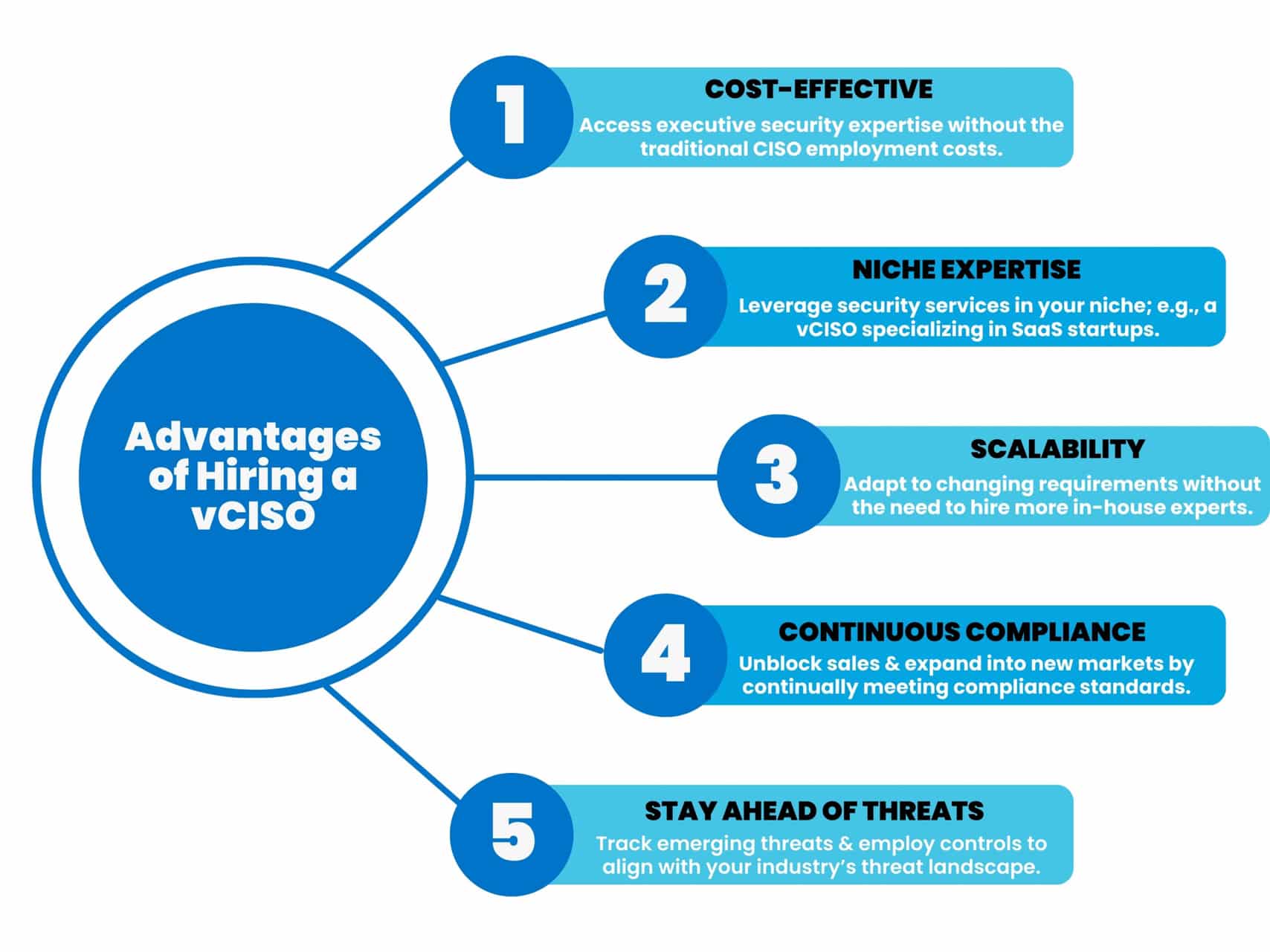
Opting for a vCISO service enables small and mid-size businesses to be certain they meet compliance standards while also leveraging their security dollars to reduce the risk of data breaches and ransomware attacks.
Let's expand on the main reasons why managed security services are an agile solution for smaller organizations:
Why Work With A Managed Security Services Provider? Specialized Experience At Scale.
The reason organizations choose to work with MSSPs is simple - specialized experience at scale. An average MSSP will often have experts on their team across many disciplines to include:
- Job Title (Salary range for an in-house full-time hire in 2025)
- CISO ($215,000 - $275,000 per year)
- Director of Security ($250,000 - $400,000 per year)
- Cloud Security Specialist ($110,000 - $150,000 per year)
- Application Security Specialist ($130,000 - $180,000 per year)
- Penetration Tester ($110,000 - $150,000 per year)
- Security Operations Analyst ($110,000 - $160,000 per year)
- Threat Intelligence Analyst ($80,000 - $140,000 per year)
- Governance, Risk and Compliance Specialist ($65,000 - $100,000 per year)
- Vulnerability Management Analyst ($100,000 - $165,000 per year)
Large enterprises spend millions of dollars on a security team with many highly specialized individuals across a range of disciplines. Small businesses need the same level of experience but not necessarily the same amount of work. Managed Security Services fill this gap perfectly.
Why Managed Security Services? It's Good Business.
Organizations are increasingly scrutinizing their vendors for security practices.
Suffering a major breach leaves a company scrambling to notify consumers, reassure investors, and manage employee fears. Proactively tackling cybersecurity, compliance, and data privacy by getting your SOC 2 Report (or other compliance audits), engaging in routine penetration testing, and utilizing vCISO services can serve as an amplifier across the rest of your business activities.
Having an MSSP as a continuous resource also simply provides peace of mind. When compliance frameworks are inevitably updated, when an auditor requests an evaluation of third-party risk, when you need things like phishing testing services to fulfill controls, or when you receive a security questionnaire from a customer - you'll know where to go for immediate and expert assistance.
Proactively providing SOC 2 Type 2 Reports to potential customers immediately makes your business stand out while also preventing the need for time-consuming security questionnaires. A vCISO service can help your organization identify and prepare for upcoming compliance regulations, saving costs and time in the long run.
Finally, working with an MSSP lets you leverage talent from across a variety of disciplines without the need to build large in-house teams.
Exploring Managed Security Services?
Rhymetec was founded in 2015 as a Penetration Testing company. Since then, we have served thousands of businesses globally in all their cybersecurity, compliance, and data privacy needs. We're industry leaders in cloud security, and our custom services align with the specific needs of your business. We help organizations achieve certifications like SOC 2, ISO 27001, HIPAA, and CMMC while preparing them for the evolving regulatory landscape in both the U.S. and Europe.
To learn more about our offerings and how a Managed Security Services Provider can be an accelerator for your business, contact our team for more information.
FAQs
Why choose managed security services instead of in-house security in 2025?
The demands of compliance and cybersecurity have outpaced what most in-house teams can manage. Managed security services provide access to expert resources, 24/7 monitoring, and full compliance management at a lower cost than building your own team. In 2025, when vendor due diligence and regulatory expectations are stricter than ever, MSSPs give businesses a faster and more reliable way to stay secure and audit-ready.
What is the cost difference between managed security services and hiring in-house?
Hiring a complete in-house security team can cost millions annually, with salaries for CISOs, penetration testers, and compliance specialists ranging from $80K to $275K each. Managed security services let you access the same breadth of expertise on a fractional basis. This approach delivers enterprise-grade protection and compliance readiness without the overhead of staffing a full team.
How do managed security services help with compliance like SOC 2 or CMMC 2.0?
MSSPs guide companies through the full compliance journey. We design policies, implement controls, maintain readiness, and support you through audits. Our team helps organizations meet frameworks such as SOC 2, ISO 27001, HIPAA, GDPR, FedRAMP, and CMMC 2.0. By outsourcing compliance management, businesses expand into new markets and shorten audit timelines, often achieving compliance in one-third of the expected time.
Can managed security services prepare businesses for AI regulations and new laws?
Yes. In 2025, MSSPs are helping organizations align with emerging frameworks like ISO 42001 (AI Management Systems - see our ISO 42001 Checklist for more info), EU AI Act compliance, and stricter privacy and disclosure requirements. By keeping you ahead of regulatory shifts, MSSPs make sure your business avoids gaps, reduces legal exposure, and can adopt AI securely while meeting compliance expectations.
How do managed security services reduce risk for growing businesses?
MSSPs combine continuous monitoring, penetration testing, vCISO leadership, and risk management to reduce the likelihood of breaches or compliance failures. This proactive approach protects your data and strengthens customer trust. For growing businesses, demonstrating strong security and continuous compliance can also shorten sales cycles by removing barriers during vendor assessments.

About the Author: Justin Rende, CEO
Justin Rende has been providing comprehensive and customizable technology solutions around the globe since 2001. In 2015 he founded Rhymetec with the mission to reduce the complexities of cloud security and make cutting-edge cybersecurity services available to SaaS-based startups. Under Justin's leadership, Rhymetec has redesigned infosec and data privacy compliance programs for the modern SaaS-based company and established itself as a leader in cloud security services.
Pen testing, or penetration testing, is a cornerstone of security for SaaS businesses. However, companies often overlook its significance, viewing it as “just another expense.” But with cyber threats becoming increasingly sophisticated, it's more than just checking a box; it's a proactive approach to safeguarding your business and your customer’s data. With the cost of cybercrime forecast to increase continuously and reach USD 5.7 trillion by 2028, ensuring robust security measures is essential. Investing in quality pen testing is not only a must but is a strategic move to protect businesses and data.
The Value of Quality Penetration Testing
Pen testing involves experts conducting simulated cyberattacks on a computer system to unveil vulnerabilities. It is more than a security check. A comprehensive pen test provides an in-depth examination of a system's strengths and weaknesses, delivering actionable insights that significantly bolster a company's security posture.
Quality pen testing also assesses an organization’s resilience against malicious attacks and ability to safeguard sensitive data. While budget-friendly, low-cost pen testing might seem economical; it often results in superficial assessments that overlook crucial vulnerabilities that could expose businesses to unforeseen risks and costly repercussions.
A comprehensive pen test enables businesses to make informed decisions, prioritize necessary fixes, and enhance their overall security posture. Continuous engagement with the pen tester throughout the process enhances its value even more, and instead of just receiving a final report, businesses benefit from real-time communication and a collaborative approach.
Questions to Ask When Choosing Penetration Testing Vendors
Now that you know why you need a quality pen test, choosing the right vendor is essential. But where do you start? Here are some critical questions to ask to help guide your decision:
Talent and Quality Factors
- Where is the pen testing team located? The location of the pen tester can affect the understanding and application of regional or industry-specific regulations. This information helps establish whether the pen tester has the relevant local knowledge to conduct a thorough and compliant assessment.
- Who will be conducting the pen test? Are they full-time or contract employees? Knowing who will perform the test helps assess the reliability and quality. Full-time employees may offer consistency and a higher level of accountability than contractors. The answer provides insights into the professionalism and commitment of the team handling the pen test, which can influence the quality and reliability of the results.
- What are their qualifications and past experiences? The qualifications and experience level directly impact the value and relevance of the pen test. A pen tester with substantial, hands-on experience is vital to provide confidence in the results. Knowing the pen tester's background allows assessment of their competence, expertise, and ability to handle the task.
- How many hours will be dedicated? The time devoted reflects the depth and thoroughness of the pen test. Understanding the hours allocated helps gauge the comprehensiveness and whether it will be a detailed and valuable assessment.
Communication and Engagement
- How will the pen tester communicate the findings? Effective communication is key to understanding and acting upon the findings. Get clarity from the vendor on how they share findings and if this will include a written report with actionable steps. The communication method impacts how easily the findings can be interpreted and applied to improve security measures. Ideally, you should be able to communicate directly with the pen tester to get clarification on any issues.
- Will there be regular updates or just a final report? Determine in advance whether the chosen vendor provides regular updates in addition to the final report. Updates can drive a more responsive and adaptive approach to identified vulnerabilities; continuous engagement indicates a committed vendor. Knowing the frequency and style helps determine how engaged and collaborative the process will be, allowing for timely actions and decisions.
Outsourcing and Location
- Do you outsource any services overseas? If so, where? Outsourcing can impact a vendor's control and oversight over the pen testing process. Different locations may also have varying regulations and standards concerning cybersecurity, which can affect the quality. The answer will give insights into the vendor's operational model and whether they maintain complete control over the process. It also provides information on the geographical locations, which might have different cybersecurity norms and regulations.
- How does this impact the quality and security of the data? This question addresses the potential risks associated with outsourcing, such as data integrity and confidentiality. It helps in understanding how the vendor ensures that the quality of the pen test and the security of the data are not compromised. The response will reveal the vendor's commitment to maintaining high-quality services and data security despite outsourcing. It will show the measures they have in place to safeguard data and ensure that the pen testing process remains robust and reliable.
Post-Penetration Testing Actions
After receiving a pen test report, the journey towards enhanced cybersecurity isn't complete. The subsequent steps and actions based on the report's findings are paramount.
Read the Report
Understanding the pen test report is essential. Focus on extracting clear, actionable insights, and avoid getting overwhelmed by technical jargon. Recognize where your vulnerabilities exist and formulate strategies to address them effectively.
Prioritize Remediation
All vulnerabilities are not of equal consequence. Address the most critical issues promptly and manage risks effectively. Adopt a strategic approach to remediation, prioritizing actions based on each vulnerability's severity and potential impact.
Stay Vigilant
Cybersecurity is a continuous journey. A single pen test is not a comprehensive solution but a component of an ongoing security strategy. Maintain regular testing and monitoring practices to ensure your defenses evolve, keeping your systems robust and secure.
Providing Profound Protection Value
Pen testing is a critical requirement for SaaS companies. It's not just about identifying vulnerabilities; it's about understanding the profound value it brings in safeguarding a business's digital assets.
For businesses aiming to thrive in a digital landscape filled with uncertainties and threats, investing in quality pen testing is not merely an option; it's a necessity. Organizations must make strategic decisions to secure a resilient and prosperous future.
You can read the original article posted in Forbes by Rhymetec CEO, Justin Rende.
Exploring Penetration Testing Services?
Rhymetec was founded in 2015 as a Penetration Testing company. Since then, we have served hundreds of SaaS businesses in all their cybersecurity, compliance, and data privacy needs. We're industry leaders in cloud security, and our custom services align with the specific needs of your business.
A Rhymetec pen test entails an intentional launching of simulated cyberattacks by our own penetration testers to access or exploit computer systems, networks, websites, and applications. Our pen testers will identify exploitable issues so that effective security controls can be implemented or will test the robustness of your current infosec program.
Rhymetec's suite of Penetration Tests offers Blackbox, Greybox, and Whitebox testing, including:
- Web Application Penetration Tests
- Mobile Application Penetration Tests
- External Network Penetration Tests
- API Penetration Tests
Companies across every industry depend more and more on technology to run their businesses, store sensitive data, and carry out essential operations. With the rise in cybersecurity threats and tough technology regulations, organizations must have a robust security plan to meet IT compliance standards. However, since no two companies are the same, and every business has unique needs, a one-size-fits-all compliance plan is not enough to establish a compliant and effective information security program.
The Current Threat Landscape
Organizations using digital technology and cloud software face a complex threat landscape that grows increasingly sophisticated. Ransomware attacks, phishing attacks that attempt to trick people into sharing sensitive data, advanced persistent threats (APTs), and well-funded, determined attackers all target companies to steal intellectual property or disrupt operations.
Then there's the explosion in connected IoT devices, standing at 15.14 billion as of 2023, and the high risk of DDoS attacks. With individual cyber breaches costing upwards of US$4.35 million, failure of a one-size-fits-all solution can be dangerous and expensive.
Generic Compliance Plan Pitfalls
IT departments these days use many different architectures with various hardware, software, and network configurations. Because of these differences, it's difficult to create a single cybersecurity formula that works for all companies. Some of the pitfalls of trying to cut corners and save costs by implementing a generic plan include:
- Lack of customization: A one-size-fits-all approach doesn't consider the specific problems and needs of each company. What works for one organization may not be enough to address the weaknesses and particular requirements of the next. It's important to customize security measures to fit the unique characteristics of each company to effectively protect against cyber threats.
- Increased risk of breaches: When companies use a standardized compliance plan, it sets a basic level of security. However, this plan might not take into account the specific risks and security gaps that exist in each organization. Without customized security measures, a greater chance exists of experiencing data breaches or cyberattacks.
- Higher chance of vulnerabilities: Cybercriminals take advantage of vulnerabilities that are often not addressed in a generic security plan. In the past, we have seen the severe consequences of inadequate security measures. Well-known breaches caused by a lack of tailored security have resulted in large-scale data leaks, compromised customer information, and significant financial losses for companies.
To keep your data safe, protect against cyberattacks, build trust with customers, and combat the potential risks and consequences of non-compliance, you need a plan tailored for your organization.
The Cost of Corner-Cutting
Few young companies are equipped to handle and overcome the financial and business losses following an attack. The direct costs can be considerable, including legal proceedings, recovering lost data, and repairing damage to the company's reputation. Fines, penalties, and legal settlements can reach millions of dollars. Restoring compromised systems, conducting investigations, and enhancing security measures add to the expenses.
A cybersecurity incident can also seriously disrupt your company operations, resulting in downtime and lost productivity. Systems can become inaccessible, affecting critical tasks and leading to delays or disruptions in operations. Additionally, a breach damages the trust and loyalty of customers, which can cause the company to lose revenue and harm its reputation in the long run.
Advantages of a Human-Centric Approach
In many cybersecurity incidents, human error plays a significant role. According to Verizon's 2022 Data Breaches Investigations Report, 82% of data breaches involved a human element. From being victims of phishing scams to using weak passwords, employees accidentally create vulnerabilities that cyber attackers take advantage of. By adopting a human-centric approach, organizations (especially startups) can establish a strong defense and create a culture where everyone in the company values security. To achieve this, your company must:
1. Invest in education
A human-centric approach propels your organization to provide thorough training that creates a culture of cybersecurity awareness. Education empowers your employees to recognize and handle suspicious emails, avoid clicking on harmful links, and use safe practices when dealing with sensitive information.
2. Keep employees informed
When employees are kept informed about the latest threats and know how to protect company assets, they feel responsible for protecting the company's digital assets. By tailoring your training to address the specific risks employees face and keeping them up to date, your workers become the first line of defense against potential attacks.
3. Empower proactive defense
Companies that recognize a human focus is crucial for quality cybersecurity goals equips employees with the knowledge and skills to prevent cyber incidents proactively. This helps them to successfully reduce the number of threats unique to their industry or work environment.
Tailor Compliance Plans to Meet Organizational Needs
Customizing security and compliance to match your company's unique environment brings several benefits. It allows you to address the specific vulnerabilities and risks that apply to your operations. It lets you focus your resources on the most critical areas and ensures your security efforts are efficient and effective.
Customization also ensures that your security measures align with your company's goals, values, and compliance requirements, putting you in a stronger position to resist cyber threats. By considering factors like the types of data you handle, your IT infrastructure, and the skills of your workforce, you can develop a security approach that is targeted and relevant to your specific situation.
A human-centric compliance and cybersecurity program integrating technology and employee involvement gives you a holistic and robust defense against cyber threats.
You can read the original article posted in Forbes by Rhymetec CEO, Justin Rende.
Need custom cybersecurity and compliance solutions?
Hire a vCISO with years of experience in cloud security at a fraction of the cost of hiring a full-time CISO in-house. Rhymetec’s custom vCISO services adapt to your organization’s cybersecurity and compliance needs and scale as you grow over time. Providing executive-level security leadership, a dedicated Rhymetec vCISO can assess your organization’s cyber risk, develop an internal InfoSec Program, and assist in the compliance and security needs that align with your business.
Interested in reading more? Check out our blog:
The role of Chief Information Security Officer (CISO) has emerged as a critical component for businesses of every size. However, not every organization has the means or the requirement to employ a full-time person in this role. As a result, organizations seek services from MSSPs (also known as Managed Security Service Providers), and the emergence of the virtual CISO (vCISO) offers a solution to this problem, but there's palpable confusion in the marketplace about what a vCISO truly is and what they do. Much of the confusion stems from the fact that the role of a vCISO is not one-size-fits-all; it varies significantly based on the specific needs, size, and industry of each company. Some see a virtual CISO as a strategic advisor, others view them as hands-on security leaders, while still others consider them compliance experts. This lack of a standard definition has led to a marketplace where companies are often unsure whether they need a vCISO, what to expect from one, and how to measure their effectiveness.
Parameters of the vCISO Role
What is a vCISO and what do they do? A virtual CISO is essentially an outsourced security expert. In today's digital landscape, where cyber threats are increasingly sophisticated and prevalent, having someone who can guide your company's cybersecurity strategy is crucial. A vCISO can help you navigate the complex cybersecurity environment, protecting your company's data and systems. Market research shows some vCISOs provide advisory services, helping companies understand their security needs and develop a plan to address them. Others offer more comprehensive services, managing a company's entire security program. Additionally, some vCISOs specialize in certain industries, while others deliver a more general service.
The role of a vCISO varies, depending on a company's specific needs. For some organizations, the need might be for a vCISO to focus more on strategic planning, helping to develop a long-term cybersecurity strategy. For others, a vCISO's role might need to be more hands-on, dealing with day-to-day security issues and establishing a stronger security posture or robust compliance program. Understanding the role of a vCISO and the services offered can help you decide whether a vCISO is right for your company.
Reasons to Consider Deploying a vCISO
Several situations can arise where a company might determine a need for a virtual CISO. If your business is growing rapidly, scaling to enterprise business, or dealing with an increasing amount of sensitive data, a vCISO can help manage the associated security risks and ensure your team is meeting security standards within your respective markets. You might also need a vCISO if you're facing specific security challenges. For example, during a project to migrate operations to the cloud, a vCISO can guide you through the process and ensure your data remains secure.
In heavily regulated industries like healthcare or finance, a vCISO can ensure you're meeting all necessary compliance requirements. They can guarantee that you remain up-to-date with the latest regulations and help you address any gaps in compliance. And if you've recently experienced a data breach, a vCISO can help you respond effectively, investigate the incident, identify the cause, and implement measures to prevent future violations.
Finding the Right Fit When Hiring a vCISO
Once you've identified your company's suitability for vCISO services, look for an individual or team with experience in your industry. Ask potential vendors the following questions to establish how they operate.
- Will the people building or maintaining our infosec program work in-house, or are they contractors?
The answer to this question impacts your level of control over your security strategy and the responsiveness of your security team. - Do you outsource any of your services overseas? If so, where?
This answer matters because selecting a vCISO who outsources your services overseas could impact your data's quality and security. - Do you cap the hours (daily, weekly, or monthly) that your security or compliance expert works with our team?
This speaks to the availability of your vCISO. You need to know that your appointed vCISO will be available when you need them, especially in the event of a security incident or when answering security questions from stakeholders. - How does communication work between our team and yours?
Effective communication is crucial in cybersecurity, so you must ensure that your vCISO will communicate effectively with your team. - What experience do you have in providing cybersecurity and compliance services to businesses similar to ours?
A vCISO with expertise in your industry will be better equipped to understand your specific security challenges and needs, better tailoring their efforts to meet security and compliance requirements within less time.
Each of these questions aims to help you understand a different aspect of your company's security needs. By obtaining clear, unambiguous answers, you can make an informed decision about a vCISO for your company. Choose a vendor whose approach aligns with your company culture, and request (and check) references.
The Benefits of the vCISO Role
One of the key advantages is that a virtual CISO can provide expert guidance without the cost of hiring a full-time executive. This is particularly beneficial for small and medium-sized businesses that may not have the budget for a full-time CISO.
A vCISO can also provide an outside perspective, helping you see potential security risks you might have missed. They can bring a wealth of experience from working with other companies and industries, which can be invaluable in developing effective security strategies.
This robust expertise can also impact the rate at which you meet your security and compliance goals. For example, in the startup world, organizations move fast. A vCISO can move as quickly as your business is ready, and allow you to focus on other critical aspects of growing your business—offering peace of mind when it comes to establishing an effective information security program as you enter into the marketplace.
Furthermore, a vCISO can help you build a security-conscious culture within your company. They can provide training and awareness programs to ensure your employees understand the importance of cybersecurity and know how to protect your company's data from the early stages. They can also leverage the most cutting-edge tools for you, including compliance automation platforms. This can impact how each of your employees views and manages important customer data, and can greatly improve the development of your software or application to intertwine security within your technology.
A Final Word to CEOs on the vCISO Role
As a CEO, it's crucial that you carefully consider your company's cybersecurity requirements and make the right choice for your organization. Take the time to understand your needs, consider your options, and choose a vCISO who can truly support your company's security strategy and overarching business initiatives. The benefits of making the right choice can be significant, helping protect your company and data into the future.
If you’re interested in working with a Rhymetec vCISO, schedule a call with our team.
You can find the original blog post from Rhymetec CEO, Justin Rende, on Forbes Technology Council.
Fast-Forward Your Cybersecurity,
Compliance, and Data Privacy Programs.
Learn More
Sound cybersecurity goals are critical for businesses of all sizes. According to the 2022 Cost of a Data Breach Report by IBM, cybersecurity incidents cost companies an average of $4.35 million per incident. As organizations increasingly rely on digital tools and data to grow and compete in their respective markets, they also face an ever-growing range of security threats that can cause significant damage to their operations and reputation.
Three Steps To Safeguarding Your Business With Strong Cybersecurity Goals
Unless you want to donate millions of dollars to such less-than-worthy causes, it's important to take steps now to ensure your cybersecurity goals align with your business' growth objectives. These steps include:
1. Review resources with sensitive access.
First things first, you should review all resources with access to sensitive information. This includes not only your own internal systems but also those of your vendors and subprocessors. Gaps or vulnerabilities in these systems create opportunities for cybercriminals to exploit your data, causing significant damage to your business.
To conduct your review, create a data flow map outlining the inputs and outputs of sensitive information across your entire network. This will help you identify potential areas of weakness that may require additional attention.
Next, conduct vendor security assessments to review the security requirements of your vendors. These assessments help you determine whether your vendors have appropriate security controls in place to protect sensitive data.
Conducting a risk analysis on all vendors, subprocessors and other systems with confidential access is also essential. This analysis should evaluate security incidents' likelihood and potential impact and help you prioritize remediation efforts.
2. Recognize your regulatory obligations.
It's vital to fully understand all laws, regulations and contractual obligations that apply to your operations. Failure to comply with these requirements can lead to legal battles, financial penalties and other consequences that can hinder your business' growth.
For example, your company may be required to comply with regulations such as HIPAA, GDPR, CCPA, FERPA and others, depending on the industry in which you operate and the type of data you handle. Even though there are no certifications or audits conducted for most of these frameworks, failure to comply can result in serious consequences that may impact business growth.
Compliance failures can also result in significant financial penalties, such as the $5 billion fine levied against Facebook by the FTC in 2019 for its handling of user data. And nobody wants to pay fines, except perhaps, Elon Musk. To ensure compliance, build a complete list of the laws, regulations and contractual obligations that apply to your company and develop a plan to meet the requirements. This could include appointing a compliance officer, conducting regular audits and assessments and providing employee training on relevant laws and regulations.
Compliance is an ongoing process, and you must remain vigilant in staying up to date with any changes in laws and regulations that may affect your operations. By understanding and meeting your legal and regulatory obligations, your company can ensure the security protocols are comprehensive enough to grow with the business while helping avoid costly legal battles and reputational damage.
3. Conduct regular penetration tests as part of your ongoing cybersecurity goals.
Although compliance can help your organization become more secure, gaps often remain in companies’ security postures for cybercriminals to exploit. Consider conducting a penetration test against all inbound/outbound data sources to address this issue.
A penetration test, or pen test, is a simulated attack on a computer system, network or web application to identify vulnerabilities a real attacker could exploit. The test is typically conducted by a third-party security company, and its results can provide valuable insights into areas of weakness that must be addressed.
The importance of conducting a penetration test can't be overstated. Hackers are constantly looking for new ways to breach security systems, and a single successful attack can result in significant financial loss and reputational damage. Help protect your data, customers and bottom line by identifying and addressing vulnerabilities before an attack occurs.
Statistics show that 75% of organizations conduct penetration testing as part of their cybersecurity goals. However, a pen test shouldn't be a one-time event. At the very minimum, businesses should be conducting pen tests at least twice a year, but best practice is to implement it into your software development life cycle so that anytime you make changes or enhancements to your app or software, you know where there are vulnerabilities. Additionally, the findings from the test can be used to inform future security planning and investment decisions.
Penetration testing can be done internally or through a reputable third-party company that has the expertise and experience needed to identify potential areas of exploitation that may go unnoticed otherwise. If you're going to hire an outside penetration testing company, here are some questions you should ask to ensure your data is secure.
- Are your services outsourced overseas? Where will my data reside?
- Can you elaborate on your approach to penetration testing?
- What are your certifications or credentials?
- Do you provide any feedback on remediation after the testing is complete?
- What is your customer base? What kind of experience do you have with our industry or specific types of systems?
- What tools or technologies do you use to conduct penetration tests?
- How do you ensure the confidentiality and security of the information you obtain during testing?
A Challenge For All Businesses
As organizations increasingly rely on digital tools and data to grow and compete in their respective markets, cybersecurity remains a challenge for every company. To safeguard against threats, review your cybersecurity goals regularly and take the necessary steps to continue growing securely. Develop a comprehensive cybersecurity strategy that's updated frequently to address new and emerging threats. Prioritize cybersecurity, take proactive measures to protect your data and focus on growing and expanding your operations with confidence.
Click here to view the original post on Forbes by Rhymetec CEO, Justin Rende.
Like what you're reading? View more of our blogs here.
How Rhymetec Enables Businesses To Meet Their Cybersecurity Goals
Rhymetec was founded in 2015 as a Penetration Testing company. We offer a range of penetration testing services to include:
- Mobile Application Penetration Testing
- Web Application Penetration Testing
- External Network Penetration Testing
- API Penetration Testing
After seeing a gap for broader security support in the market, Rhymetec grew to offer services for frameworks like SOC 2, ISO 27001, GDPR, CCPA, HIPAA, HITRUST, NIST and more. Since then, we have served hundreds of SaaS businesses globally in all their cybersecurity, compliance, and data privacy needs. We’re industry leaders in cloud security, and our custom services align with the specific needs of your business. If you want to learn more about how our team can help your business meet your cybersecurity goals, contact our team for more information.
Cloud storage has become an increasingly practical way to store information, ranging from basic documents and emails to sensitive data such as financial information and customer records. In addition to the cost savings potentially gained by reducing the need for hardware and infrastructure investment, cloud scalability allows you to adjust storage capacity based on your changing business needs. Most cloud providers offer robust backup and recovery capabilities as well as advanced security measures. Employees can access data from anywhere and enjoy easier file sharing and collaboration. Despite the benefits, however, cloud computing carries a degree of cloud storage security risk, and your organization must follow best practices to combat this.
Risks Of Cloud Storage For Companies
Every day, we hear about new data breaches, and statistics show 1,802 U.S. companies had their data compromised in 2022. The industries targeted most often included healthcare, financial services and manufacturing, and the breaches impacted 422 million individuals.
A few of the most common ways an organization's cloud storage gets accessed include:
- Hacking or unauthorized access to the organization's cloud storage, potentially resulting in data breaches and financial losses.
- Data loss through intentional theft of company data, including financial and customer information, possibly resulting in lost business and damage to your reputation.
- File sharing, leading to the unintentional distribution of sensitive company information with unauthorized parties. This can result in data breaches and potential legal liability.
- Local access that allows unauthorized users to gain physical entry to your company's cloud storage. This can potentially cause data breaches and the loss of sensitive information.
- Accidental synchronization between employees' personal and work devices, resulting in the unintentional sharing of company data and legal liability.
- Compatibility issues that end in data loss or corruption, impacting the efficiency of your business operations.
Moreover, organizations relying on a single cloud service provider run the risk of vendor lock-in in their vendor management, making it difficult to switch to a new provider if problems arise. A lack of control over the cloud infrastructure can also be a threat, as your business might not have complete visibility into the cloud storage provider's security and operational processes. If the cloud storage provider gets hacked, your confidential data could be exposed. This risk is compounded by users having limited control over their data because it's stored on the cloud provider's servers.
Other challenges associated with cloud storage include stolen credentials. For example, if a user's password is weak or easily guessed, their account can be hacked and their login information stolen. Malicious software can be installed on individual computers to gain access to and compromise the organization's cloud storage data. Employees can find themselves unable to access their data due to technical issues or cloud provider downtime. Users also often receive phishing text messages, emails or calls targeting their cloud storage login information. Not all cloud storage providers are compatible with all devices, and specific devices may not work well with certain providers.
Best Cloud Storage Security Practices For Organizations
Organizations should follow best practices when it comes to storing and sharing documents within a company cloud account. These include:
- Defining authorized domains and investing in data loss prevention software to protect sensitive information.
- Establishing company policies for separating work and personal documents to ensure employees understand the boundaries.
- Avoiding storing documents locally and preventing employees from synchronizing personal file storage systems with their work computers. This stops the accidental sharing of personal or sensitive information.
Your executive team must have a clear understanding of the data collected and stored in the company systems and an inventory of all applications and vendors employees can access. In turn, employees must be instructed and trained to set strong passwords, enable two-factor authentication and avoid signing into accounts on shared or public devices.
Other ways to secure data include encrypting all devices with access to your company data, including mobile phones and tablets. Avoid giving your employees mobile access to cloud data and disable every employee’s mobile control center from the lock screen. This step can prevent a thief from changing a mobile user’s Wi-Fi or Bluetooth settings, resulting in access to their data. The reason behind this is if a mobile device is stolen, the thief’s first action is likely to be turning on flight mode from the lock screen. Once they do that, tracking the phone is no longer possible.
Ensure your users set strong mobile passwords and encrypt all devices with access to corporate data. Train staff to understand the risks associated with phishing attempts sent via text messages and emails. For smartphone security, we recommend ensuring employees delete old devices and enable self-destruct. These measures help protect sensitive company information from unauthorized access.
Maximizing The Benefits Of Cloud Storage & Security
Cloud storage has become a popular method for preserving and sharing data for both personal and business purposes. However, using it presents several security risks that can lead to tremendous losses of data and money. Companies must train employees to develop healthy cloud habits and follow best cloud storage security practices on all devices. By taking the appropriate steps to safeguard company data, your executive team can maximize the benefits of cloud storage while minimizing the risks.
Click here to view the original post on Forbes by Rhymetec CEO, Justin Rende.
Like what you're reading? View more of our blogs here.
The new cybersecurity directive is the first to propose mandates for securing data. Here’s what that could mean for SaaS firms...
In recent years, report after report has highlighted how cyber attackers have made short work of accessing everything from personally identifiable information to research data and other intellectual property. Reports show that hackers have targeted healthcare since 2014. Russia is suspected of a series of cyberattacks during the COVID-19 pandemic, and the U.S. Department of Health and Human Services reported that there were 642 healthcare data breaches in 2020, exposing over 27 million patient records. These incidents highlight the ongoing threat of cyberattacks and the need for increased security measures to protect sensitive data.
3 Steps Companies Can Take to Prepare for the National Cybersecurity Strategy Proposal
- Build a cybersecurity program using a globally accepted cybersecurity framework.
- Implement data privacy controls using guidelines from GDPR and CCPA.
- Implement fundamental cybersecurity best practices such as encryption at rest, IDS/IPS, regular vulnerability scans and annual penetration testing, etc.
The Biden administration has made cybersecurity a clear priority. While every administration since 2008 has issued Presidential Directives on cybersecurity, the current strategy is the first to propose mandates for securing data and making organizations liable for not implementing cybersecurity controls.
This strategy has important connotations for SaaS businesses and impacts the steps they take to improve their security posture.
What to Know About the Proposed Cybersecurity Strategy
The Biden-Harris administration's proposed National Cybersecurity Strategy aims to close the current gap between compliance standards and government regulations. Many private entities comply with cybersecurity frameworks such as SOC 2 and ISO 27001 that require preventive security controls, such as continuous monitoring and regular vulnerability assessments. However, these frameworks are optional.
While government organizations implement privacy laws such as GDPR and CCPA, they haven’t released laws that require private organizations to implement specific cybersecurity measures.
The proposal recommends implementing several cybersecurity strategy best practices. These include:
- Expanding the use of minimum cybersecurity requirements in critical sectors.
- Defending and modernizing federal networks.
- Updating federal incident response policies.
- Engaging the private sector in disruption activities through scalable mechanisms.
- Addressing the ransomware threat through a comprehensive federal approach.
- Shifting the liability for software products and services to promote secure development practices.
Engaging the private sector and shifting liability of cybersecurity to software products and services is a major change in the U.S. government’s cybersecurity strategy. By shifting liabilities to private software products and services, the U.S. government can hold private entities liable for not implementing certain cybersecurity controls.
For example, if the new strategy were to become law, it could potentially make it illegal for organizations to collect sensitive data without encrypting it. Currently, when private organizations don’t comply with security controls from compliance frameworks, they simply don’t receive their certification or report.
Under the new proposal, organizations could be fined or even face legal ramifications if they do not comply with the security controls required by the U.S. government. This could upend the entire tech industry, and suddenly, many organizations would become out of compliance if they don't have the necessary security measures in place.
How the National Cybersecurity Policy Impacts SaaS Companies
It’s important to note that the strategy is not yet a law but a policy document, so it doesn’t change how we deal with cyberattacks as of now.
Still, the proposal’s shift of liabilities to software products and services is likely to ring alarm bells for SaaS business owners. Currently, consumers are responsible for software vulnerabilities that result in cyberattacks. For example, if a user downloads new software that introduces a vulnerability and allows access by an attacker, the software manufacturer is protected by the software licensing agreement signed by the user accepting the risk of liability.
Under the new strategy, however, the software producer would be liable for enabling the vulnerability to be introduced to the user’s computer. If this strategy is signed into law, SaaS businesses will need to reallocate funds and other resources to cybersecurity to comply with government regulations. This change will require new roles, responsibilities and assets in cyberspace.
What SaaS Companies Can Do to Prepare for the New Cybersecurity Strategy Policy
To best prepare, organizations should implement some fundamental cybersecurity controls and follow best practices. If an organization is already complying with some of the most common frameworks such as NIST 800-53, SOC 2 or ISO 27001, then they are already one step ahead.
There are however three actions organizations can take right now to prepare for this potential law, and those include:
- Build a cybersecurity program using a globally accepted cybersecurity framework.
- Implement data privacy controls using guidelines from GDPR and CCPA.
- Implement fundamental cybersecurity best practices such as encryption at rest, IDS/IPS, regular vulnerability scans and annual penetration testing, etc.
Currently, private entities are responsible for securing the majority of U.S. citizens’ data. Shifting liabilities to software products and services is a major change to protect data privacy that will significantly strengthen the nation’s cybersecurity posture. The proposed National Cybersecurity Strategy is a significant step in promoting secure development practices and protecting data privacy.
While the strategy is still in the proposal stage, it has the potential to shift liability from consumers to software producers. That means SaaS businesses need to begin adapting their focus and resources now, both to comply with future regulations and to ensure their cybersecurity posture is strong — regardless of what happens at a national level. By implementing minimum security requirements, modernizing your networks and updating your incident response policies, you can take a giant leap toward protecting your company from attack.
Click here to view the original post on Built-In by Rhymetec CISO, Metin Kortak.
About The Author: Metin Kortak, CISO
Metin Kortak is the Chief Information Security Officer at Rhymetec. Metin began his career working in IT security and gained extensive knowledge of compliance and data privacy frameworks such as SOC 2, ISO 27001, PCI, FedRAMP, NIST 800-53, GDPR, CCPA, HITRUST and HIPAA. He joined Rhymetec to build data privacy and compliance as a service offering. Under Metin’s leadership, these offerings have grown to more than 200 customers, positioning the company as a leading SaaS security service provider in the industry.
Rhymetec also offers a range of penetration testing services including:
- Mobile Application Penetration Testing
- Web Application Penetration Testing
- External Network Penetration Testing
- API Penetration Testing
Interested in reading more? Check out our other blogs: