As an industry leader in cybersecurity and compliance, Rhymetec is proud to partner with Vanta to deliver a complete solution for modern businesses. As Vanta's first MSP partner, we combine Vanta's compliance automation with Rhymetec's hands-on security and compliance expertise to accelerate readiness, strengthen your security posture, and reduce the time and effort required to meet regulatory requirements.
The Rhymetec + Vanta advantage
Rhymetec leverages Vanta to turn compliance automation into a practical, managed security and compliance program. Over the last decade, we've helped more than 1,000 organizations around the world meet their security and compliance goals.
“What makes the Rhymetec and Vanta partnership so valuable is how well our capabilities complement each other.
Vanta gives organizations the automation and visibility to manage compliance more efficiently, while our team brings the expertise to put those capabilities into practice and keep the program moving forward.”
— John Hibbeler, Partnerships Manager, Rhymetec
With our joint services, you can:
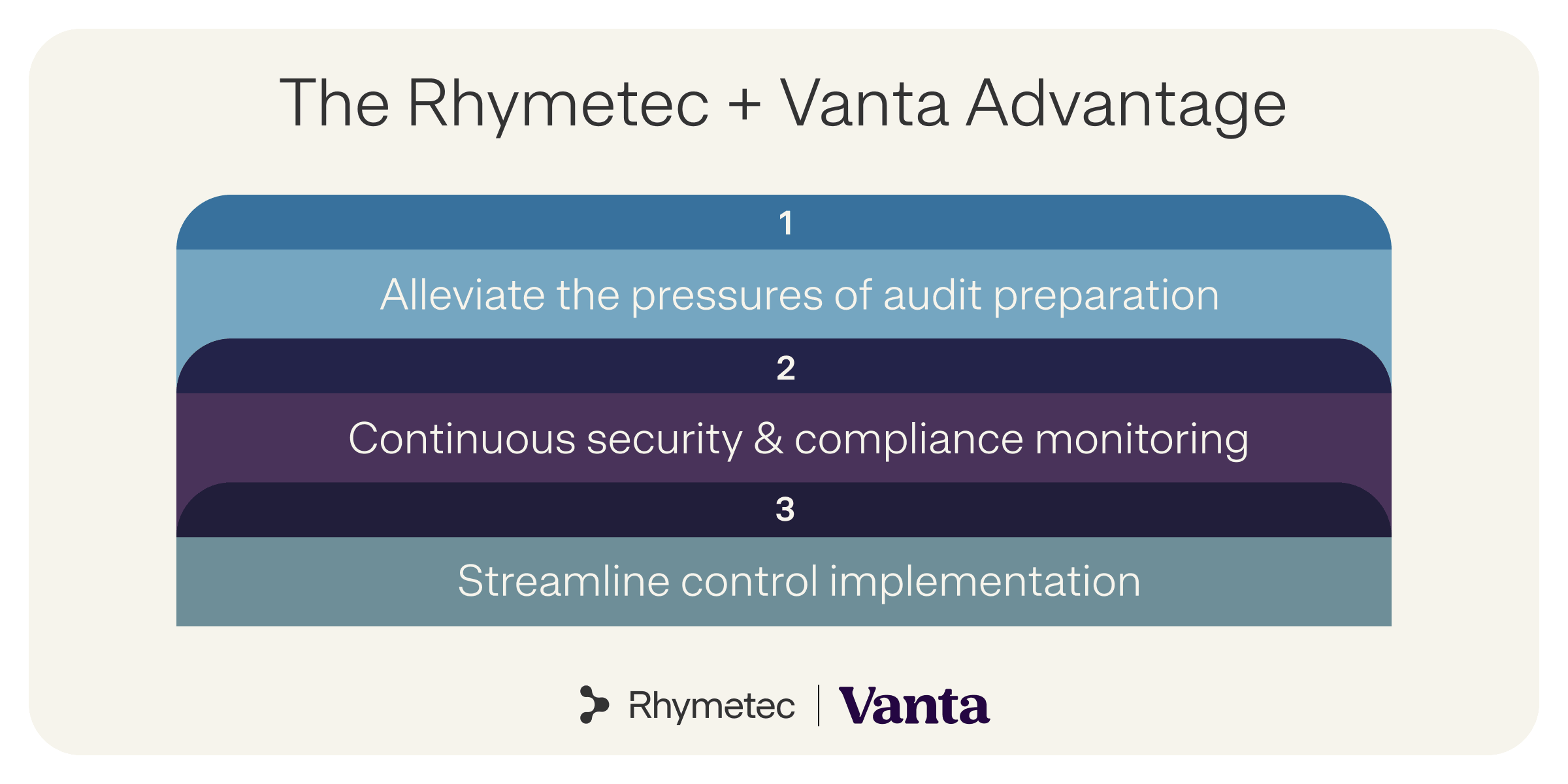
1. Reduce the burden of audit preparation
Vanta provides a centralized source of truth for compliance, helping organizations organize evidence, monitor controls, and track audit readiness. Rhymetec ensures the required documentation, evidence, and manual activities are addressed and manages the audit preparation process using Vanta as a central platform.
2. Maintain continuous security and compliance
Vanta's automation and continuous monitoring capabilities help organizations maintain visibility into their compliance posture between audits. Rhymetec's vCISO and compliance services provide the ongoing security guidance, remediation support, and questionnaire assistance needed to maintain and mature your program as your business evolves.
3. Streamline control implementation with Vanta
Rhymetec implements the controls required by your selected compliance framework and aligns them to your organization's actual environment and operations. Vanta supports this process through system integrations, automated evidence collection, continuous monitoring, and visibility into areas that require attention.
Together, Vanta and Rhymetec provide an integrated approach to compliance that combines automation with hands-on expertise, reducing the administrative burden on internal teams while keeping your program moving forward.
Our team at Rhymetec leverages Vanta to transform compliance from a complex challenge into a strategic advantage for your business. Over the last decade, we've helped over 1,000 companies around the world meet their security and compliance goals.
With our joint services, you can:
Our Vanta compliance services
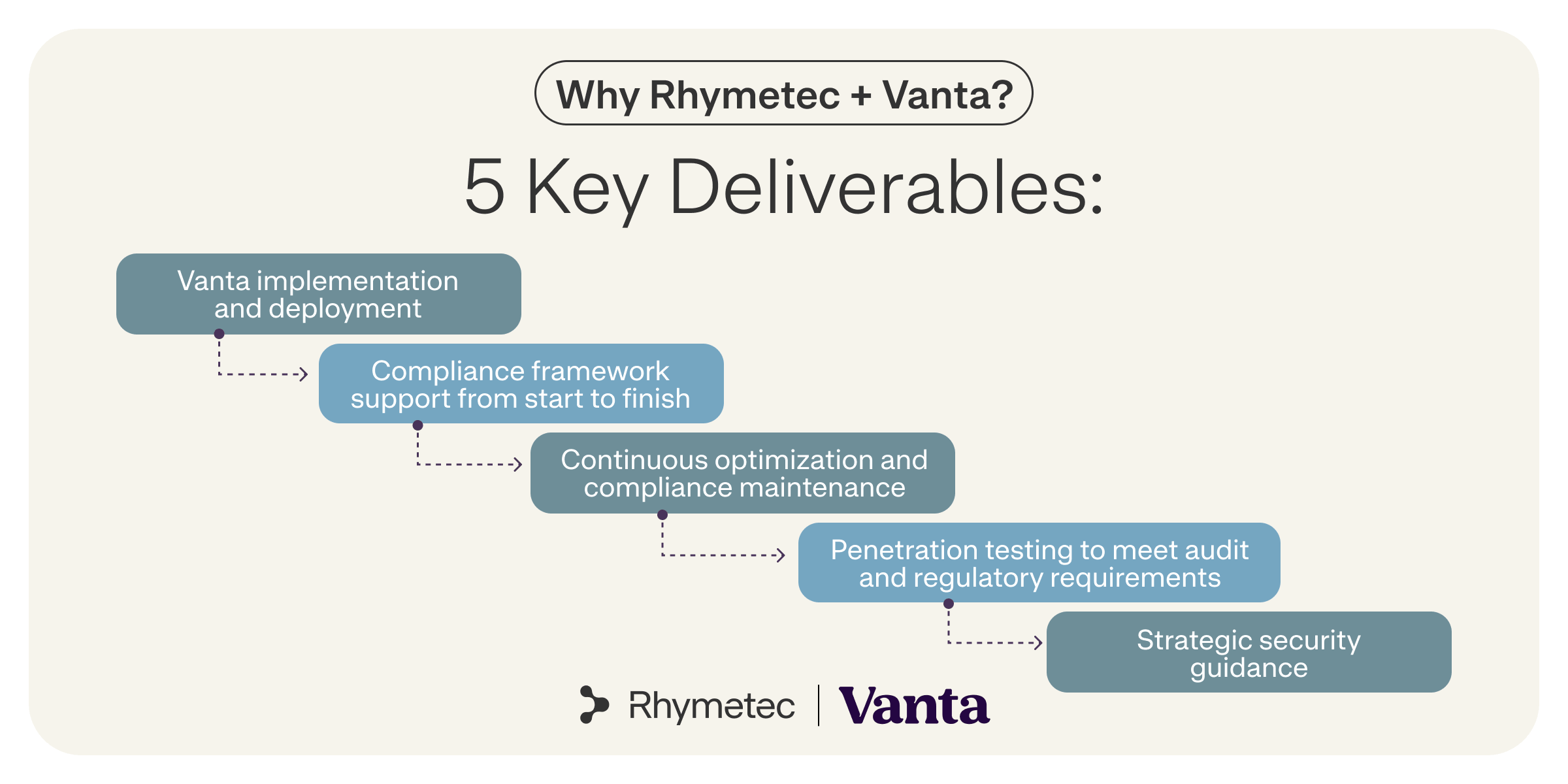
Vanta implementation and deployment
Vanta automates more than 90% of compliance work through 300+ integrations, continuous control monitoring, and automated evidence collection.
Rhymetec configures and deploys Vanta on your behalf, integrating the platform with your infrastructure to maximize its automation capabilities. We connect relevant systems, establish automated workflows, and configure policies and controls around your organization and selected compliance framework.
With Rhymetec managing Vanta deployment, your team can avoid the complexity of configuring integrations and building the platform from scratch. From the initial setup forward, we establish a reliable compliance foundation and reduce the burden on your internal resources.
Compliance framework support from start to finish
Vanta provides pre-built content and controls for 20+ major frameworks and standards, including SOC 2, ISO 27001, HIPAA, and GDPR. The platform helps automate scoping, evidence collection, monitoring, and document management while providing a foundation for policy and control management.
Rhymetec aligns these automated capabilities with your business needs and selected framework, handling the work that requires human judgment and implementation. This can include internal audits, tabletop exercises, risk assessments, penetration testing, evidence preparation, policy development, and remediation.
Managing compliance without dedicated expertise can result in missed requirements, ineffective controls, or unnecessary work. By managing the full compliance process, Rhymetec helps reduce uncertainty, accelerate readiness, and ensure your program is appropriately aligned to auditor and regulatory expectations.
Continuous optimization and compliance maintenance
Vanta's continuous monitoring identifies failing controls, missing security measures, and other changes that may affect your compliance posture. Automated notifications and remediation workflows help surface issues and keep them moving toward resolution.
Rhymetec oversees these findings, interprets their impact, and performs or coordinates the manual remediation required to address them.
Ongoing compliance requires more than preparing for an annual audit. With Rhymetec managing continuous monitoring and remediation alongside Vanta's automation, your organization can maintain visibility into its security posture, reduce compliance drift, and address gaps before they become larger issues.
Penetration testing to meet audit and regulatory requirements
Many voluntary frameworks and regulatory requirements include expectations around penetration testing and security testing.
SOC 2, PCI DSS, ISO 27001, CMMC, and HIPAA include requirements related to testing security controls, networks, applications, or systems. Regulations such as GDPR and CCPA also emphasize appropriate technical and organizational security measures to identify and address vulnerabilities.
Rhymetec began as a penetration testing company in 2015. Today, our penetration testing services help organizations meet security and compliance requirements while strengthening their overall security posture. We provide detailed reports of findings and practical remediation recommendations, helping organizations address vulnerabilities before an assessment or audit.
We offer a range of penetration testing services to support different security and compliance requirements, including mobile application and web application penetration testing.
Strategic security guidance
Vanta's capabilities streamline core areas of security and compliance, including risk management, access reviews, vendor security assessments, and security questionnaires. The platform accelerates workflows and provides visibility into the state of your compliance program.
Rhymetec's team provides the expertise required to interpret those findings, implement security best practices, and align controls to your organization's unique risk profile and risk appetite.
Effective security and compliance programs must reflect how an organization actually operates. Rhymetec combines Vanta's automation and integrations with hands-on security expertise to build programs that address regulatory requirements while supporting operational efficiency and long-term business growth.
Why Rhymetec?
Transparency
We believe clients deserve clarity around what they're getting, how we work, and the results they can expect. From our methodologies and testing scope to the technologies we use, we provide visibility throughout the engagement.
Autonomous
As a self-funded company, Rhymetec has the independence to make client-focused decisions quickly and adapt our services to meet each organization's needs. Our independence allows us to focus on what matters most: delivering meaningful security and compliance outcomes for our clients.
Team credentials
Our team holds a broad range of industry-recognized certifications, including Burp Suite Certified Practitioner, CISSP, EC-Council CHFI and CPENT, Offensive Security certifications including OSE3, OSED, OSEP, OSWA, OSWE, and OSCP, CompTIA Security+, PECB Internal Auditor certifications, and more.
Market maturity
Founded in 2015, Rhymetec brings more than a decade of specialized cybersecurity and compliance experience to every engagement. Our team understands the practical challenges organizations face when building security programs, preparing for audits, and meeting evolving compliance requirements.
Frameworks supported by Rhymetec's Vanta compliance services
Achieve compliance readiness with Vanta's automation and Rhymetec's hands-on security expertise. Together, we streamline control implementation and manage the work required across the compliance lifecycle.
Rhymetec supports a broad range of frameworks and standards, including the following:
SOC 2
Vanta automates control monitoring, policy management, and evidence collection for SOC 2, reducing the manual effort required to prepare for an audit. Because SOC 2 allows flexibility in how controls are designed and implemented, organizations still need to determine how requirements apply to their specific environment.
Rhymetec ensures automated controls are appropriately scoped, addresses gaps through manual activities such as risk assessments and penetration testing, and guides your team through audit readiness.
ISO 27001
Vanta helps accelerate ISO 27001 readiness through automation across areas such as risk management, asset and system inventory, evidence collection, and document management.
ISO 27001 also requires organizational processes and ongoing activities that extend beyond automation, including internal audits, risk treatment, and continual improvement. Rhymetec manages these components, develops and refines policies, and aligns your Information Security Management System (ISMS) with your organization's risks and operations.
GDPR
Vanta supports GDPR compliance through capabilities such as access reviews, vendor risk assessments, security monitoring, and evidence management.
GDPR also requires legal, privacy, and operational processes that cannot be addressed through automation alone. Rhymetec supports activities such as data mapping, Data Protection Impact Assessments, incident response planning, privacy policy development, and data processing agreements to help align your program with applicable GDPR requirements.
HIPAA
Vanta supports HIPAA compliance by monitoring technical safeguards, access controls, security policies, and related evidence.
For administrative safeguards that require organizational processes and human oversight, Rhymetec helps implement and refine areas such as employee training, documented risk management procedures, and business associate agreements. Our team also provides guidance on regulatory expectations and how they apply to your environment.
PCI DSS
Vanta helps organizations monitor security controls and identify gaps related to PCI DSS requirements. Rhymetec addresses the technical and operational components that require hands-on expertise, including penetration testing, network segmentation, vulnerability management, and required security assessments.
By combining Vanta's automation with Rhymetec's technical security expertise, organizations can address PCI DSS requirements efficiently while establishing a sustainable approach to ongoing compliance.
CMMC
Vanta helps streamline CMMC compliance by automating areas such as security control monitoring, evidence collection, and access reviews.
CMMC requires organizations to implement and maintain a broad set of security practices across areas including access control, incident response, risk management, system and communications protection, and more. Rhymetec's team provides hands-on support to implement the necessary security measures, develop documentation such as System Security Plans, establish incident response processes, and address third-party risk management requirements.
FedRAMP 20x
FedRAMP 20x represents a significant modernization of the federal cloud security authorization process, introducing a more automation-ready approach built around measurable Key Security Indicators (KSIs). For cloud service providers pursuing federal business, understanding how these requirements apply to the organization's environment is an important first step toward readiness.
Vanta supports FedRAMP 20x with automated evidence collection, continuous testing, KSI-mapped controls, centralized workflows, and machine-readable outputs designed to support the FedRAMP 20x certification process.
Rhymetec complements these capabilities with hands-on security and compliance expertise. Our team helps organizations interpret requirements, assess readiness, address security gaps, implement required controls, develop documentation, and prepare for independent assessment.
Additional frameworks supported by Rhymetec and Vanta
Beyond the frameworks listed above, Vanta and Rhymetec support a range of other compliance frameworks and standards. These include ISO/IEC 42001 for AI management systems, DORA for financial sector digital resilience, HITRUST CSF for healthcare security, NIST AI RMF for AI governance, the California Consumer Privacy Act (CCPA), and other global and industry-specific standards.
For the framework or frameworks you select, Rhymetec combines Vanta's compliance automation with hands-on security and compliance expertise to streamline readiness, strengthen your security operations, and establish a program designed for long-term maintenance.
Ready to simplify your Vanta compliance journey?
Compliance should support your business objectives without creating unnecessary operational burden.
Rhymetec combines Vanta's automation with experienced cybersecurity and compliance professionals to manage the work required to build, maintain, and mature your compliance program.
Contact Rhymetec to learn how Vanta and our compliance services can support your organization's security and compliance goals.
As technology, software, and AI become deeply ingrained in our everyday operations, cybersecurity threats are evolving at an unprecedented pace. The need for proactive, strategic cybersecurity leadership has never been greater. The role of the vCISO, or Virtual Chief Information Security Officer, has emerged to meet this demand.
But what is a vCISO, and what do they do exactly?
In this guide, we'll break down the roles and responsibilities of a virtual CISO and help you decide if hiring one is the strategic move your business needs to stay secure and compliant.
What is a vCISO?
A Virtual Chief Information Security Officer (vCISO)—often referred to as CISO as a service—is a highly skilled cybersecurity executive hired to manage and lead an organization’s information security program remotely or on a contract basis. A vCISO provides top-tier cybersecurity expertise, strategic guidance, and hands-on support without the overhead required for a full-time, in-house CISO. Typically, a vCISO acts as a fractional member of an organization’s executive team, working closely with the board of directors, executive management, and any internal security personnel.
vCISOs are armed with a deep understanding of business objectives, modern cloud-native architectures, and compliance standards, helping to bridge the gap between technical execution and business strategy. They help organizations develop intelligent security strategies, establish continuous monitoring controls, assess and manage risks, and ensure regulatory compliance.
Traditionally, organizations relied exclusively on in-house CISOs to manage their security posture. However, with the rapidly changing landscape of AI-driven cyber threats, along with the complex compliance demands of modern businesses, the flexible, scalable vCISO role has become a critical asset.
What Does a vCISO Do?
Acting as the anchor between strategy and execution, a vCISO wears multiple hats—advisor, strategist, and guardian—to ensure an organization's digital assets remain impenetrable and compliant with strict security and privacy regulations.
Every organization has unique cybersecurity and compliance requirements. Depending on the level of support required, a vCISO typically performs a strategic combination of the following tasks:
- Strategic Security Planning: At the heart of a vCISO's responsibilities is devising a security strategy that aligns with your business goals. By assessing your technology stack, business demands, and data security requirements, a vCISO identifies vulnerabilities and architects defense mechanisms to keep the business resilient.
- Risk Assessment and Management: Virtual CISO services include conducting thorough risk assessments, prioritizing threats, and crafting detailed mitigation plans rooted in industry best practices and global telemetry.
- Compliance and Regulatory Oversight: With global data protection regulations constantly shifting, and complex new AI frameworks emerging, companies must stay vigilant. A vCISO ensures your organization is not only compliant with privacy standards like GDPR today but is also prepared for recent regulatory changes, stricter data governance, and the frontier of AI compliance, such as navigating the EU AI Act or achieving ISO 42001 certification.
- Incident Response Management: A vCISO ensures you have a robust incident response plan ready. When a threat materializes, they take charge, manage the crisis, and minimize operational damage.
- Security Awareness Training Programs: Cybersecurity isn't just about tools; it's about people. A vCISO fosters a security-first culture, organizing regular training so every team member acts as an active line of defense.
- Addressing Stakeholder Security Requests: B2B organizations need to prove a solid security posture to win new business. A vCISO assists in these high-stakes conversations, tackling lengthy security questionnaires to speed up the sales cycle, attract investment, and build absolute trust with potential clients.
"At its core, cybersecurity... will be about establishing and maintaining trust. This includes demonstrating to customers, regulators, and internal stakeholders that the organization in question consistently upholds its controls. Trust will become a competitive differentiator."
— Justin Rende, Founder and CEO of Rhymetec
The 6 Cybersecurity Trends That Will Shape 2026
What Are The Advantages of Hiring a vCISO?
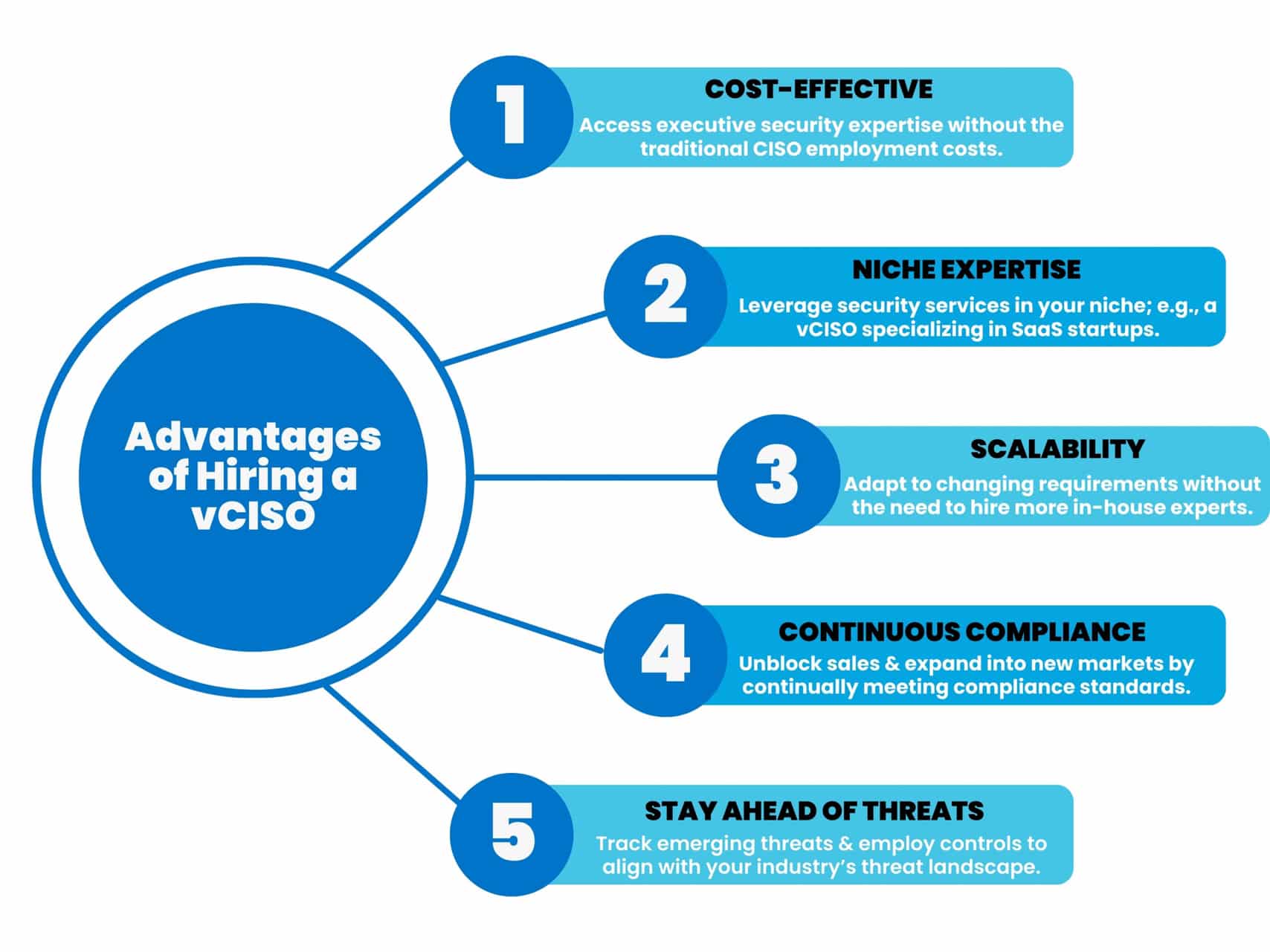
Cost-Effective Expertise
Startups and Small to medium enterprises can't always afford the multi-six-figure salaries of top-tier CISOs. A vCISO provides the exact same executive-level expertise without the traditional employment costs and overhead.
Unbiased Advice
External vCISOs come to your organization without legacy biases or internal politics. Their fresh, objective perspective can unveil vulnerabilities that an internal team might overlook.
Extensive Experience
An in-house CISO generally focuses on a single environment, while a vCISO manages a diverse portfolio of clients across various industries. Having navigated the hurdles that other businesses face at different growth stages, a vCISO is able to use their past expert experience to foresee and prevent issues long before they impact your operations.
Niche Expertise
Many vCISOs specialize in a particular sector. For example, Rhymetec primarily works with SaaS companies and startups. We have current, firsthand experience solving the exact compliance and data privacy issues facing cloud-native organizations.
Scalability and Flexibility
A startup’s cybersecurity requirements are vastly different from those of an enterprise, and your security posture must scale rapidly alongside your revenue. vCISOs allow for true scalability, adapting to your changing requirements without the need to continuously expand your in-house headcount.
Rhymetec client, Orum, a live-conversations platform experiencing hyper-growth. Orum handles vast amounts of client CRM data to power their AI-driven dialing technology. They needed an adaptive security co-pilot to help their solo internal security expert achieve SOC 2 Type 2 compliance, unlocking enterprise-level sales opportunities, and lay the groundwork for ISO 27001 to support international expansion.
Rather than slowing down to hire more full-time staff, Orum leveraged a Rhymetec vCISO. This provided them with tailored security services and expertise that offered full-time expert guidance during critical audit windows and part-time maintenance in between.
"We were moving fast, and I needed someone to move fast with me. Leveraging your services has helped me speed up, not slow down."
— Rolland Miller, Vice President of Security and Compliance, Orum
Access to Highly Skilled Mentorship
With a vCISO, businesses tap into a wealth of strategic knowledge that can mentor and elevate the existing IT and security staff.
Signs a vCISO is Right for Your Business
Deciding between a full-time CISO and a vCISO can be challenging. Based on our experience, here are the core indicators that a vCISO is the right choice:
- Your budget can’t accommodate a full-time CISO: If your budget doesn’t have room for an executive salary plus overhead, a vCISO is your smartest bet for securing top talent efficiently.
- You only need help with a specific task or framework: If your goal is strictly to implement a specific compliance framework (like SOC 2 or ISO 27001), hiring a fractional CISO is far faster and more efficient than onboarding a new executive.
- Your team needs cybersecurity mentorship: If your employees don’t need a full-time manager but could benefit from the strategy, goal-setting, and operational mentorship of an expert, a vCISO is a highly effective way to develop your team.
- You need an expert to get you started: Building an InfoSec program from scratch is a massive undertaking. Because vCISOs build security programs continuously for multiple organizations, they bring a level of speed and efficiency that traditional CISOs cannot.
- You don’t have enough work for a full-time CISO: If you’re unsure if you have 40 hours of executive security work a week, hiring a vCISO to assess your needs and lay the groundwork is a smart way to make the decision.
- You’re an early-stage startup: Startups benefit immensely from vCISOs because the services scale precisely with the company's trajectory.
"One strategy tech leaders can use to maximize digital transformation outcomes is to automate wherever possible. By embedding automation into repetitive or manual processes... leaders can dramatically cut hours spent on a process, reduce errors and redirect talent to higher-value initiatives. Smart automation amplifies impact without adding headcount or overspending."
— Metin Kortak, CTO, Rhymetec
Digital Transformation: How To Drive High Impact With A Low Budget
vCISO vs CISO: What’s the Difference?
A vCISO is a seasoned expert who offers strategic guidance and leadership on a fractional basis. A CISO is a traditional, full-time employee who works exclusively for one organization on-site. The vCISO approach gives modern companies the flexibility to access world-class cybersecurity strategies and leadership without the massive salary and overhead of a full-time executive.
Why Are vCISOs Becoming So Popular?
The barrier to entry for cyberattacks is lowering due to AI, while global data privacy regulations are only getting stricter. Today, cybersecurity is a board-level priority, especially as modern startups build exclusively in cloud-native architectures where continuous monitoring is the default.
Despite this urgency, the cybersecurity workforce is facing a massive talent gap. Recent ISACA reports show that over half of organizations feel understaffed in cybersecurity professionals and struggle to retain qualified talent.
When you combine sophisticated threats, complex compliance requirements, and a global talent shortage, it’s clear why the demand for vCISOs is skyrocketing. A vCISO bridges the talent gap by acting as an intelligent co-pilot, offering defense mechanisms that are effective, adaptable, and completely aligned with the future of digital trust.
Looking for a vCISO? We can help.
Contact Rhymetec to learn how our vCISO services can help you build a bespoke security program, navigate emerging frameworks, and win enterprise trust, all without the overhead of a full-time executive hire.
In 2025, more companies than ever before are budgeting for ISO 27001 certification costs. In a recent ISO survey, the global number of ISO 27001 certificates reached over 70,000 certificates and were reported in 150 countries and across a range of economic sectors.
Many of these certifications are driven by customer demand and procurement requirements, in particular in fields such as B2B SaaS.
Understandably, cost is often one of the most important questions companies exploring their compliance options have. ISO 27001 is a bit more involved than other frameworks in this space, such as SOC 2, as it requires a broader set of security controls and third-party requirements.
External audit costs, internal resource time, implementing technology changes at your organization, and ongoing maintenance all factor into ISO 27001 certification costs. Without a clear breakdown, it can be easy to underestimate both the initial investment and the ongoing effort.
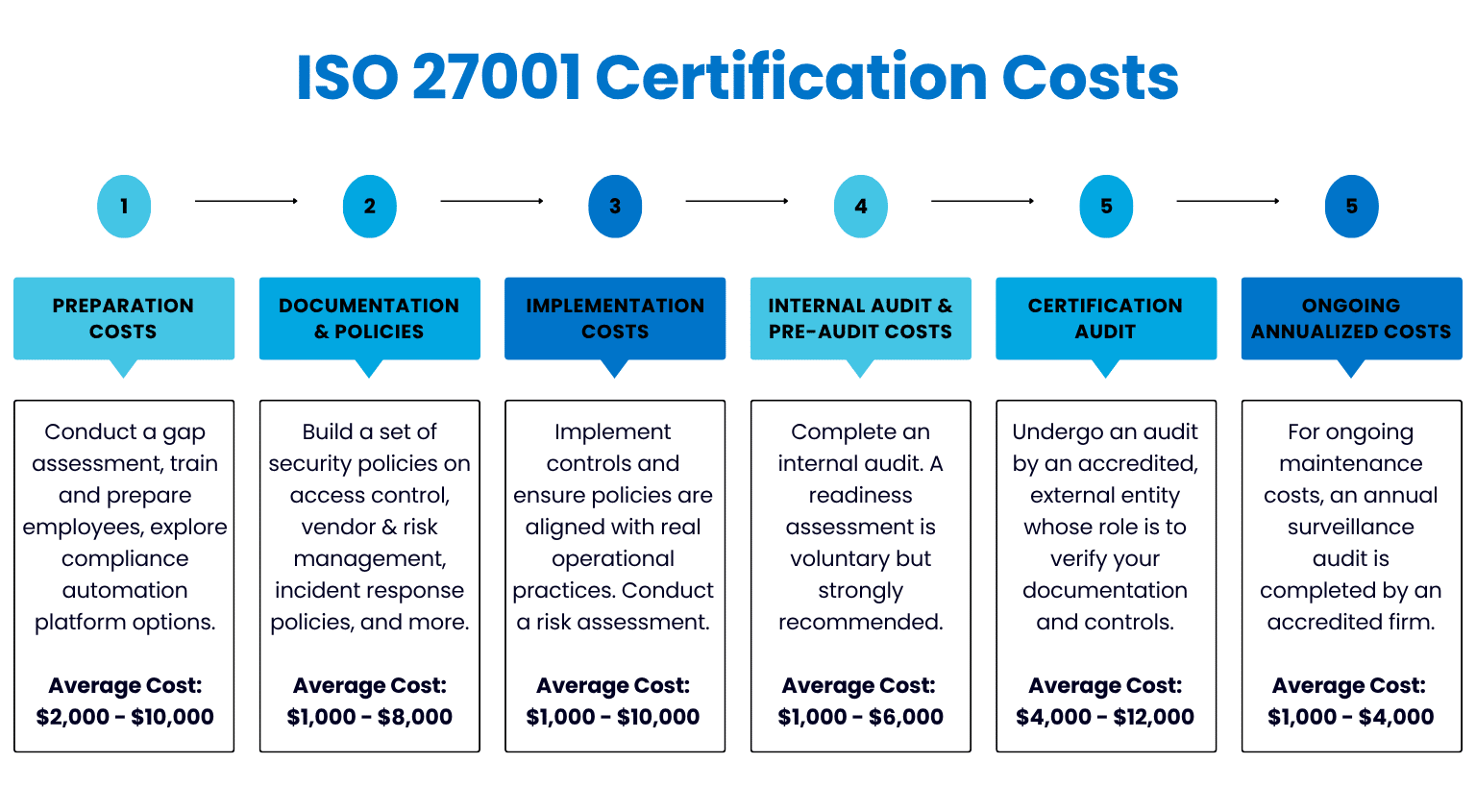
This blog outlines what to expect for ISO 27001 certification costs, based on current market data, our team’s firsthand experience working with SaaS startups, and input from certified auditors we work closely with.
Preparation Costs
Preparation costs for ISO 27001 represent a substantial part of the overall investment. Before engaging a registrar (an accredited certification body), your organization must complete a range of activities that require time, resources, investing in new technologies, and, in many cases, external support.
Typically, the first step of an ISO 27001 engagement is a gap assessment. A gap assessment shows where you are versus where you need to be by identifying missing controls and policy gaps in comparison to the ISO 27001 standard. Companies may complete this assessment internally or work with a third-party consultant for greater objectivity and expertise (if you don’t have in-house personnel with compliance experience).
Following the gap assessment, staff training and security awareness are typically the next steps.
Every employee needs to understand their role in protecting both company and customer data. Your organization will likely need to develop new onboarding materials, invest in employee training sessions, and plan targeted training sessions for engineers and leadership.
The adoption of new software for compliance is often included in the preparation phase. Startups in rapid phases of growth typically select to use tools like Drata or Vanta to automate the pieces of compliance that can be automated, and keep track of their progress in one central place.
These tools support policy management, control tracking, evidence collection, audit preparation, and more. These platforms can vastly simplify the compliance process, but they do entail an investment. Check out our blog post on compliance automation platforms for more information on how these tools work and how they accelerate compliance.
Each one of these preparation activities helps to create a foundation for a successful certification process. Companies that invest early on in assessments, training, and new technologies tend to move through the audit with greater efficiency and fewer surprises. While the cost ranges vary, the effort spent up front directly impacts how much time and work will be needed later on.
Estimated Total Cost of Preparation: $2,000 - $10,000
ISO 27001 Certification Cost: Documentation and Policy Development
ISO 27001 requires formal documentation of the Information Security Management System (ISMS), including your policies and procedures. Documents are reviewed during the audit and must align with how your organization operates in practice.
For this step, most companies begin by building out a core set of policies around access control, vendor management, risk management, acceptable use policies, incident response policies, and asset management. Policies must reflect actual practices and responsibilities that are implemented.
While templates can be used to accelerate this step, customization specific to your organization is important. This is a good example of where using a compliance automation tool (such as Vanta or Drata) in combination with working with an expert security and compliance professional (such as our vCISOs at Rhymetec) can be extremely helpful:
The compliance automation tool provides an excellent baseline, while a dedicated team can customize documentation and policy development to your organization in a way that will pass scrutiny during your audit.
Some companies choose to adopt a full ISMS documentation toolkit or policy automation platform. Although optional, these tools simplify everything from version control to auditor access and stakeholder review, but they do come with additional software costs.
Your documentation will be one of the most scrutinized aspects of your ISO 27001 audit. It’s critical to adequately plan out enough time and resources to draft, review, and align policies with actual practices. Building out your policies with day-to-day operations in mind can help streamline the audit process while supporting long-term security and compliance.
Estimated Cost of Documentation and Policy Development: $1,000 - $8,000
Implementation Costs: Building The Framework
Once documentation is drafted, the next step is to begin actually implementing the controls required by ISO 27001.
The most critical piece of this phase is making sure your policies are aligned with real operational practices. Additionally, at this stage, you will assign responsibilities and validate that controls work as they are meant to. Costs can also add up during the implementation phase from technology upgrades you may need.
Conducting a risk assessment and documenting a plan to mitigate any identified risks is also a key part of this stage. Many companies choose to circumvent the need to acquire new technologies and dedicate internal resources by engaging a vCISO (Virtual CISO). At Rhymetec, our vCISOs take the implementation work off your plate and accomplish these items for you.
Estimated Implementation Costs: $1,000 - $10,000
Internal Audit and Pre-Audit Expenses
Before undergoing your certification audit, you’ll need to complete an internal audit.
In many cases, organizations will outsource this step to a firm specializing in pre-audit assessments (or, if you are already working with a vCISO, they will do this work for you!). Organizations with internal teams can manage this on their own, but many choose to work with outside consultants to speed things up and ensure objectivity. It’s important to note that it’s encouraged to find internal auditors who are PECB-accredited.
The pre-audit, or readiness assessment, is a voluntary but highly recommended assessment typically carried out by a consultant (such as a vCISO) or the certification entity. This serves to mimic your official audit, identifying areas of weakness and reducing the risk of non-conformity during your real audit. Costs during this stage also reflect the need to revise any discovered gaps, finalize your evidence collection, and coordinate between teams.
Estimated Internal Audit & Pre-Audit Costs: $1,000 - $6,000
Certification Audit Costs
After you’ve completed your ISO 27001 readiness work, the ISO 27001 certification audit is conducted by an accredited, external entity. The process is divided into two phases:
Phase 1 - Verifies your documentation.
Phase 2 - Verifies that controls are working as intended.
Costs depend primarily on organizational size, which region you are in, how complex your infrastructure is, and the level of risk associated with your operations. The total cost of the audit covers both of these phases. For startups or for SMBs with less than 100 employees, the audit typically takes anywhere from a few days to two weeks.
If areas of non-conformity are discovered during the audit, it may be necessary to undergo a follow-up audit after making changes. This can cost extra as well. Some auditing firms also tack on administrative costs, in addition to the baseline cost of the audit.
Estimated Cost For Accredited ISO 27001 Audit: $4,000 - $12,000
Ongoing Costs: Maintaining Your Certification
Once certification has been obtained, your organization must maintain the ISMS and undergo annual surveillance audits. This requirement generates a recurring set of compliance activities to be completed every year:
The annual surveillance audit is completed by an accredited firm. While less demanding compared to the original audit, it’s still an obligatory step. Your internal team or vCISO will manage updating documentation, risk remediation where needed, technical control updates, and more.
Additionally, every three years your organization will need to undergo a recertification audit, with costs similar to the initial audit. This is built into the overall ISO 27001 certification costs for ongoing maintenance.
Estimated Ongoing Costs (Annualized): $1,000 - $4,000
Additional Factors That May Influence Your ISO 27001 Certification Cost
While most organizations follow a similar certification process, a number of variables can influence total cost. The following factors will affect the duration of your audit, internal preparation effort, and the level of external support needed:
Company Size and Structure
Larger teams, companies with multiple office locations, or hybrid work environments tend to increase both the number of controls and the audit scope. Costs due to these factors add up in terms of time spent on audit activities, documentation, and coordinating with internal teams.
Level of Technical Complexity
Companies with custom infrastructure, multi-cloud environments, or proprietary platforms often require additional effort in terms of documentation and control verification. Auditors also need to spend more time reviewing technical evidence in these cases.
Systems and Vendors That Are In-Scope
The number of systems and third-party services included in the ISMS directly affects the depth and length of your audit. Most companies include at least a dozen vendors in their initial ISO 27001 scope.
Internal Experience Level
Companies without prior compliance experience will require a greater level of external guidance. Meanwhile, teams that are already familiar with SOC 2 or similar frameworks tend to move faster and are able to reduce external costs.
The controls required for ISO 27001 overlap with several other popular frameworks in this space. If you already have SOC 2, for example, your organization can leverage some of those requirements to meet some of the ISO 27001 requirements.
Auditing Body Selection
Certification bodies charge different rates and employ slightly different methodologies. Regional pricing differences, travel costs, and preferred audit partners can influence the final quote.
Total ISO 27001 Certification Cost
For most startups and SMBs, the full cost of ISO 27001 certification falls between $10,000 - $50,000. This covers everything from preparation, implementation, internal and external readiness assessments, the official audit, and the first year of ongoing expenses.
Companies building from scratch and managing the process on their own will fall toward the higher range, while companies that opt to engage external support (such as a vCISO) will see lower overall bundled costs, even if they are starting from scratch.
This cost is front-loaded in year one, with most of the budget being allocated before and during the initial audit. After certification, annual maintenance costs are typically much lower.
In Conclusion: Planning For ISO 27001 Certification Cost
ISO 27001 certification is a multi-phase effort that touches nearly every part of a company’s operations. The audit itself is just one part of the full cost. Preparation work, implementation of the ISMS, internal (and external) testing, and ongoing maintenance all contribute to the total budget.
Companies that plan early on and understand their internal capacity are better positioned to keep costs under control. For early-stage teams, the main drivers of cost are scope, control maturity, and whether you’re handling the work internally or bringing in outside help.
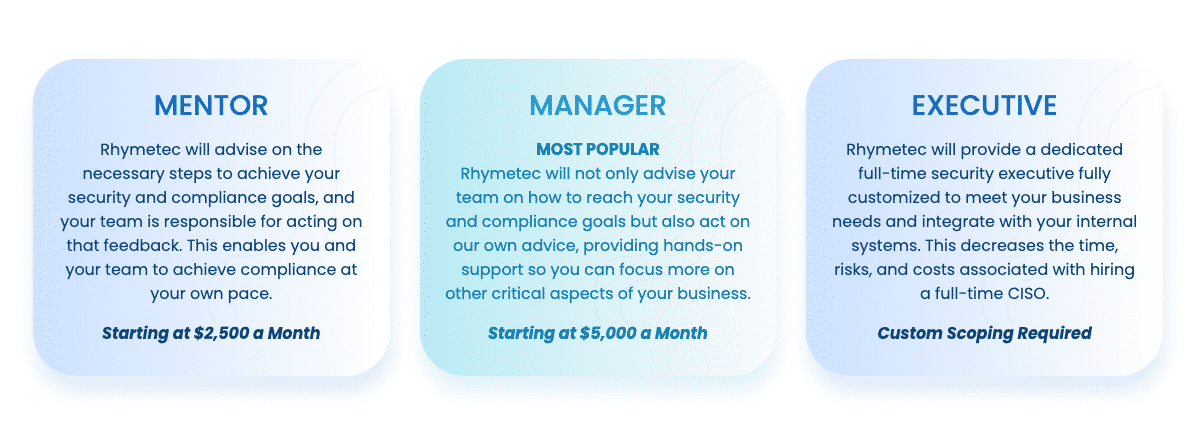
Most startups and small to mid-sized companies spend between $10,000 - $50,000, depending on how much needs to be built from scratch. Large corporations may spend over $100,000, depending on their industry and the complexity of their operations. At Rhymetec, our vCISO pricing depends on which tier of support you select:
Properly budgeting for ISO 27001 certification costs enables organizations to get certified while building sustainable security practices that scale as the business grows. Whether you are in the early stages of building your compliance program or if you have already started the work and feel stuck, our experts can assist. Contact us today to get started.
In this blog, we'll go over frequently asked questions about conducting a cybersecurity tabletop exercise, including how it works, why it's important for startups and SMBs, which voluntary and legal compliance requirements you need one for, and more.
What Is a Cybersecurity Tabletop Exercise?
You're sitting in a meeting with your leadership team, the IT lead, and a couple of personnel from operations. Someone kicks things off by saying, "Alright, here's the situation: You've just received an email from a threat actor claiming they've gained access to our production environment. They've encrypted customer data and are demanding a $50,000 ransom in the 48 hours. What do we do first?".
That's a cybersecurity tabletop exercise in action. A tabletop exercise allows your team to practice handling a cybersecurity incident without the actual crisis. Your team works through a realistic scenario step by step, discussing who's responsible for what and how decisions will be made. During the exercise, gaps in your existing plan and questions you need to answer going forward will likely surface:
Who decides if the ransom should be paid? What happens if legal or PR resources are tied up? Is your team ready to handle questions from customers or regulators?
These are the types of issues that otherwise may not come up unless you are in the middle of a real incident, but a tabletop exercise allows you to address them before they actually happen.

These exercises enable you to see how your team will react when/if you experience a real threat, based on your specific situation: Maybe your team has a strong technical foundation but hasn't worked out all the details for responding to an attack. Or maybe you're growing quickly, and roles like security and IT are spread across multiple people who wear a lot of hats.
Regardless of your situation, tabletop exercises strengthen your security posture by giving you a chance to run through various scenarios, fine-tune how to respond, and stress-test your existing processes.
They also need to be conducted to meet many voluntary and legal requirements. For this reason, they're especially critical for organizations seeking to land bigger clients or meet compliance requirements like SOC 2 or ISO 27001.
Why Do Startups and SMBs Need Tabletop Exercises?
Let's say your startup just landed a major client. Part of the contract includes a requirement to prove you can handle a security incident without putting their data at risk (or, they simply ask to see your SOC 2 report).
You've got your security policies written up, but when it comes to how your team would respond to a real incident, you need to make sure everyone is on the same page and that you have documented proof of your processes.
Enter the tabletop exercise.
Startups and SMBs often operate with lean teams, where people juggle multiple responsibilities. In a crisis, this reality can often cause confusion over who does what and how to make decisions. A cybersecurity tabletop exercise allows you to clarify responsibilities and builds confidence in your ability to respond to incidents.
Besides disrupting your daily business operations and creating downtime, an incident like ransomware or a data breach can harm the trust of your customers and hurt your ability to grow. Knowing how you'll respond greatly reduces that risk and helps minimize the fallout.
Compliance is another factor. Frameworks like SOC 2 require you to put your incident response policies and plan to the test, and tabletop exercises are an easy way to meet that requirement. Tabletop exercises are just as critical for startups and SMBs as they are for large enterprises.
For startups looking to scale, being able to demonstrate that you've done this makes a big difference when building trust with investors, partners, and customers.
Cybersecurity Tabletop Exercises and Compliance: SOC 2 and More
Under the SOC 2 Trust Services Criteria, tabletop exercises meet the incident response testing requirement of the security criteria (which is not amongst the optional criteria under SOC 2!). Criteria CC7.1 and CC7.2 require organizations to test out an incident response plan. Auditors will therefore ask to see evidence that you've actually put your plans to the test and don't simply have them written down as policies.
ISO 27001, often seen as the baseline for global security standards, also calls for incident response testing. Annex A.16.1.5 requires the periodic testing of information security incident response plans. Tabletop exercises are the simplest, most effective, and industry-standard way to satisfy this requirement.
PCI DSS Version 4.0, which applies to organizations that handle payment card data, also includes a specific requirement for incident response testing. Noncompliance with PCI DSS can lead to fines and additional transaction fees. Requirement 12.10.2 states that companies must "test incident response procedures at least annually". Again, tabletop exercises are the most straightforward and widely accepted way to meet this requirement.
For privacy regulations like GDPR and the California Consumer Privacy Act (CCPA), there are various stipulations around the importance of having processes in place to be ready in the event of a security incident.
For instance, GDPR's Article 32 emphasizes the need for "…a process for regularly testing, assessing and evaluating the effectiveness of technical and organisational measures for ensuring the security of the processing." While tabletop exercises aren't explicitly named, CCPA has similar expectations for businesses handling sensitive consumer information.
Putting your response to a security incident into practice through a tabletop exercise allows you to prove to auditors that you can meet these requirements.
Enterprise clients in particular will want reassurance that you can handle incidents without putting their data at risk. Many enterprise contracts (which can be used as either an alternative or an add-on to compliance by some organizations) also include requirements for incident response testing. This can be especially important if your organization handles sensitive data or will be integrating with an enterprise client's systems.
3 Ways MSSPs Support Tabletop Exercises for Organizations
Organizations often choose to work with a Managed Security Services Provider (MSSP) in order to guide them through tabletop exercises. Here are three ways MSSPs offer valuable support through this process while ensuring you meet compliance requirements:
1. Crafting Realistic Scenarios For Your Cybersecurity Tabletop Exercise
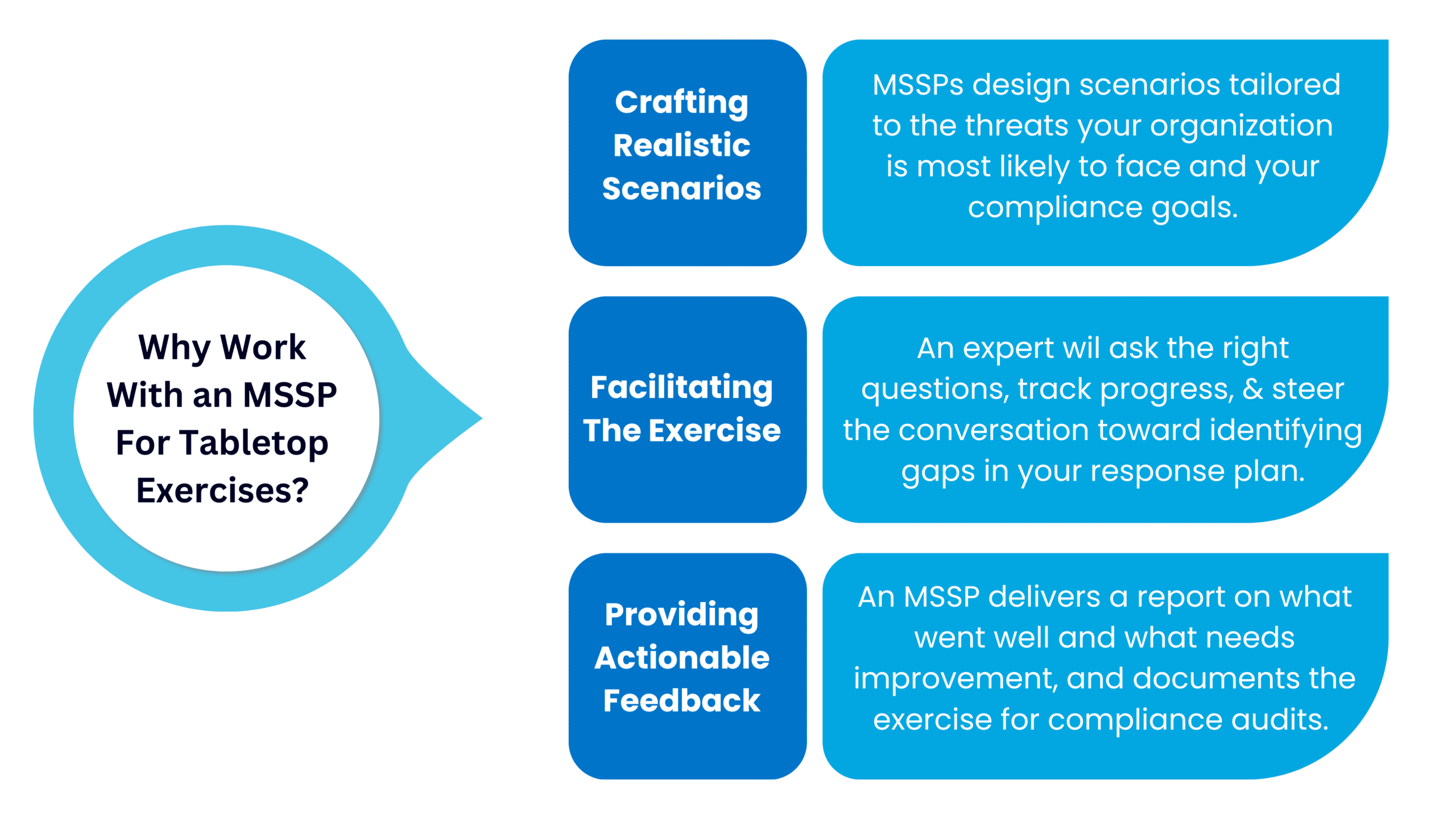
Creating a scenario that makes sense for your business is critical. MSSPs can design scenarios tailored to the threats your organization is most likely to face and your compliance goals.
For example, if your company handles customer payment data and you are trying to obtain PCI DSS compliance, the exercise may focus on a ransomware attack targeting your payment processing systems. If you're in SaaS, it could take the form of a simulated compromise of user accounts.
2. Facilitating the Exercise
To conduct tabletop exercises, you need a neutral facilitator to guide the discussion and keep the team on track. A security expert (such as a Virtual CISO, vCISO) at an MSSP can take on this role, asking the right questions, tracking progress, and steering the conversation toward identifying gaps in your response plan.
Working with an outside expert allows your team to engage in the exercise without worrying about having to run it themselves. They bring an outsider's point of view, which can enable you to gain insight into areas your internal team may overlook.
3. Providing Actionable Feedback
After the exercise, an MSSP delivers a report on what went well and what needs improvement. They can help you prioritize updates to your incident response plan and recommend additional security measures based on gaps uncovered during the exercise. They can also document the exercise for compliance audits.
Working with an MSSP provides access to expertise, allows you to strengthen your response capabilities without pulling your internal team away from their day-to-day work, and provides deliverables you can use to demonstrate your security posture to auditors and customers.
Getting Started: Partnering With Experts
Cybersecurity tabletop exercises can be used to meet a vast range of both legal and voluntary requirements, and having conducted them builds trust with your clients and prospects. They provide both the evidence auditors need and the confidence customers expect.
However, startups and smaller organizations may lack the resources or internal expertise needed to effectively run cybersecurity tabletop exercises. An external expert, such as a vCISO, solves this issue and provides specialized knowledge. At Rhymetec, our vCISOs have walked dozens of organizations through their tabletop exercises and provided reports that fulfill compliance requirements.
Check out details on our vCISO services to get started today if you are interested in conducting exercises for your organization.
About Rhymetec
Our mission is to make cutting-edge cybersecurity available to SaaS companies and startups. We've worked with hundreds of companies to provide practical security solutions tailored to their needs, enabling them to be secure and compliant while balancing security with budget. We enable our clients to outsource the complexity of security and focus on what really matters – their business. Contact us today to get started.
About the Author
Metin Kortak has been the Chief Information Security Officer at Rhymetec since 2017. He began his career working in IT security and gained extensive knowledge of compliance and data privacy frameworks such as SOC, ISO 27001, PCI, FEDRAMP, NIST 800-53, GDPR, CCPA, HITRUST and HIPAA. Metin joined Rhymetec to build data privacy and compliance as a service offering. Under his leadership, these offerings have grown to more than 700 customers, and the company is now a leading SaaS security service provider in the industry.
Interested in reading more? Check out more content on our blog.
The CISO as a service model allows organizations to reap the benefits of an in-house CISO without the need to make a full-time hire. This model can be particularly helpful for startups and small to mid-sized companies that need CISO-level guidance but may not have the resources or demand for a full-time executive. Feel free to contact our team for more information specific to Rhymetec's CISO services:
CISO As A Service: Definition
Terms like "Fractional CISO" and "vCISO" (Virtual CISO) are often used interchangeably with CISO as a service. They all refer to the same concept: Providing part-time or on-demand security leadership tailored to the needs of your business.
With this service model, companies can outsource the role of a Chief Information Security Officer (CISO) to an external expert rather than hire a full-time executive. Whether in-house or outsourced, CISOs provide the guidance and expertise needed to manage your security and compliance needs.
What Will Your CISO Do For You?
There is a vast range of services your CISO can provide, depending on your industry, your compliance needs, and the scope of service offered by the provider.
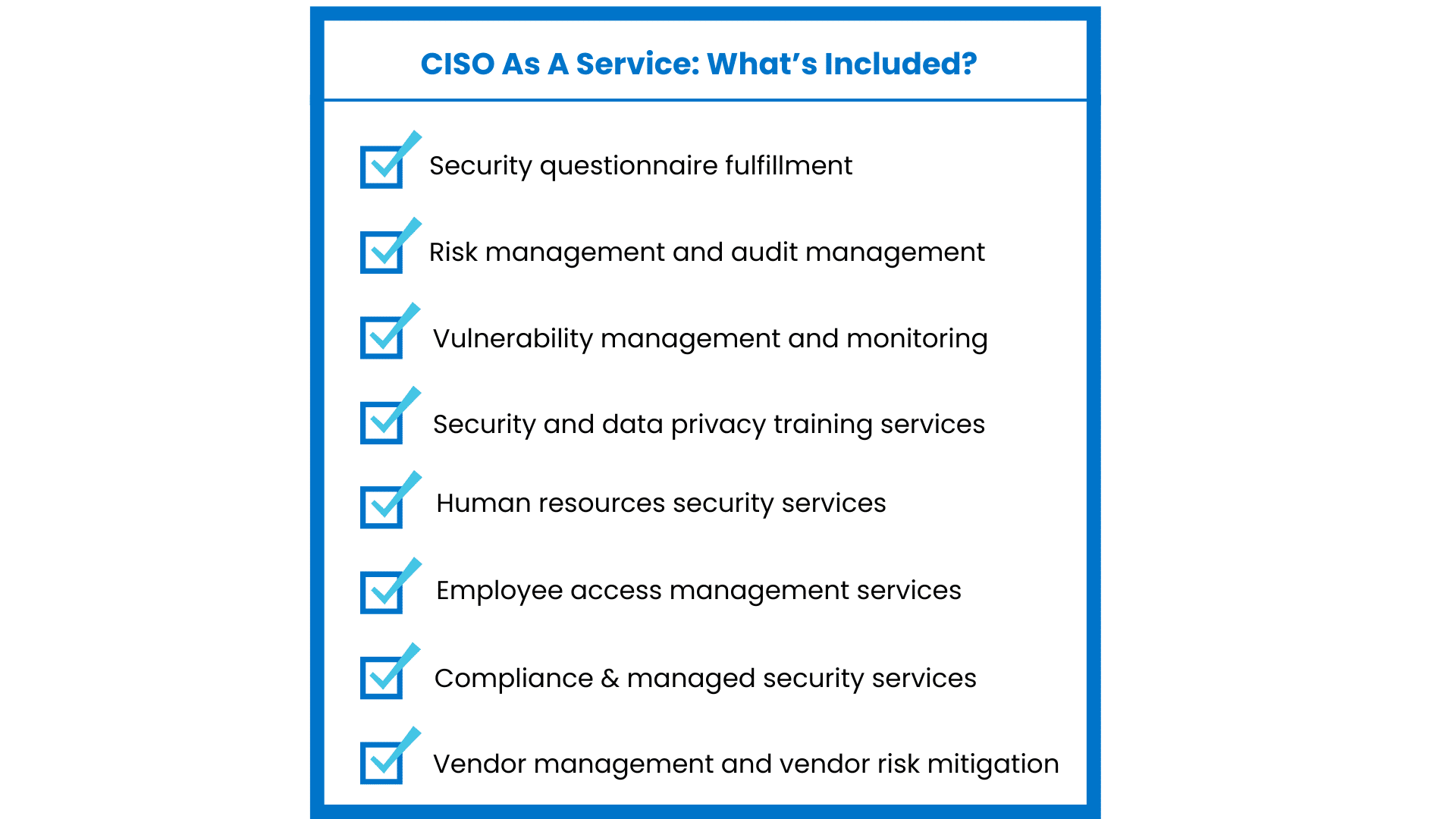
Here are just some of the services the CISO as a service model may include:
- Fill out security questionnaires on your behalf
- Risk management and audit management
- Vulnerability management and monitoring
- Security and data privacy training services
- Human resources security services
- Employee access management services
- Fully managed compliance and managed security services
- Vendor management and vendor risk mitigation
At Rhymetec, depending on which level of service you select, our CISOs will accomplish all of the above. We work with many organizations that leverage a compliance automation tool for their compliance needs. If using compliance automation, our team can help deploy it and enable you to maximize your use of your selected compliance automation platform.
For audits such as SOC 2, your CISO will create SOC 2 policies for you and help you select the right SOC 2 trust services criteria for your business. We will fully prepare you for audits that align with your industry standards, such as a PCI audit if relevant to your organization, and conduct gap assessments to identify areas for improvement.
For these items and more, your CISO acts as your go-to resource for all security, compliance, and data privacy matters.
Do You Need CISO As A Service?
If your organization lacks in-house security leadership or if you struggle to keep up with compliance requirements, CISO as a service could be just what you need. This model is ideal if you are:
- A startup without the resources for a full-time CISO hire.
- Under pressure to meet compliance goals and need to fast-track the process.
- Looking for a permanent CISO but need to fill the position temporarily.
- Experiencing rapid growth, expanding operations, or going through due diligence for funding rounds or go-to-market strategies.
Startups entering regulated marketplaces such as healthcare or finance often face pressure to be able to demonstrate their compliance through certifications and attestation reports. In these cases, a CISO helps you build a compliance framework from the ground up, so you can focus on your business.
If you're running a SaaS company and pursuing SOC 2 certification to meet customer demands, a CISO can guide you in setting up the right controls and policies. They can walk you through each phase of a SOC 2 readiness assessment, fully preparing you for your official audit.
For companies experiencing rapid growth and expanding operations, security risk and regulatory requirements change. A CISO can enable you to scale your security program in line with your business growth.
If you find you're handling frequent security questionnaires from clients or going through due diligence for funding rounds, a CISO manages these requests, lightening the load on your team and improving your security posture. If your company has experienced a security incident, a CISO can help develop incident response policies and prevent future breaches.
CISO As a Service Pricing Models
CISO as a service pricing depends on which model you select.
A project-based engagement (where your CISO will perform a one-time task such as a security audit or gap assessment) ranges from $10,000 to $50,000.
Hourly pricing, which may make sense for organizations that require occasional support but don't want a long-term contract, typically costs $200 - $500 per hour.
For a monthly retainer model, which provides the most comprehensive ongoing support and continuous access to your CISO, fees range from $5,000 - $20,000 per month.
For more detailed information on pricing models, how they compare to in-house options, and how Rhymetec structures our pricing, check out our vCISO Pricing blog post.
Job Requirements and Qualifications
A CISO should bring a strong blend of technical knowledge and leadership experience.
At a minimum, the vCISO role requires a deep understanding of security frameworks like SOC 2, PCI DSS, HIPAA, and ISO 27001, along with the ability to implement these standards across various industries. You should seek out someone who is well-versed in managing risk, developing security policies, and leading incident response efforts.
Beyond technical expertise, your CISO should also have strong communication skills to engage with both technical teams and business stakeholders. They'll need to be able to present security issues in a way that drives decision-making at the executive level. Experience leading tabletop exercises, phishing simulations, and security training is an important requirement for the job.
Lastly, a qualified CISO will typically hold certifications like CISSP, CISM, or CISA. A background in governance, risk, and compliance (GRC) and knowledge of regulatory requirements relevant to specific industries coupled with certifications poise them to manage the security challenges your organization faces.

Advantages of the CISO As a Service Model
CISO as a service is a popular option for several reasons.
The model offers many advantages, particularly for startups and companies experiencing rapid growth. It provides access to experienced security leadership without the cost of hiring a full-time executive. You get the expertise you need, tailored to your organization's size and budget.
Flexibility is another key benefit. You can scale the level of support as your business grows or as your compliance requirements change. This allows you to address security and compliance issues on demand without committing to a long-term, fixed-cost resource.
The CISO as a service model brings immediate benefits when preparing for audits or responding to client security requests. As previously discussed, you gain access to a broad range of security services, from policy development to incident response planning, all managed by a dedicated expert who prioritizes fitting security strategies into your unique business needs. An outsourced CISO also eliminates the risk of turnover and retention if bringing someone in-house and full-time.
Lastly, many CISO as a service providers will give you access not only to one highly skilled individual, but to an entire team of security experts with experience across a vast range of disciplines.
In Conclusion: Selecting the Right CISO As a Service Provider For Your Organization
By leveraging the CISO as a service model, you gain access to the security and compliance leadership needed to meet industry standards and client expectations without the overhead of building an internal security team.
Whether you need assistance developing a security program from the ground up, need help preparing for audits, or need guidance on how to respond to security incidents, a fractional or vCISO fills these needs perfectly without the commitment of a full-time hire.
If you have more specific questions, please feel free to contact our team:
About Rhymetec
Our mission is to make cutting-edge cybersecurity available to SaaS companies and startups. We’ve worked with hundreds of companies to provide practical security solutions tailored to their needs, enabling them to be secure and compliant while balancing security with budget. We enable our clients to outsource the complexity of security and focus on what really matters – their business. Contact us today to get started.
About The Author: Metin Kortak, CISO
Metin Kortak is the Chief Information Security Officer at Rhymetec. Metin began his career working in IT security and gained extensive knowledge of compliance and data privacy frameworks such as SOC 2, ISO 27001, PCI, FedRAMP, NIST 800-53, GDPR, CCPA, HITRUST and HIPAA. He joined Rhymetec to build data privacy and compliance as a service offering. Under Metin’s leadership, these offerings have grown to more than 200 customers, positioning the company as a leading SaaS security service provider in the industry.
This article goes over vCISO pricing models and services, how to choose the right option for your business, and how to make sure you receive the guidance and services you need without unnecessary expenditure.
For startups and SMBs, cybersecurity and regulatory compliance are challenges that demand expert attention. However, many organizations either lack the resources or don't need to hire a full-time Chief Information Security Officer (CISO) to meet their needs. A Virtual CISO (vCISO) offers a practical alternative, delivering high-level security leadership on a flexible, cost-effective basis.
Today, vCISO services are used not only by startups but also by enterprises that need executive-level security leadership without the full-time salary overhead. By partnering with an MSSP like Rhymetec, organizations of all sizes gain access to compliance expertise across SOC 2, ISO 27001, HIPAA, GDPR, and CMMC, plus global regulations like NIS2 and GDPR for European expansion.
vCISO Pricing Structures
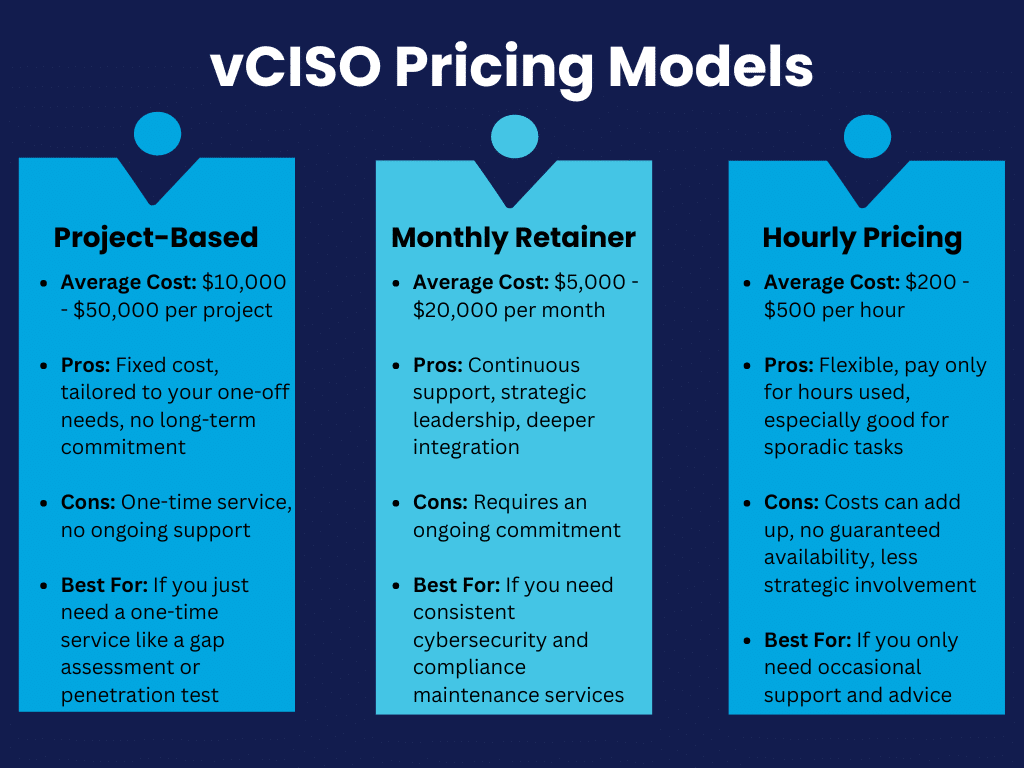
Let's go over the three main vCISO pricing structures and their average costs right off the bat:
Project-Based Pricing
Businesses often select this option if they need one-time tasks like security audits, risk assessments, or gap assessments. As you can probably imagine, the cost varies widely depending on the specific project.
As an estimate, project-based vCISO pricing ranges from $10,000 (for services like gap & risk assessments) - to $50,000 (prices can go up this high for things like penetration testing and compliance certifications).
This option is best for companies tackling immediate needs, such as preparing for a SOC 2 or HIPAA readiness assessment, or validating new cloud infrastructure security controls.
Hourly vCISO Pricing
Hourly vCISO pricing typically falls between $200 - $500 per hour. This option may be suitable for companies that need occasional expert input or are looking to address specific tasks without a long-term contract.
However, a major con of hourly pricing is that your hours may be capped on a weekly or monthly basis. This means that if you need extra support if something comes up, you may not be able to receive it on demand.
For example, Rhymetec’s Executive Tier provides what is essentially a full-time vCISO, fully integrated into your systems, offering audit preparation, vendor management, and direct collaboration with trusted auditors and partners such as A-LIGN.
Monthly Retainers
Monthly retainer fees typically range from $5,000 - $20,000 per month, depending on the level of service and the vCISO's involvement.
This pricing model allows you to have continuous access to a vCISO, offering the most comprehensive support. This benefits businesses that need ongoing direction and hands-on management of their infosec programs.
What Does The vCISO Role Entail?
A Virtual Chief Information Security Officer (vCISO) is a seasoned cybersecurity professional who provides the strategic leadership and services of a traditional CISO, but operates remotely and often on a part-time basis.
vCISOs work with businesses to develop and manage their security programs, maintain overall good security hygiene, and protect the company's data and systems. This role is particularly appealing to startups and SMBs that need expert guidance and support but without the full-time commitment or cost of an in-house CISO.
vCISOs assist with a wide range of services, including risk management, compliance with regulatory standards, incident response, and security policy development. Some Managed Security Services Providers (MSSPs), such as Rhymetec, offer comprehensive vCISO services that provide an elegant solution for businesses aiming to improve their security posture without the overhead of a full-time CISO.
In practice, a vCISO helps organizations evaluate risk, implement security frameworks, maintain audit readiness, and navigate changing regulatory environments. They often work hand-in-hand with compliance automation platforms for evidence collection and reporting, setting them up and leveraging them on your behalf.
What Are The Advantages of a vCISO vs. In-House Security?
For SMBs and startups, the choice between a vCISO and an in-house security team often comes down to three main considerations:
- Cost
- Expertise
- Flexibility
Hiring a full-time CISO can be prohibitively expensive, with salaries often exceeding six figures. Not to mention, there are the additional costs of benefits, training, and other resources required to support the role.
A vCISO, on the other hand, offers the expertise of a seasoned CISO at a fraction of the cost, often working part-time or on a retainer basis. vCISOs bring a breadth of experience from working with multiple clients across various industries, which can be particularly beneficial for smaller companies that may not have the resources to stay on top of the latest threats and regulatory changes.
For instance, Rhymetec's Executive Tier vCISO Service provides not just a dedicated vCISO, but also full integration with the client's systems, providing a level of support that rivals that of an in-house team. This allow startups and scaling enterprises to achieve enterprise-grade security without building costly in-house departments.
Factors Impacting vCISO Pricing
vCISO pricing can vary substantially depending on the scope of services, the requirements specific to your location and industry, and the complexity of your existing infrastructure. The broader the scope of services - such as adding compliance frameworks or expanding to full-time support - the higher the cost.
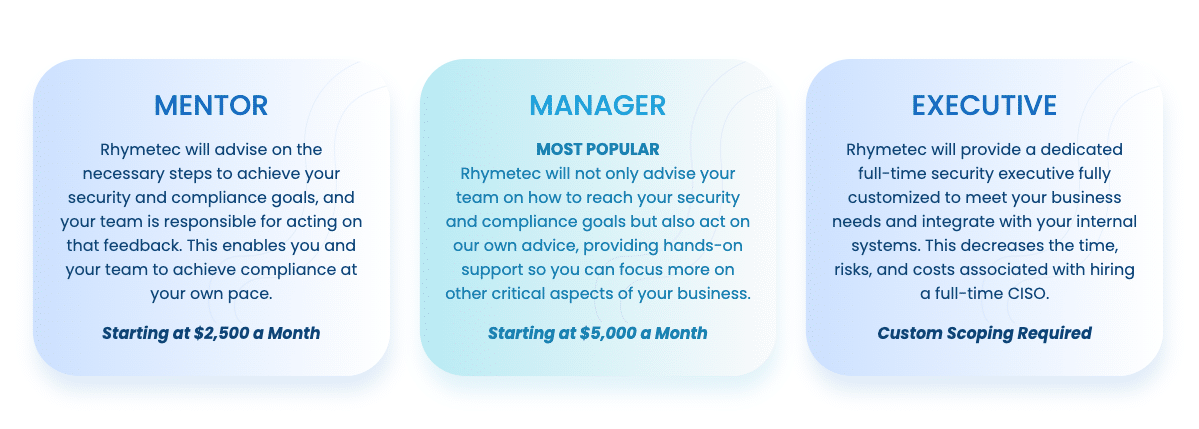
For example, Rhymetec's pricing structure adjusts based on the level of service required. Our Mentor Tier starts at $2,500 per month, which covers essential advisory services and assistance in maximizing your use of a compliance automation platform.
However, if a client needs additional services, such as manual security services to meet requirements under a framework like SOC 2 or align with new NIST governance requirements, the monthly fee increases by a minimum of $500. Companies in highly regulated industries may face higher costs due to the need for specialized expertise and more comprehensive services.
For instance, a vCISO can act as a CMMC consultant and help defense contractors navigate the requirements by determining which certification level applies to them and how to reach compliance efficiently. Many organizations begin by reviewing a CMMC Level 1 Checklist, but a vCISO builds on that by mapping the right controls and managing implementation. They help also clarify higher-level common doubts such as when CMMC versus FedRAMP is the right framework to pursue, since both can impact federal contracts.
Pricing Models for vCISO Services
As discussed previously at a high level, there are several common pricing models for vCISO services:
The most straightforward and popular option is a flat monthly fee. Businesses often find that this option allows them to budget more effectively and provides predictability. This model is often tiered, with different levels of service available depending on the company's needs.
Rhymetec, for instance, offers three tiers of service on a monthly basis: Mentor, Manager, and Executive. The Mentor Tier is ideal for startups and SMBs needing strategic guidance, while the Manager Tier adds more hands-on management of security and compliance.
The Executive Tier, with custom scoping, offers the equivalent of a full-time vCISO, including advanced services like penetration testing and vendor risk management:
Another model is an hourly-based arrangement, where the vCISO is available for a set number of hours per month. This model offers flexibility but can lead to variable costs depending on how much time is used.
Some providers also offer project-based vCISO pricing for specific initiatives, such as phishing training for employees, a security audit, gap assessments, penetration testing, or compliance certification.
vCISO Pricing Compared To In-House Options
Taking a look at the differences in vCISO pricing and in-house options reveals substantial cost savings:
The average salary for a full-time CISO can exceed $200,000 per year, not including bonuses, benefits, and investing in necessary resources. Companies often need to invest in ongoing training and potentially expand their IT team to support the CISO's initiatives.
In contrast, a vCISO from Rhymetec's Mentor Tier, as an example, costs a total average of $30,000 per year, with options to scale services as needed. Even the top-tier Executive service, which provides comprehensive, full-time support, is more cost-effective than hiring an in-house CISO, particularly when considering the added value of expert-level services that might otherwise require multiple hires!
Consider the average cost of the following positions:
Job Title (Salary range for an in-house full-time hire in 2024):
- CISO ($215,000 – $275,000 per year)
- Cloud Security Specialist ($110,000 – $150,000 per year)
- Application Security Specialist ($130,000 – $180,000 per year)
- Penetration Tester ($110,000 – $150,000 per year)
- Security Operations Analyst ($110,000 – $160,000 per year)
- Threat Intelligence Analyst ($80,000 – $140,000 per year)
- Governance, Risk and Compliance Specialist ($65,000 – $100,000 per year)
- Vulnerability Management Analyst ($100,000 – $165,000 per year)
SMBs and startups need the same level of expertise but not necessarily the same amount of work as large enterprises that spend millions of dollars on a security team with many highly specialized individuals.
Small businesses need the same level of experience but not necessarily the same amount of work. Many organizations choose to work with a Managed Security Services Provider with vCISO support precisely for this reason, as they fill this gap perfectly. At Rhymetec, our vCISO pricing model centralizes all of these skillsets under a single engagement, giving SMBs access to the same expertise as large enterprises without the payroll overhead.
vCISO Pricing & Scope of Work
When considering working with a vCISO, understanding the scope of work and exactly what will be delivered is crucial.
A typical vCISO proposal will outline the specific services offered, the frequency of engagements (such as weekly meetings or monthly reports), and the expected outcomes. Rhymetec's Mentor Tier includes weekly virtual meetings, gap assessments, and policy development, while the Manager and Executive Tiers expand the scope to include incident management, vendor management, and even penetration testing upon request.
The proposal will also detail if and how the vCISO will integrate with your existing team. In Rhymetec's Executive Tier, this includes not just virtual support but also on-site meetings and close collaboration with the client's internal IT team. This helps align your tailored vCISO services with your business objectives and cybersecurity needs.
Case Studies: SMBs and Startups Leveraging vCISOs
In our experience with clients, particularly with B2B startups, the vCISO program enables companies to meet their security and compliance goals in a much shorter timeframe than other options would have allowed for:
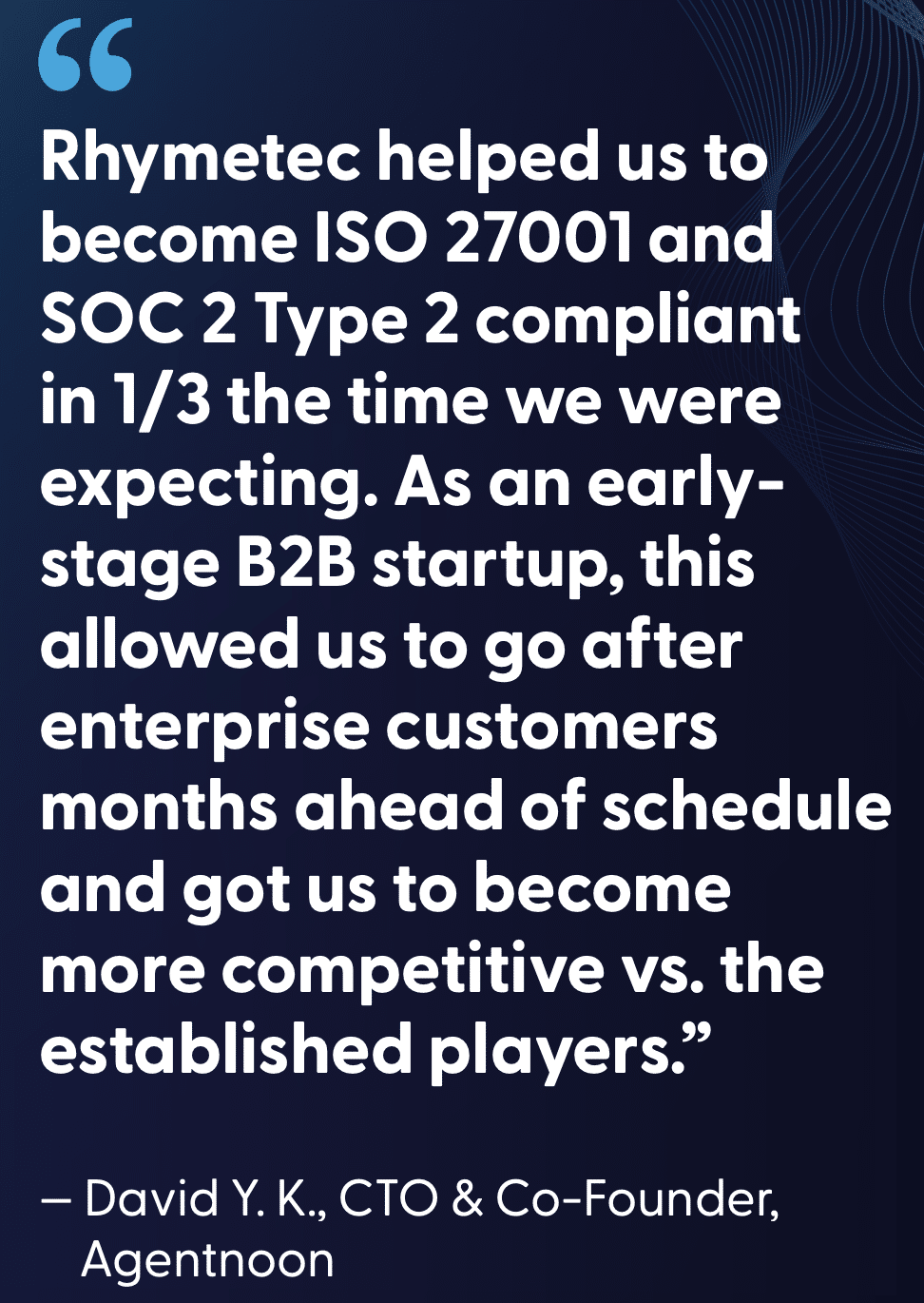
In our cybersecurity case studies, we've found that the vCISO pricing model and services provide several key advantages for companies. First and foremost, when working with a vCISO, specifically through an MSSP, it allows access to a vast set of skills:
"You can rely on a single individual, or you can have the benefit of a whole team of deep expertise and process knowledge. It's a small investment when you're considering in-house resources versus an entire team available on call at a fractional need – the ROI is really compelling."
– Harry Karamitopoulos, President, Modicum
Customers leveraging a vCISO program also find that it enables them to stay on track with their security and compliance goals, while being able to move their business forward and eliminating the need to build out expensive in-house teams:
"It kind of is like my 'security blanket.' I am a team of one for security and I need support. Having the Rhymetec team to lean on, help me consider options, weigh the pros and cons for different assets around security, and have someone else to bounce ideas off of has been helpful. Also, helping me stay on track and act as a copilot to help manage and navigate those decisions are all things that are essential to me. Without it, I would have to go out and hire more people, and the vCISO essentially cuts out the workforce I would need to hire full-time."
– Rolland Miller, Vice President of Security and Compliance, Orum
Lastly, we often hear from clients that working with their vCISO provides the level of experience and knowledge they need to meet their goals, and their vCISO's established relationships with auditors and compliance automation companies are a critical resource during the audit process:
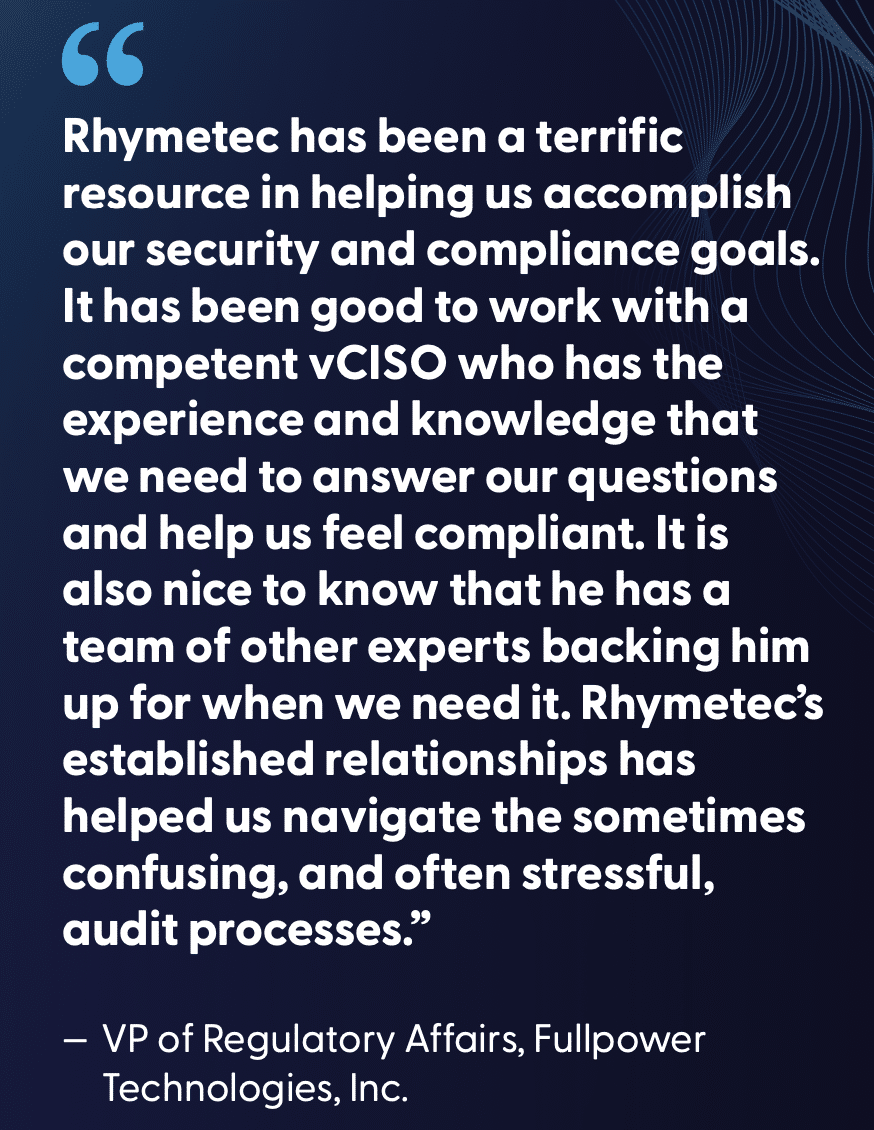
Maximize The Value of Your vCISO Investment
To get the most value from a vCISO, businesses should do the following:
- Make sure your objectives from working with a vCISO are clearly defined
- Communicate regularly with your vCISO
- Establish metrics for success and periodic reviews of your security posture as it evolves
Rhymetec's vCISO services are designed with flexibility in mind, allowing businesses to begin with basic services and scale up as their needs grow. For example, a startup might begin with the Mentor Tier to establish a security foundation and achieve security advisement, then transition to the Manager or Executive Tier as their operations and the marketplaces they sell to expand. This not only helps manage costs but also ensures that the vCISO's services evolve in tandem with the business.
An effective engagement with a vCISO enables you to vastly improve your company's overall security posture over time, and serves as a business enabler as you break into new marketplaces and grow your business.
At Rhymetec, we act as both strategic advisors and hands-on operators, making advanced security and compliance attainable for companies of any size through our vCISO pricing options.
Concluding Thoughts: A Model for vCISO Pricing & Services With Busy Technology Executives Top of Mind
Whether you're looking to start out with basic advisory services or invest in full-time support, the right vCISO can provide the expertise required to protect your business and take security off your plate so you can focus on what really matters - your business.
Rhymetec's vCISO pricing tiers and vCISO services were created with busy technology executives and their workflows in mind. Our goal is to help you shorten your timelines, reduce your team's level of effort, and successfully guide your company through all of your cybersecurity and compliance needs so you can continue to move your business forward. Contact us today to learn more:
FAQs - vCISO Pricing & Services
What is a vCISO and how is it different from a full-time CISO?
A vCISO provides the same strategic leadership as a Chief Information Security Officer but works on a part-time or flexible basis. This makes it far more cost-effective while still delivering deep expertise.
How much does a vCISO cost?
Costs vary depending on scope and pricing model. Project-based engagements can range from $10K–$50K, hourly rates run $200–$500, and monthly retainers average $5K–$20K. Rhymetec offers tiered services beginning at $2,500/month.
Why would a company choose a vCISO over hiring in-house?
Hiring in-house requires salaries exceeding $200K annually plus benefits. A vCISO gives access to equivalent expertise at a fraction of the cost, with the flexibility to scale services as needed.
Can a vCISO help with compliance certifications?
Yes. vCISOs often lead compliance readiness efforts for SOC 2, ISO 27001, HIPAA, GDPR, CMMC, and other frameworks. They manage everything from gap assessments to evidence collection to audit prep.
Do vCISOs work with partners or tools?
Many vCISOs, including Rhymetec’s team, collaborate with audit partners like A-LIGN and leverage compliance automation platforms such as Drata and Anecdotes to streamline readiness.
What industries benefit most from vCISO services?
Startups, SaaS companies, healthcare, fintech, and government contractors all benefit. Any organization that needs to prove compliance to customers, investors, or regulators can use a vCISO to reduce cost and complexity.
About Rhymetec
Our mission is to make cutting-edge cybersecurity available to SaaS companies and startups. We've worked with thousands of organizations to provide practical security solutions tailored to their needs, enabling them to be secure and compliant while balancing security with budget. We enable our clients to outsource the complexity of security and focus on what really matters – their business.
Interested in reading more? Check out more content on our blog:
- Managed Compliance: An Updated Approach For The Cyber Regulatory World
- Why Managed Security Services? In-House vs External Security
- AI Frameworks: What They Are & Why We Need Them
The array of compliance requirements being propagated by both government and private sector entities is dizzying. The European Union's NIS2 regulations, the recent SEC data breach notification rule, and the ever-impending requirements under the U.S. DoD's CMMC are all examples of an expanding regulatory framework meant to bolster corporate information security practices and protect consumer data.
Building a comprehensive information security program that maps technical and process controls to existing and pending regulations has never been more critical, but companies still struggle.
Compliance is complex. Small companies often lack the full-time subject matter experts required to translate technical jargon into risk reduction and compliance controls. Large organizations, meanwhile, struggle with massive IT infrastructures and huge amounts of data.
This article dives deep into the world of information security compliance. First, we'll examine why governments and private industry groups are expanding requirements. We'll then spotlight a few upcoming requirements. Finally, we will review a way that organizations, both large and small, can stay current with compliance - an approach Rhymetec dubs "managed compliance" or "compliance management."
Managed Compliance: Why Is The Regulatory Landscape Shifting?
Before we dive into how the landscape is shifting, let's start with a more basic question - why is it shifting?
The simple answer is that the cyber threat landscape is becoming increasingly dire at the same time as geopolitical tension is increasing around the world.
Ransomware continues to plague both large enterprises and small organizations, and ransomware groups are resorting to increasingly high-stakes gambits in order to elicit payments.
These aggressive tactics were on full display in February of 2024 with the attack on Change Healthcare, which allegedly compromised terabytes of personal health data belonging to millions of consumers. The ransomware group Black Cat not only encrypted files but also threatened to publicize the information if payment was not made, resulting in an eye-popping twenty-two million dollar ransom.
Secondly, geopolitical tensions between the United States and Russia continue to remain at a post-Cold War low point. The risk of Russian, Iranian, and Chinese cyber-espionage against the U.S. technology and critical infrastructure sectors continues to remain acute, with both CISA and the U.S. FBI publishing repeated warnings that they have evidence of ongoing campaigns.
Finally, the cybercrime ecosystem itself is expanding rapidly, and the cybercrime market is booming: The global cost of cybercrime is projected to increase 15% year over year, reaching an annual $10.5 trillion USD by 2025. Market economics incentivizes threat actors to target both consumers and businesses as it pays, particularly in countries and economies with relatively weak rule of law and low median earnings.
Governments around the world, but particularly in Western Europe and the United States, are responding to these challenges with an increasing array of regulations, warnings, and executive decrees designed to incentivize companies to improve their security posture and reduce risk.
Pending Regulations & Examples of Managed Compliance in a Rapidly Changing World
There are many regulations one could cover in this article.
To illustrate our point we will focus on two salient requirements that are particularly telling of where things are moving: The EU's NIS2 Directive and the SEC data breach notification requirement. We will also talk about recent updates to frameworks like ISO that address new risks to organizations posed by Artificial Intelligence.
The NIS2 Directive and The EU
NIS2 is an EU-wide compliance requirement that will require many EU businesses to meet increasingly stringent information security requirements. Version 2 builds on an original framework that was specifically targeted to improve the security of a narrow band of critical infrastructure companies within the European Union. NIS2 expands on both the scope and scale of NIS, mandating requirements for what will likely be the majority of EU businesses.
EU regulations work by creating a comprehensive framework at the EU level, which is then written into each EU member's legal code by a certain date. As it stands, many organizations will be required to implement NIS2 by the fall of 2024, specifically ones that provide necessary services to the EU member states, regardless of location.
Some key changes in NIS2 include:
Executive teams and boards of directors become directly liable for compliance violations under the update. Organizations that fall under the regulation are required to implement many specific technical safeguards and are required to report serious incidents to their national Cyber Security Incident Response Teams (CSIRT). Covered organizations are also required to carefully evaluate their supply chains for risks that could result in substantial disruption.
NIS2 is novel in several respects, particularly by making boards of directors and corporate executives directly liable for non-compliance. We've seen a similar move to raise cyber risk to the board level in the United States, with the recent propagation of the voluntary framework NIST CSF V2.0 with the addition of the NIST governance function.
SEC Data Breach Notification Rule
The United States currently lacks a strong national cybersecurity regulation such as NIS2. However, various states and federal entities continue to add additional requirements. In 2023 the U.S. Securities and Exchange Commission published a data breach notification rule, requiring covered financial entities to publicly report a substantially adverse event within 24 hours. While this may seem relatively minor, this extends reporting requirements to thousands of publicly traded financial institutions.
The new SEC rule is illustrative of the U.S. patchwork approach to security compliance. Unlike the EU, which is adopting sweeping pan-national legislation, the U.S. instead operates under an array of state, federal, and administrative information security requirements. This can create enormous complexity for both startups and large enterprises as there are questions of jurisdiction, legal language, and mapping complex controls to a variety of requirements.
ISO 42001 and The AI Management System
The AI boom isn't showing any signs of slowing down. Organizations all over the world are increasingly incorporating the use of AI into their operations and systems. While AI may represent exciting opportunities, a cautious approach that keeps in mind security risks is necessary, particularly as AI is increasingly incorporated into many SaaS companies.
Before implementing AI, security experts recommend that organizations consider the following factors: The projected impact on products, transparency and customer trust, contractual obligations and customer agreements, how AI processes data, and, above all - data privacy and security concerns.
Enter ISO 42001.
ISO 42001 is the first international standard for the use of Artificial Intelligence. It provides comprehensive guidance for organizations on how to establish and manage systems using AI. Similar to the updated NIST CSF framework and NIS 2 in the EU, there appears to be a stronger focus on governance in ISO 42001.
Certification with the standard includes incorporating a defensible systems management strategy specifically for AI. Under controls that address leadership, top management must show how the AIMS (AI Management System) is being used across the organization and how it aligns with the overall direction and goals of the organization.
It's important to note here that this part of the standard emphasizes continuous improvement. To stay compliant, organizations must provide ongoing evidence that their AIMS is not only continually working as intended but that they are continually improving it to align with new uses of their systems.
Overall, ISO 42001 illustrates yet another shift in the direction of two areas:
1 ) The increasing importance of governance.
2) The sharper focus on continuous compliance rather than a "check the box" mentality of compliance.
Three Benefits of Managed Compliance
At Rhymetec, our vCISO services take the approach of continuous managed compliance.
That is, we don't treat requirements as a fixed-in-time prescriptive list that's checked off once it's done. Instead, we work with our customers to continuously demonstrate affirmative compliance across multiple frameworks and requirements.
We fully manage your legal and voluntary compliance for you in a way that is guaranteed to continuously fine-tune your security posture, be defendable to auditors, and scale with your growing business. We take a multi-step process that includes:
1. Understanding Which Compliance Requirements Apply
It can be remarkably complex for small organizations (and sometimes large ones!) to even begin to understand which compliance requirements they are legally obligated to meet. For example, a large financial institution operating out of New York State may be obligated to meet cybersecurity requirements under:
- NYDFS Cybersecurity Regulation
- The EU's General Data Protection Regulation (GDPR)
- The U.S. Gramm-Leach-Bliley Act (GLBA)
- The Payment Card Industry Data Security Standard (PCI DSS)
- SOC 2 (As required by customers)
- ISO 27001 (As required by customers)
Rhymetec works continuously with our clients to examine their current business and which existing requirements may apply to them while also keeping an eye on developing requirements in order to help our customers proactively meet legal obligations.
2. Implementing Controls Effectively: Doing Just The Right Amount
One of the benefits of working with a Managed Security Services Provider to implement a managed compliance program is that we leverage more than a century of cumulative experience across a diverse range of cybersecurity disciplines. We bring this experience to bear for clients in order to maximize the efficiency of control implementation. We only implement the controls that make sense for our clients.
Fortunately for our clients (and their bank accounts!), in many cases, one security control can meet requirements under multiple frameworks and regulations. For example, the control "employee training" can be tailored to meet requirements under both SOC 2 and HIPAA.
When architected properly, an information security program should be able to meet a large number of requirements with a small number of controls. Effective compliance programs serve as business enablers, allowing the business to work in confidence that they have substantially reduced breach risk and are meeting relevant regulatory requirements.

Bonus Tip For Startups:
As your organization matures, you will likely be asked to meet an increasing number of both legal and voluntary requirements such as SOC 2, NIS2, GDPR, CCPA, FedRAMP, and others. Rhymetec works to understand our client's business so that we can advise you to be as efficient as possible when implementing compliance frameworks the first time, resulting in cost savings down the road.
For example, if you know you will be selling to the federal government in 2025, we can architect your program to begin meeting and documenting FedRAMP requirements early.
3. Continuous Review
Security is not a fixed point in time activity.
A well-managed compliance program should involve continuous review of the organization's security controls to ensure they are being effectively met and that processes are properly implemented. Many organizations that attempt to meet compliance themselves follow a similar pattern:
- An organizational leader is tasked with meeting a common compliance requirement or framework, often SOC 2 or ISO 27001 (more often than not because a prospect has asked for it).
- They spend several weeks building documentation, paperwork, and processes to demonstrate compliance.
- They implement many required technical controls.
- But, by the time the auditor comes, many of the processes have been discarded in favor of efficiency and many of the technical controls have lapsed, resulting in a poor showing on the compliance audit.
At Rhymetec, we take the opposite approach:
Controls are only as effective as their implementation and processes are only as good as the adherence to them is. We work with our clients to ensure that security policies aren't just documents that sit on a shelf collecting dust but are core business documents that form the basis for how the organization does business.
Knowing you've outsourced the complexity of all of this and have a team continuously taking care of your legal and voluntary requirements provides peace of mind. That's one of the key benefits of managed compliance that companies report.
Rhymetec's Method for Accelerating and Managing Compliance
Our team has worked with hundreds of clients across different industries. We are equipped with the expertise to conduct a thorough gap analysis at the beginning of the engagement to identify areas of improvement. Our team works with you to craft a roadmap tailored to your individual security needs and the compliance requirements relevant to your industry.
We leverage the latest technology, such as compliance automation tools, to streamline documentation of your security policies, collect evidence for audits, and more. We offer expert phishing testing services, internal audits, and penetration testing services (including mobile application penetration testing and web application penetration testing) that are guaranteed to meet security controls.
Finally, our team of experts continuously reviews and updates existing controls, evaluates your information security program throughout phases of growth, and stays up to date with the latest changes in the industry or with compliance standards to help you prevent gaps in compliance—providing an effective compliance maintenance program.
About the Author: Justin Rende, CEO
Justin Rende has been providing comprehensive and customizable technology solutions around the globe since 2001. In 2015 he founded Rhymetec with the mission to reduce the complexities of cloud security and make cutting-edge cybersecurity services available to SaaS-based startups. Under Justin’s leadership, Rhymetec has redesigned infosec and data privacy compliance management programs for the modern SaaS-based company and established itself as a leader in cloud security services.
You might be wondering - Why would a threat actor bother targeting a startup? Don't they focus on larger companies?
In 2025, cybersecurity for startups is just as critical as it is for the world's largest organizations. You may be surprised to learn that small businesses nowadays are actually more frequent targets of cyberattacks than larger companies.
According to Verizon's 2023 Data Breach Investigations Report, there's a very clear reason for this:
Regardless of organizational size, companies are increasingly adopting similar services and infrastructure. This means that the attack surface of small organizations - all of the points from which a threat actor can access a system - looks more similar than ever to that of large companies.
When it comes to the attack surface of small versus large businesses, "...by now there is so little difference based on organizational size that we were hard-pressed to make any distinctions whatsoever." (Verizon, 2023).
While it's great that many business-accelerating tools are now equally accessible to small organizations, this democratization of technology has a dark side:
Organizations, from startups to Fortune 500, have increasingly similar risk profiles but do not have the same resources to prevent and respond to attacks.
From a threat actor's perspective, this makes smaller organizations ripe targets. In light of this, what can you do as a startup to improve your security, especially without breaking the bank?
This guide will discuss:
- Why is Cybersecurity for Startups Important?
- 5 Practical Things You Can Do Right Away
- Measures to Further Improve Your Security
- Balancing Security With Budget
- Frequently Asked Questions
- Accelerating Cybersecurity for Startups
Rhymetec was specifically founded with the mission to make cutting-edge security available to startups. We've worked with hundreds of companies to provide practical solutions that enable them to be as secure as possible while also balancing security with budget.
This guide will provide actionable solutions for cybersecurity for startups based on:
- Our experience working with hundreds of startups.
- Current trends in the industry in 2025.
Why is Cybersecurity for Startups Important?
Large companies have the resources to continuously sharpen their security measures and keep up with increasingly stringent compliance requirements. Meanwhile, smaller businesses without the same resources to devote to security are left behind.
Threat actors know this, and that's why an employee at a company with less than 100 employees receives 350% more social engineering attacks in their email than an employee at a large company.
And the smaller the business, the harder the attack hits: For over half of small companies, all it takes is one data breach to go out of business within 6 months.
What does this mean?
Startups need to invest in cybersecurity as much as large companies do, ideally from the onset. Fortunately, nowadays, there are affordable solutions for startups to access cybersecurity services and expertise historically reserved for large companies:
Instead of building out expensive in-house security teams, many startups turn to Virtual CISO Services as an alternative. Additionally, there are measures any startup can take right away to improve security, which we'll discuss in the section "5 Practical Things To Do Right Away".
But first, let's talk about the most common threats faced by startups in 2025. We'll keep these in mind when suggesting security measures you should consider.
Common Security Threats Faced by Startups in 2025
According to Verizon, 92% of tactics threat actors use against small businesses are either:
- Social engineering tactics, such as phishing emails.
- Basic web application attacks.
User credentials (like passwords) are the most frequently compromised type of data. This is because threat actors know this type of data is particularly vulnerable when hosted and processed by small organizations without strong security.
Even if you aren't at the stage where you want to explore building out a comprehensive security program, there are a few things you can do in the short term.
With the most common threats faced by startups in mind, here are 5 solutions that will mitigate a huge amount of risk right off the bat:
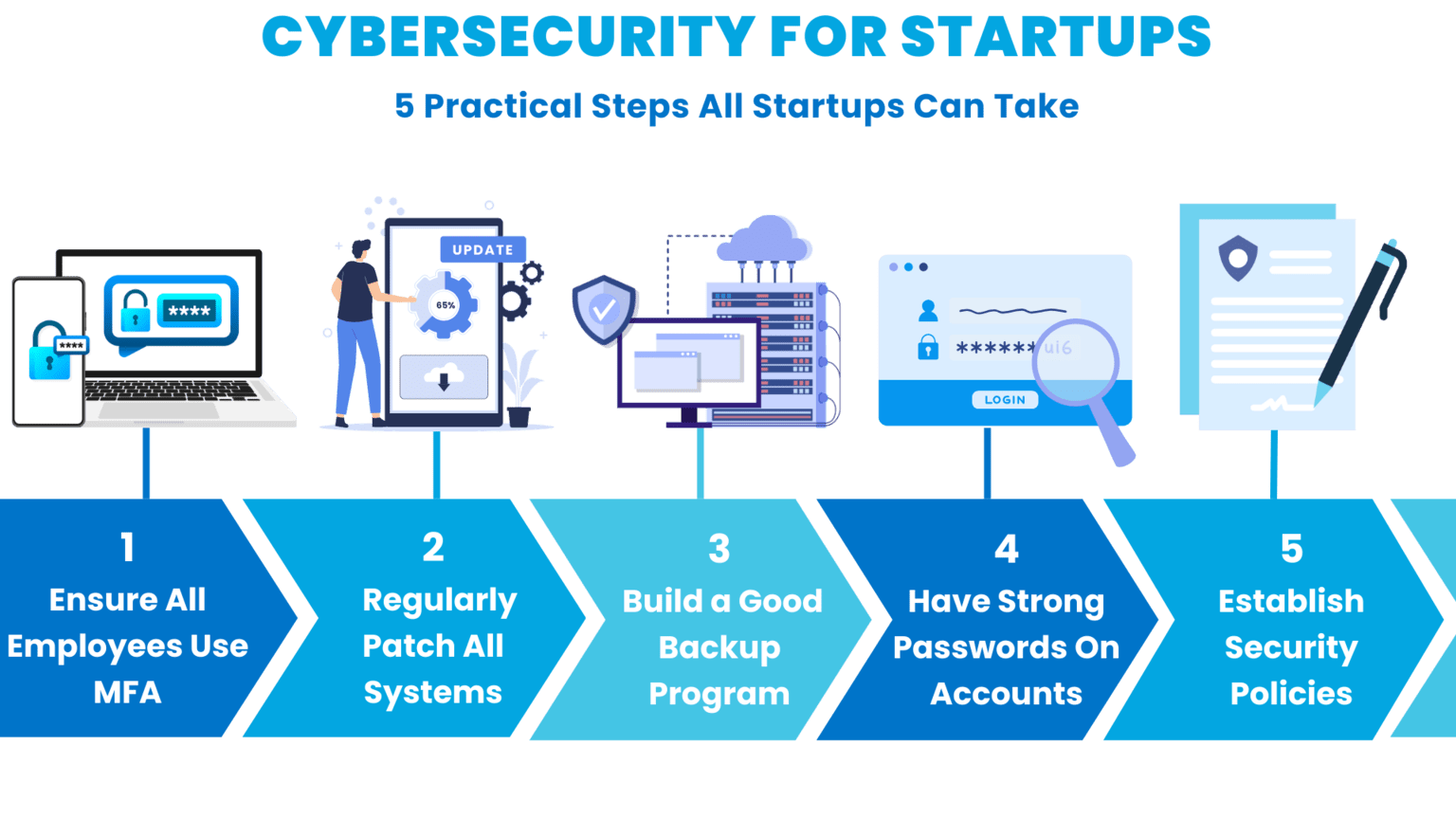
Cybersecurity for Startups: 5 Practical Things To Do Right Away
We get how much running a startup involves on a daily basis.
Even if you're crunched for time and resources, fortunately, there are a few 'quick win' measures you can take to improve your security immediately!
Some of these may seem basic. But you would be stunned how many people, even in high-level positions, are using passwords like "032564Oreo (user's birthday + their cat's name), or "newpassword2025!" (self-explanatory).
It's best to play it safe and operate from the assumption that most people simply don't practice good security hygiene. It's on company leadership to provide guidance and policies.
With this in mind, here are 5 measures you can take right away:
1. Ensure All Employees Use MFA At Your Startup
Multi-factor authentication (MFA) is critical to an effective security program.
Implementing MFA across all accounts, including cloud access, network access, and even SaaS access accounts, is the number one thing you can do to reduce the risk of a major incident or breach.

Without MFA, all a major breach takes is a single employee setting a weak password, which a threat actor then identifies through password spraying or traditional leaks.
Beyond simply setting up and requiring MFA, there are additional steps you should take in light of the current threat landscape in 2025. Unfortunately, threat actors have inventive ways around MFA nowadays.
To mitigate this risk, here are some important tips when setting up MFA controls:
- Understand where your customer data lives. Individual teams and employees may purchase new SaaS applications on their own authority and begin storing customer and other data in these systems. Without adequate controls and visibility, employees may be storing customer data in SaaS solutions without MFA that your IT and security teams are unaware of.
- Set short time-to-live (TLL) on session cookies where possible. Session cookies allow a user to reauthenticate without having to reenter a code for a set duration of time. If session cookies are stolen in the meantime, they can be used in a session replay attack to bypass codes. Setting time-to-live for cookies as shortly as possible does inconvenience users, but reduces the risk that if a threat actor steals cookies, they can be effectively used.
- When implementing MFA, it is strongly recommended to use authenticator applications rather than SMS-based authentication when possible. SMS-based authentication is susceptible through a practice known as "SIM Swapping," in which threat actors either social engineer or steal the means to swap SIM devices at the carrier level, allowing them to hijack a user's cellphone traffic.
2. Make Sure All Systems Are Patched
Many cyberattacks happen as a result of organizations not building a successful vulnerability management practice. Threat actors continuously scan for publicly facing IT assets with known vulnerabilities to identify potential targets to exploit.
A great example of this is the WannaCry ransomware attack in 2017. The exploit used by threat actors had actually been patched in Windows two months prior to the attack. Devices up-to-date on the latest security updates were not impacted by the attack. Meanwhile, devices that hadn't kept up with the latest patches were left vulnerable.
Vulnerability prioritization can be a pain. It isn't always clear when a vulnerability is critical versus when it can be delayed somewhat. Additionally, patches can be extremely disruptive to existing IT infrastructure. All of this makes effectively patching systems quite difficult. Here are a few tips:
- Prioritize vulnerabilities on publicly facing systems first: Threat actors regularly scan the internet looking for known exploitable vulnerabilities on publicly facing systems. An instance of this in 2025 includes the ConnectWise ScreenConnect vulnerability. Another recent example includes the MOVEit vulnerability.
- Prioritize actively exploited vulnerabilities: Not all vulnerabilities are equally high-risk. Vulnerabilities that are theoretical or haven't been known to be "actively exploited in the wild" are likely lower risk and can be deprioritized compared to those that threat actors are utilizing.
- Use a vulnerability management service like Shodan: Shodan can help identify publicly facing IT assets along with services running on them. This can dramatically expedite mapping your organization's attack surface and identifying services that may have exploitable vulnerabilities.
3. Build A Cybersecurity Program With an Extensive Backup and Recovery Program
It's no secret that ransomware groups often encrypt sensitive data belonging to organizations. But ransomware isn't the only reason you should have a strong backup and recovery program.
Natural disasters, unexpected outages, and threat actors can all compromise the confidentiality, integrity, and availability of data. This creates enormous risk.
Create not just a backup system for your startup, but a backup and recovery program that includes technology (either localized or cloud backups), processes (policies and procedures), and people responsible for ensuring it all works together.
Once you have a system that works, test it!
Tabletop exercises can be invaluable in testing real-world examples to make sure that your system works, everyone knows their role, and you can effectively respond to a crisis.
Bonus Tip: Be sure to back up your "less" critical systems.
Don't underestimate the dependencies between data and software applications. Even if your organization has multiple systems, don't isolate backup and recovery to "only" the most critical. It is often easy to overlook data dependencies between systems where one system going down can render another entirely nonfunctional.
4. Ensure All Employees Have A Strong Password

Many organizations make the mistake of believing that if they have strong two-factor authentication, they are adequately protected and don't need to worry too much about weak passwords. This couldn't be further from the truth.
If you have a weak, easily guessable password and two-factor authentication, you only really have single-factor authentication!
IBM's recent X-Force Report showed that identity-based attacks that involve leveraging valid user accounts are now the predominant way threat actors compromise environments. Compromising a single valid user account with administrative privileges can quickly escalate into a full-blown breach.
Multi-factor authentication means your organization has strong passwords and monitors password reuse. Here are a few tips to ensure employees are using good passwords:
- Create strong passwords with a length requirement, special characters, numbers, and letters.
- Use a credential monitoring service like haveibeenpwned to identify if a user's credentials have been compromised in a data breach. Rotate credentials immediately if this has happened.
- Talk extensively about password hygiene during regular security trainings. Emphasize not to reuse passwords across services. Walk users through how reusing passwords can result in the organization being compromised.
Bonus Tip: Use a password manager like 1Password.
Tools like 1Password automatically create strong passwords, which are then encrypted and stored so that only authorized users can access them.
This allows members of your team to share passwords without showing the actual password. Additionally, employees can access business-critical accounts across multiple devices without having to remember complex passwords.
If your startup has a remote workforce and employees are logging into their work accounts on multiple devices, a password manager is a must-have.
5. Establish A Written Security Policy
Establishing a written security policy is one of the most critical things you can do to create a strong cybersecurity baseline for your startup.
Rhymetec's Senior Cybersecurity Analyst, Kyle Jones, recently spoke about how to draft and communicate strong security policies. Here are a few tips he suggested:
- Know your audience. If the people who need to understand and adhere to your security policies aren't security knowledgeable, keep that in mind. Don't use overly technical language in your policies. Instead, tailor your language to your audience.
- Emphasize your policies continuously, and connect policies with the reasons behind them. People will be more likely to follow policies if the reason behind them is explained. Find opportunities, such as when an employee has an IT-related question, to reference the policies and see what they say.
- Make sure your policies reflect current trends. Your risk profile changes depending on what's going on in the world! For instance, the launching of large language models (LLMs) like Google's Gemini should make you rethink your policies.
Here are several critical questions about AI:
- Do you know if your employees are sharing data with any LLMs they may be using for work?
- Do you have an established policy around the use of this technology at your startup?
- What about updates to regulatory language around AI? Do your policies take that into account?
A great example of why these questions need to be visited can be seen in Samsung's 2023 data leak with Chat GPT - the company has since banned the internal use of generative AI tools.

Bonus Tip: Create a culture that prioritizes security and transparency.
Share resources and talk to your team regularly about the importance of security.
Don't fearmonger - you never want your employees to feel like they can't come to you if something happens. Make it clear that your door is open, and you want to know if they receive a suspicious email or if they notice unfamiliar software on their work device.
Cybersecurity for Startups: Measures To Further Improve
So, you've made sure your employees are using MFA and that nobody's password is their cat's name. You regularly update all of your systems, back up your data, and already have security policies in place.
Here are the next steps you should take:
1. Build A Formal Process to Assess The Security of Third-Party Vendors and Suppliers
Third-party risk management continues to grow in importance for organizations of all sizes.
We recommend building a full inventory of all third-party suppliers your organization uses and implementing a standard risk screening. Fortunately, modern standards make it easy to quickly screen to see if a potential third party takes information security seriously.
We recommend asking questions like:
- Does your organization have a SOC 2 Type 2 Report, or other third-party attestation on your information security program?
- Are you compliant with the HIPAA Security Rule, New York Department of Financial Services Cybersecurity Rule, or other formal legal requirements?
- Does your organization have documented security policies?
- Do you share customer data with third parties? If so, which ones?
2. Conduct Routine Pen Testing Engagements
Engage a third party (such as Rhymetec) to regularly put your security controls to the test.
Regular pen testing identifies gaps that potential attackers could exploit. Pen tests should be scoped to the specific risks that your organization faces. For example, Rhymetec can help with:
- Web application pen testing to identify vulnerabilities and misconfigurations in web apps.
- Mobile application penetration testing to identify vulnerabilities or exploits in mobile apps that could be exploited.
- Network penetration testing to identify ways that your organization's network could be exposed.
Pen testing is critical to meeting numerous security requirements. It also enables you to better answer questionnaires about your organization's security provided by potential customers.
3. Conduct Simulated Spear-Phishing Tests
Simulated phishing exercises represent another very significant opportunity to improve your security.
Running realistic simulated phishing tests can help condition employees to be wary of even realistic-looking emails purporting to offer them gift cards and sensitive information. Make sure emails look realistic and are targeted. Sending generic emails generated by a platform can come across as too obvious and fail to adequately test users.
Take an attacker's perspective - what might an attacker write without inside knowledge of users to get users to click links?
Bonus Tip: Have An Incident Response Plan In Place.
An incident response plan is a set of documented procedures to act on in the event of a security incident. For instance, do you know what steps to take in the event your startup experiences a ransomware attack?
To recall an earlier example, during the WannaCry ransomware attack in 2017, many victims paid the ransom to try to get their data back. Security professionals generally do not advise paying ransoms. The threat actors behind the WannaCry attack did not restore people's data even after they'd paid the ransom.
Having a documented incident response plan equips you with important know-how in the event you are to experience an attack or a data breach. This saves time, money, and headaches if an incident were to occur.
Balancing Security With Budget
Building good organizational security is critical. However the cost of protecting an asset shouldn't have to exceed the value of the asset.
Cybersecurity for startups needs to be balanced against ease of access, business processes, and the risks associated with the service, data, or application being secured.
At Rhymetec, we work with a lot of SaaS startups who need to build a security program typically because their customers require it and it's difficult to compete in the marketplace without one. These startups are working off a limited budget.
A good place to start to figure out how to balance security with budget is to think about the answers to the following two questions:
- What does your risk profile look like? Narrowing down the specific risks facing your organization helps prioritize where you need to spend your security dollars. For example, if you are located somewhere that's prone to earthquakes and your servers are stored there, that's a high risk. You would want to prioritize taking steps to remediate this.
- What's your risk appetite? Understand what your own risk tolerance is - If you have a low-risk appetite, you will want to commit to remediating any medium or high risks. Or, at the very least, look at how to reduce your risk from high to low in the areas of highest risk.
At Rhymetec, after we assess your risk profile and answer these questions, we get creative on the best way to proceed with building your information security program while keeping in mind budget constraints.
Frequently Asked Questions (FAQ) for Cybersecurity for Startups in 2025
Here are 5 questions we see frequently from startups in 2025. Knowing the answers to these questions - and implementing corresponding policies - is essential for robust cybersecurity for startups.
1. What are some commonly required or requested compliance frameworks for startups in 2025?
- SOC 2 is a voluntary standard often requested by customers to show you take security seriously and that their data will be in good hands if they share it with you.
- ISO 27001 is the leading international standard for information security.
- PCI DISS is necessary if your startup processes credit card payments.
- GDPR is required in 2025 if you handle the personal data of EU citizens.
- HIPAA privacy regulations require organizations dealing with healthcare data to follow procedures around the confidentiality and security of PHI (Protected Health Information).

2. How does the increasing shift to remote work impact cybersecurity for startups in 2025?
Cloud security is critical in the age of remote work.
Without proper controls, even daily activities like file sharing can result in sensitive information being shared with unauthorized users. Following best practices for cloud storage is essential in 2025, including:
- Make sure your employees have a strong separation between work and personal documents and devices.
- Invest in backing up your data to prevent the loss of important information and documents.
3. What should startups do from a security standpoint with all the AI hype?
AI amplifies existing threats, especially social engineering attacks. For example, AI can be used by threat actors to generate a larger number of personalized phishing emails.
This simply means that the best way to protect your business from AI-assisted threats is to strengthen your core security program. Staff awareness training to protect against social engineering attacks is especially important.
4. What are some best-of-breed tools startups can easily utilize in 2025?
As discussed earlier, the attack surface of small organizations is starting to increasingly resemble that of large organizations. What if you could monitor this, even down to the individual employee level?
Services like Picnic enable you to minimize the human attack surface of your startup and protect executives, contractors, and employees from social engineering attacks.
Nowadays, fortunately, there are tools that make security more accessible. Even if you have zero technical background, you can seamlessly integrate tools like Zip Security that provide enterprise-grade security and endpoint threat detection.
5. When is the right time to start looking into cybersecurity for startups?
The straightforward answer here is that if you're reading this, the right time is now.
Don't wait for the perfect time. The reality is that early-stage startups are unfortunately particularly vulnerable to cyberattacks, precisely because threat actors know they often lack even basic security practices.
Plus, it's always better to start building your security program early on so it can grow in alignment with your needs as your startup scales. Implementing a robust information security program after growth involves even more time, money, and resources to catch up.
How MSSPs Can Accelerate Cybersecurity for Startups in 2025
Hiring an external security team can substantially help organizations, especially in the early stages.
Virtual CISOs at organizations like Rhymetec have extensive experience balancing budgetary needs, usability, and security for start-up cybersecurity programs. It's not an easy balance, but leveraging an experienced partner can deliver huge amounts of specialized talent without the need to spend millions of dollars on an in-house security team.
Managed Security Services Providers like Rhymetec have dozens of professionals across security disciplines like cloud security, compliance, web application security, penetration testing, and others. They have the experience putting these skills to work for startups in a way that drives real security outcomes as you scale while also keeping your budget in mind.
To learn more about how our team can accelerate your security while keeping your budget in mind, contact us for more information.
About The Author: Metin Kortak, CISO
Metin Kortak is the Chief Information Security Officer at Rhymetec. Metin began his career working in IT security and gained extensive knowledge of compliance and data privacy frameworks such as SOC 2, ISO 27001, PCI, FedRAMP, NIST 800-53, GDPR, CCPA, HITRUST and HIPAA. He joined Rhymetec to build data privacy and compliance as a service offering. Under Metin's leadership, these offerings have grown to more than 200 customers, positioning the company as a leading SaaS security service provider in the industry.
Partnering with a Managed Security Services Provider (MSSP) is an elegant solution for many companies for two main reasons:
- MSSPs provide specialized experience at scale, enabling organizations to access expert security services without having to build in-house security teams.
- Companies of all sizes are increasingly recognizing that good security is good business.
Cybersecurity and information technology risks continue to shift more rapidly than ever. Organizations of all sizes are coming under increasing regulatory scrutiny both in the United States and the European Union, with new requirements such as the U.S. SEC Data Breach rule and the EU's NIS2 Directive, as well as upcoming regulations like the Digital Operational Resilience Act (DORA) requirements in Europe and CMMC 2.0 in the U.S. defense sector.
In 2025, enterprise buyers are also raising the bar with stricter vendor due diligence and security questionnaire requirements. At the same time, a vast cybercrime underground continues to flourish, amplifying the ever-present threats of ransomware attacks, data breaches, and insider threats.
But even beyond these well-known risks, having a solid information security foundation is just good business. It inspires confidence with partners, vendors, customers, and employees. Even more than that, it enables organizations to scale effectively without the omnipresent threat of ransomware attacks, data breaches, and compliance violations.
Good security is good business.
What is a Managed Security Services Provider?
Managed Security Services Providers (MSSPs) provide outsourced cybersecurity and consulting services to businesses of all sizes, providing an elegant and simple solution for organizations to reduce the risk of both regulatory noncompliance and experiencing a threat actor attack. Common services provided include incident response, endpoint protection, threat intelligence, patch management, risk management, security questionnaire fulfillment, compliance management, and much more.
MSSPs centralize decades of security experience across different functions and organizations into a single entity, enabling small businesses to leverage security know-how and experience usually reserved for the world's largest and most sophisticated corporations.
Why Organizations Are Turning to MSSPs in 2025
Business drivers in 2025 include:
Expansion into regulated markets (e.g., finance, healthcare, SaaS)
Scaling globally, especially into Europe under NIS2 and DORA
Meeting stricter third-party vendor risk assessments from enterprise buyers
Preparing for CMMC 2.0 certification in the U.S. defense sector
This is why MSSPs like Rhymetec, now serving over 1,000 clients worldwide, are seeing increased demand from SaaS companies, startups, and enterprises alike.
Indeed, MSSPs help organizations work through a variety of complex technical and regulatory challenges, including:
Compliance Frameworks and Regulatory Requirements
Compliance requirements continue to proliferate adding additional regulatory impetus for organizations to improve their cybersecurity.
That's one of the reasons why Managed Security Services Providers with extensive experience helping organizations meet a range of frameworks (such as SOC 2, ISO 27001, PCI DSS, FedRAMP, GDPR, and others) are increasingly seen as the best route to go to meet requirements. In 2025, new frameworks like ISO 42001 (AI Management Systems) are also becoming relevant for companies building or deploying AI, and the EU AI Act is introducing additional oversight.
Many organizations see regulatory requirements as purely a cost. However, collaborating with the right MSSP company can help transform these requirements into a net benefit that can be applied across the organization.
There's a reason that 75% of companies who achieve some level of continuous compliance view their compliance program as a business driver. Meeting regulatory and voluntary standards boosts your ability to serve more clients, unblock sales, and expand into additional markets.
And in 2025, CMMC 2.0 compliance is becoming a key requirement for U.S. defense contractors, making MSSP expertise essential for entry into that market.
Enterprise sales opportunities will want to see compliance with regulations relevant to their industry such as SOC 2, GDPR, HIPAA, and PCI before even considering an engagement. Working with an MSSP simplifies the process of achieving and maintaining compliance standards, ensuring you are able to break into new marketplaces as your company grows.
Penetration Testing
It's no secret that the threat landscape continues to drive higher levels of risk.
Increases in geopolitical tension, growth in cybercrime, and the rapidly evolving risk of ransomware attacks all directly increase risk to organizations. Penetration testing can directly reduce much of this risk.
Currently, another issue is that AI-powered attack tools and supply chain exploits are also creating new levels of exposure for SaaS companies. Through partnerships with leading platforms like XBOW, at Rhymetec, we now combine automation with human-led oversight to scale testing more effectively.
Similar to the importance of continuous compliance discussed above, when exploring how to select the right pen testing vendor, companies should consider the importance of continuous communication and a collaborative approach with the pen tester.
A good pen testing firm will work with you to scope the pen test to your organization's specific requirements and risks. For example, organizations that offer their data via API may benefit from API penetration testing while organizations with web applications may need pen testing specifically scoped to address common vulnerabilities in web applications.
A rigorous penetration test can identify flaws in your application or corporate security that an attacker could exploit. In addition, they can strengthen your compliance posture and reassure potential auditors that your organization takes security seriously.
An MSSP that offers pen testing as a service will collaborate with you to understand your business requirements and scope the pen test to vulnerabilities that threat actors are most likely to exploit based on your unique risk posture. For example, Rhymetec offers a variety of pen testing engagements, including web application, API, network, and mobile application pen testing.
Virtual CISO Services
Security isn't a one-time initiative. It's an evolving process that requires buy-in from individuals across the organization.
Virtual CISO (vCISO) services serve as the linchpin of a security program. A vCISO acts as your organization's security expert - enabling you to leverage executive security expertise without the need to employ a full-time CISO.
A vCISO can advise you on:
- When to make additional security investments
- Which security policies and procedures would most benefit your organization
- Emerging threats that may pose a risk to your business
- Maintaining robust security throughout complex engagements like cloud migrations
- Upcoming changes to compliance regulations that may need to be addressed
- Preparing you for compliance or data privacy audits
A good vCISO has an in-depth understanding of compliance requirements, coupled with the technical resources needed to implement security controls in the context of the threat landscape. Managed Security Services offering a vCISO service provide companies of all sizes access to this valuable combination of skills.
In addition, a vCISO enables you to maintain a posture of continuous compliance.
Working With A Managed Security Services Provider Encourages Continuous Compliance
At Rhymetec, we believe compliance shouldn't be a sprint right before an audit.
Organizations that make compliance core to their business can maintain a posture of constant compliance, reducing the stress and overhead associated with compliance while also ensuring that audit requirements are met.
A common misconception is that smaller businesses are exempt in some way from needing to meet requirements. However, requirements are generally stipulated across the board for most companies regardless of size.
Going beyond compliance frameworks, which represent a reasonable baseline but fall far from the finish line compared to an actual security program, vCISOs are able to implement additional security controls based on the unique risks an organization faces. Before building out or improving upon an existing security program, a vCISO will consider customer requirements and pinpoint specific laws and threats that apply to an organization and its vendors.
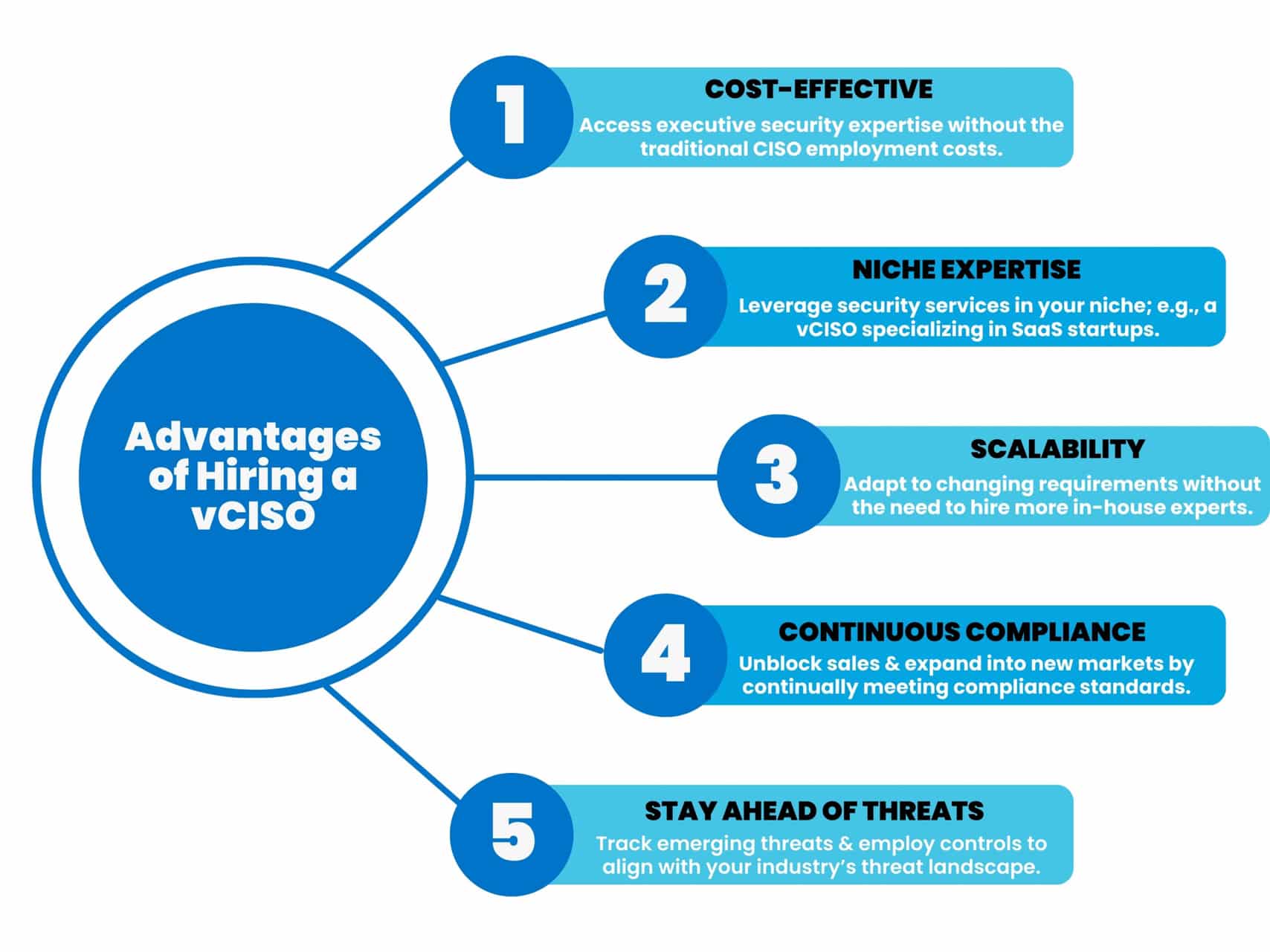
Opting for a vCISO service enables small and mid-size businesses to be certain they meet compliance standards while also leveraging their security dollars to reduce the risk of data breaches and ransomware attacks.
Let's expand on the main reasons why managed security services are an agile solution for smaller organizations:
Why Work With A Managed Security Services Provider? Specialized Experience At Scale.
The reason organizations choose to work with MSSPs is simple - specialized experience at scale. An average MSSP will often have experts on their team across many disciplines to include:
- Job Title (Salary range for an in-house full-time hire in 2025)
- CISO ($215,000 - $275,000 per year)
- Director of Security ($250,000 - $400,000 per year)
- Cloud Security Specialist ($110,000 - $150,000 per year)
- Application Security Specialist ($130,000 - $180,000 per year)
- Penetration Tester ($110,000 - $150,000 per year)
- Security Operations Analyst ($110,000 - $160,000 per year)
- Threat Intelligence Analyst ($80,000 - $140,000 per year)
- Governance, Risk and Compliance Specialist ($65,000 - $100,000 per year)
- Vulnerability Management Analyst ($100,000 - $165,000 per year)
Large enterprises spend millions of dollars on a security team with many highly specialized individuals across a range of disciplines. Small businesses need the same level of experience but not necessarily the same amount of work. Managed Security Services fill this gap perfectly.
Why Managed Security Services? It's Good Business.
Organizations are increasingly scrutinizing their vendors for security practices.
Suffering a major breach leaves a company scrambling to notify consumers, reassure investors, and manage employee fears. Proactively tackling cybersecurity, compliance, and data privacy by getting your SOC 2 Report (or other compliance audits), engaging in routine penetration testing, and utilizing vCISO services can serve as an amplifier across the rest of your business activities.
Having an MSSP as a continuous resource also simply provides peace of mind. When compliance frameworks are inevitably updated, when an auditor requests an evaluation of third-party risk, when you need things like phishing testing services to fulfill controls, or when you receive a security questionnaire from a customer - you'll know where to go for immediate and expert assistance.
Proactively providing SOC 2 Type 2 Reports to potential customers immediately makes your business stand out while also preventing the need for time-consuming security questionnaires. A vCISO service can help your organization identify and prepare for upcoming compliance regulations, saving costs and time in the long run.
Finally, working with an MSSP lets you leverage talent from across a variety of disciplines without the need to build large in-house teams.
Exploring Managed Security Services?
Rhymetec was founded in 2015 as a Penetration Testing company. Since then, we have served thousands of businesses globally in all their cybersecurity, compliance, and data privacy needs. We're industry leaders in cloud security, and our custom services align with the specific needs of your business. We help organizations achieve certifications like SOC 2, ISO 27001, HIPAA, and CMMC while preparing them for the evolving regulatory landscape in both the U.S. and Europe.
To learn more about our offerings and how a Managed Security Services Provider can be an accelerator for your business, contact our team for more information.
FAQs
Why choose managed security services instead of in-house security in 2025?
The demands of compliance and cybersecurity have outpaced what most in-house teams can manage. Managed security services provide access to expert resources, 24/7 monitoring, and full compliance management at a lower cost than building your own team. In 2025, when vendor due diligence and regulatory expectations are stricter than ever, MSSPs give businesses a faster and more reliable way to stay secure and audit-ready.
What is the cost difference between managed security services and hiring in-house?
Hiring a complete in-house security team can cost millions annually, with salaries for CISOs, penetration testers, and compliance specialists ranging from $80K to $275K each. Managed security services let you access the same breadth of expertise on a fractional basis. This approach delivers enterprise-grade protection and compliance readiness without the overhead of staffing a full team.
How do managed security services help with compliance like SOC 2 or CMMC 2.0?
MSSPs guide companies through the full compliance journey. We design policies, implement controls, maintain readiness, and support you through audits. Our team helps organizations meet frameworks such as SOC 2, ISO 27001, HIPAA, GDPR, FedRAMP, and CMMC 2.0. By outsourcing compliance management, businesses expand into new markets and shorten audit timelines, often achieving compliance in one-third of the expected time.
Can managed security services prepare businesses for AI regulations and new laws?
Yes. In 2025, MSSPs are helping organizations align with emerging frameworks like ISO 42001 (AI Management Systems - see our ISO 42001 Checklist for more info), EU AI Act compliance, and stricter privacy and disclosure requirements. By keeping you ahead of regulatory shifts, MSSPs make sure your business avoids gaps, reduces legal exposure, and can adopt AI securely while meeting compliance expectations.
How do managed security services reduce risk for growing businesses?
MSSPs combine continuous monitoring, penetration testing, vCISO leadership, and risk management to reduce the likelihood of breaches or compliance failures. This proactive approach protects your data and strengthens customer trust. For growing businesses, demonstrating strong security and continuous compliance can also shorten sales cycles by removing barriers during vendor assessments.
About the Author: Justin Rende, CEO
Justin Rende has been providing comprehensive and customizable technology solutions around the globe since 2001. In 2015 he founded Rhymetec with the mission to reduce the complexities of cloud security and make cutting-edge cybersecurity services available to SaaS-based startups. Under Justin's leadership, Rhymetec has redesigned infosec and data privacy compliance programs for the modern SaaS-based company and established itself as a leader in cloud security services.
The role of Chief Information Security Officer (CISO) has emerged as a critical component for businesses of every size. However, not every organization has the means or the requirement to employ a full-time person in this role. As a result, organizations seek services from MSSPs (also known as Managed Security Service Providers), and the emergence of the virtual CISO (vCISO) offers a solution to this problem, but there's palpable confusion in the marketplace about what a vCISO truly is and what they do. Much of the confusion stems from the fact that the role of a vCISO is not one-size-fits-all; it varies significantly based on the specific needs, size, and industry of each company. Some see a virtual CISO as a strategic advisor, others view them as hands-on security leaders, while still others consider them compliance experts. This lack of a standard definition has led to a marketplace where companies are often unsure whether they need a vCISO, what to expect from one, and how to measure their effectiveness.
Parameters of the vCISO Role
What is a vCISO and what do they do? A virtual CISO is essentially an outsourced security expert. In today's digital landscape, where cyber threats are increasingly sophisticated and prevalent, having someone who can guide your company's cybersecurity strategy is crucial. A vCISO can help you navigate the complex cybersecurity environment, protecting your company's data and systems. Market research shows some vCISOs provide advisory services, helping companies understand their security needs and develop a plan to address them. Others offer more comprehensive services, managing a company's entire security program. Additionally, some vCISOs specialize in certain industries, while others deliver a more general service.
The role of a vCISO varies, depending on a company's specific needs. For some organizations, the need might be for a vCISO to focus more on strategic planning, helping to develop a long-term cybersecurity strategy. For others, a vCISO's role might need to be more hands-on, dealing with day-to-day security issues and establishing a stronger security posture or robust compliance program. Understanding the role of a vCISO and the services offered can help you decide whether a vCISO is right for your company.
Reasons to Consider Deploying a vCISO
Several situations can arise where a company might determine a need for a virtual CISO. If your business is growing rapidly, scaling to enterprise business, or dealing with an increasing amount of sensitive data, a vCISO can help manage the associated security risks and ensure your team is meeting security standards within your respective markets. You might also need a vCISO if you're facing specific security challenges. For example, during a project to migrate operations to the cloud, a vCISO can guide you through the process and ensure your data remains secure.
In heavily regulated industries like healthcare or finance, a vCISO can ensure you're meeting all necessary compliance requirements. They can guarantee that you remain up-to-date with the latest regulations and help you address any gaps in compliance. And if you've recently experienced a data breach, a vCISO can help you respond effectively, investigate the incident, identify the cause, and implement measures to prevent future violations.
Finding the Right Fit When Hiring a vCISO
Once you've identified your company's suitability for vCISO services, look for an individual or team with experience in your industry. Ask potential vendors the following questions to establish how they operate.
- Will the people building or maintaining our infosec program work in-house, or are they contractors?
The answer to this question impacts your level of control over your security strategy and the responsiveness of your security team. - Do you outsource any of your services overseas? If so, where?
This answer matters because selecting a vCISO who outsources your services overseas could impact your data's quality and security. - Do you cap the hours (daily, weekly, or monthly) that your security or compliance expert works with our team?
This speaks to the availability of your vCISO. You need to know that your appointed vCISO will be available when you need them, especially in the event of a security incident or when answering security questions from stakeholders. - How does communication work between our team and yours?
Effective communication is crucial in cybersecurity, so you must ensure that your vCISO will communicate effectively with your team. - What experience do you have in providing cybersecurity and compliance services to businesses similar to ours?
A vCISO with expertise in your industry will be better equipped to understand your specific security challenges and needs, better tailoring their efforts to meet security and compliance requirements within less time.
Each of these questions aims to help you understand a different aspect of your company's security needs. By obtaining clear, unambiguous answers, you can make an informed decision about a vCISO for your company. Choose a vendor whose approach aligns with your company culture, and request (and check) references.
The Benefits of the vCISO Role
One of the key advantages is that a virtual CISO can provide expert guidance without the cost of hiring a full-time executive. This is particularly beneficial for small and medium-sized businesses that may not have the budget for a full-time CISO.
A vCISO can also provide an outside perspective, helping you see potential security risks you might have missed. They can bring a wealth of experience from working with other companies and industries, which can be invaluable in developing effective security strategies.
This robust expertise can also impact the rate at which you meet your security and compliance goals. For example, in the startup world, organizations move fast. A vCISO can move as quickly as your business is ready, and allow you to focus on other critical aspects of growing your business—offering peace of mind when it comes to establishing an effective information security program as you enter into the marketplace.
Furthermore, a vCISO can help you build a security-conscious culture within your company. They can provide training and awareness programs to ensure your employees understand the importance of cybersecurity and know how to protect your company's data from the early stages. They can also leverage the most cutting-edge tools for you, including compliance automation platforms. This can impact how each of your employees views and manages important customer data, and can greatly improve the development of your software or application to intertwine security within your technology.
A Final Word to CEOs on the vCISO Role
As a CEO, it's crucial that you carefully consider your company's cybersecurity requirements and make the right choice for your organization. Take the time to understand your needs, consider your options, and choose a vCISO who can truly support your company's security strategy and overarching business initiatives. The benefits of making the right choice can be significant, helping protect your company and data into the future.
If you’re interested in working with a Rhymetec vCISO, schedule a call with our team.
You can find the original blog post from Rhymetec CEO, Justin Rende, on Forbes Technology Council.
Fast-Forward Your Cybersecurity,
Compliance, and Data Privacy Programs.
Learn More